Safehome.org is dedicated to helping people rest easy at night. We’re here to show our readers how to get the most secure home possible for the best possible price. That’s why we never charge our readers for our content.
We participate in partnerships that we may receive compensation from. We never allow these partnerships to influence our trusted reviews and rankings.
Our editorial decisions are ours alone, and our recommendations are based solely on our expertise, experience, and opinions. Our reviews are the result of hours of careful research. When we endorse, rank, or review products and services, we’re making independent judgments that you can trust.
In order to keep our important content free to readers, we participate in affiliate programs, including the Amazon Services LLC Associates Program.
Our partnerships exist to help us serve our readers — never the other way around. We partner only with companies that meet our strict standards for quality, and we never allow our partners to dictate the content in our trusted reviews and rankings. Our goal is to deliver comprehensive, accurate, and up-to-date home security information to our readers, and everything that we do is in service of that goal.
Safehome.org is driven by one mission only: to become the #1 resource that helps the everyday person protect themselves and their family.
To this end, we’ve recruited industry experts to advise our editorial team. Our expert panel brings a wealth of experience from various backgrounds such as burglary detectives, identity theft experts, senior care professionals, and more. Rest assured that our reviews, guides, and recommendations all contain factual information from highly-reputable sources.
We also spend countless hours researching and testing products and services. Our objective findings are then distilled into SecureScore, an at-a-glance score that is both trustworthy and incredibly useful.
To maintain reader trust, we must remain unbiased, truthful, and thorough. This is a responsibility we take seriously. We will continue to recruit the brightest minds and deliver top-quality information in each of our reviews and SecureScore ratings. And that’s a SafeHome.org promise.
ADT
SecureScore™: 9.3/10
ADT sells many Google Nest products on its website and utilizes some of the features within its monitoring plans, like Trusted Neighbor. All devices are compatible with Google Home for convenient, hands-free operation.
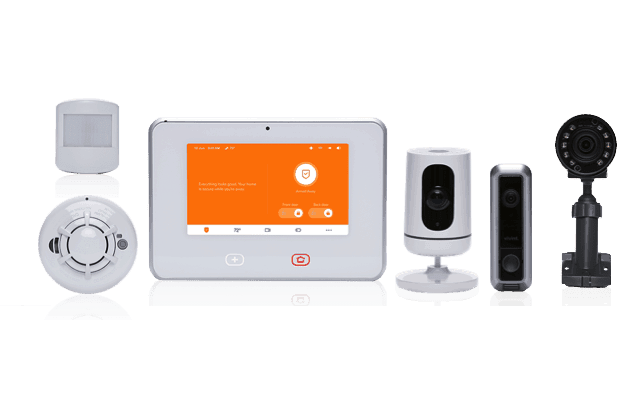
Vivint’s advanced technology seamlessly integrates home security and smart home automation. Their high-end equipment works with Google Home devices, giving you voice control over your thermostat, lights, door locks, alarm system, and more.
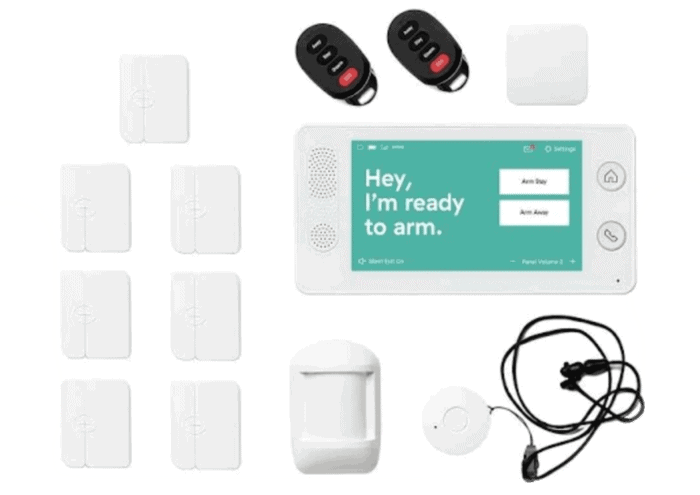
Looking to secure your home with a smart security system that works with Google Assistant? If so, Cove has the most affordable options on the market. You’ll like the hands-free voice controls and reliable 24/7 monitoring.
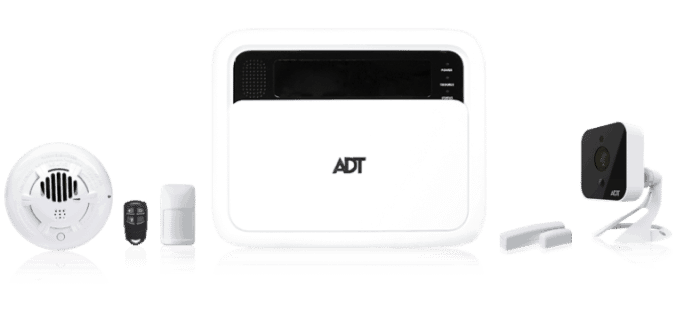
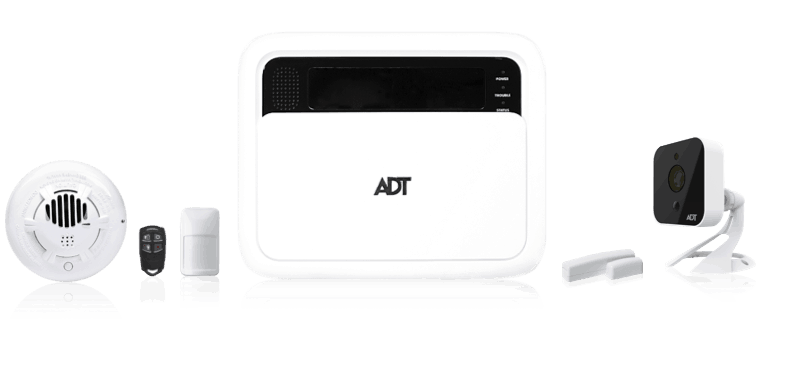
ADT leverages Google Nest devices as part of its home security ecosystem. You can purchase Nest Cams, Nest Thermostats, and Nest Hubs directly from ADT, and they integrate seamlessly with ADT’s entry sensors and motion detectors. Features like Nest’s Familiar Faces enhance ADT’s Trusted Neighbor automation, making ADT the obvious top pick among Google Assistant-compatible systems.
ADT isn’t the only option for Google integration. Vivint, Cove, Brinks, and Scout also work with Google Home and Assistant, offering everything from voice commands to automated routines. Here’s a closer look at how each system performs and which might fit your home best.
Our Methodology - How We Test and Rank Security Systems That Work With Google Home
Our Approach
The best way to make trustworthy and unbiased recommendations is through hands-on security system testing. To do this, we spend our own money to buy the products, set them up in our homes, and test them extensively for weeks or months. This rigorous process lets us get a feel for the usability, app, response time, and unique features of each security system.
Our Testing Setup
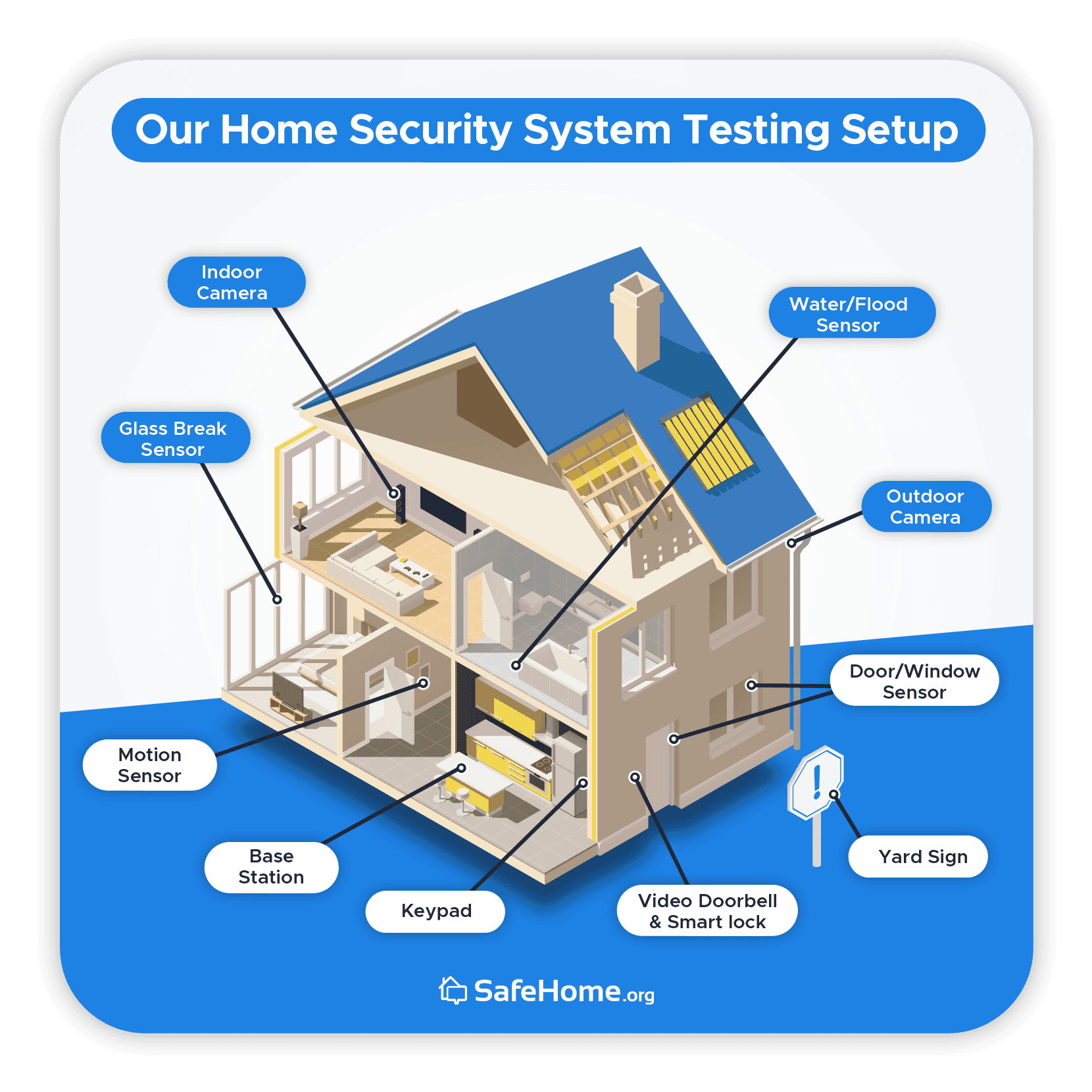
We always try to provide objective comparisons when testing security systems. We achieve this by installing our test units in the same location, which is the two-story, 2,200-square-foot home of our testing coordinator. We’ve found that using a real house gives us the most accurate results.
We take it a step further by buying the same components for each system and setting them up in the same areas. Here’s what our security system setup typically looks like:
We drew on our extensive security expertise to identify the most important factors when choosing a home security system that works with Google Home. They are:
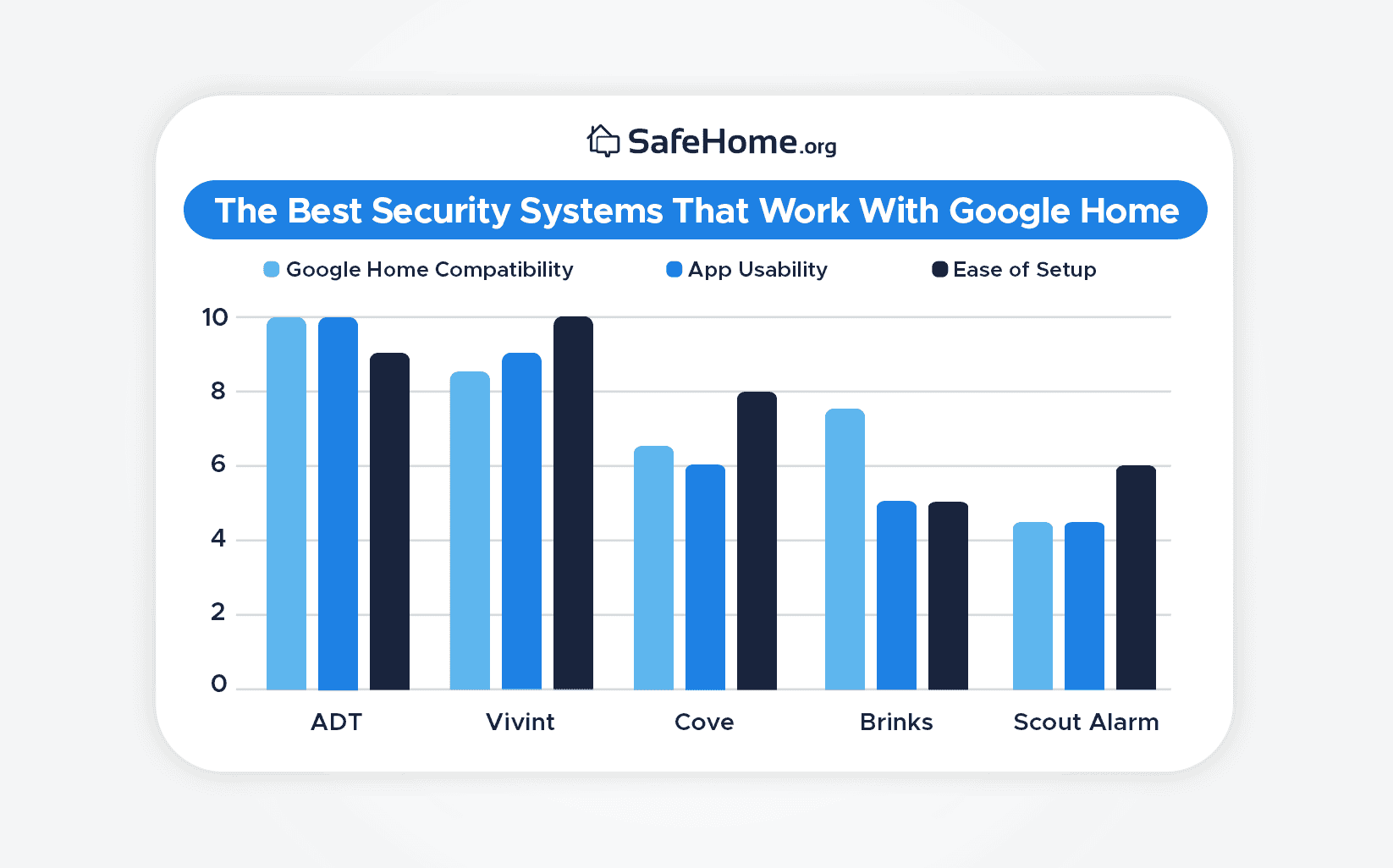
Google Home compatibility (40%): Connecting to the Google ecosystem should bring multiple benefits, including automations and voice recognition for specific actions.
App usability (30%): How well the system’s app works affects its integration with Google; we looked for apps that pair easily and smoothly with the Google smart home platform.
Ease of setup (30%): The security system doesn’t have to be complicated to set up to enjoy advanced automation functions. We looked for options with the best professional installation service or easiest DIY installation.
After careful examination, here’s how we rated our top picks based on these criteria:
Rating The Best Security Systems That Work With Google Home
Why You Can Trust Us
Unlike review sites that cover everything from ceiling fans to electric toothbrushes, our team of security experts exclusively reviews security and safety equipment. So we know our stuff! The experts who tested and ranked the security systems that work with Google Home include:
Rob Gabriele, Editorial Director & Home Security Expert
Derek Prall, Home Security Expert & Testing Coordinator
Jaime Fraze, Security Camera & Video Doorbell Expert
Joshua Lee, Former patrol officer and detective for a police department in Arizona.
We are the most experienced home security team on the internet. Since starting SafeHome.org in 2016, our work has been featured in many major outlets, including The Washington Post and The New York Times. Together, our team has:
Accumulated over 75 years of combined experience
Spent over 10,000 hours of home security research
Published more than 60 security system reviews
Produced 40+ industry research/studies
Shared dozens of home security guides
Every recommendation we publish is based on first-hand product experience and a thorough understanding of the home security industry. So without further ado, let's take a closer look at the best security systems that work with Google Home.
Top Home Security Systems That Work with Google Home in 2026
ADT has always been a top-tier home security system. But now that ADT offers affordable self-installed systems and a lower monitoring price point, it’s on par with competitors like SimpliSafe and abode. Add in a partnership with Google, and it’s easy to see why ADT has been around for 150 years and could very well be around for another 150.
Pros & Cons:
Pros:
DIY and professional installation available
24/7 professional monitoring from 12 monitoring centers
SMART monitoring via text message for faster response
Intuitive smartphone app
Financing available
Six-month money-back guarantee
Cons:
No touch-screen control panel
Video support is only available on the most expensive monitoring plan
No local storage options
Our Experience:
Our Experience Testing ADT
ADT doesn’t just work with Google Home; it has a full-on partnership with Google. ADT now offers Google Nest cameras with each plan, and the two companies have jointly designed a security system as well, the ADT Plus. ADT installers are now trained to optimize your ADT system’s connection to the Google Home platform. And if you use ADT’s mobile app, you get full Google Home functionality.
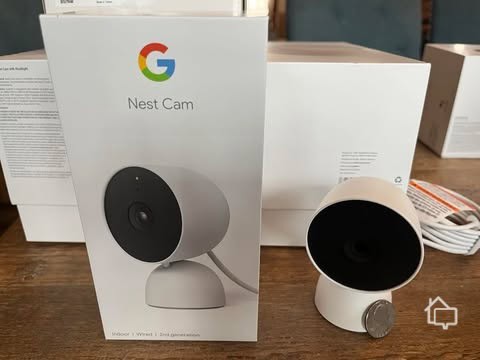
We’ve always preferred Google Nest Cams over ADT’s security camera range.
What does all of that mean? It means that your system’s capabilities are virtually endless. We invested in some of the best smart locks, then set our system up so all we needed to do was say, “Unlock the front door,” to make it happen. You can get even fancier by connecting your locks to other smart home products, like your ADT video doorbell (see more in our ADT video doorbell review). Then, operate the whole shebang from your phone.
With that said, no home security is perfect. There’s no getting around it: You’ll pay more with ADT than you might with some other companies. You can finance the equipment instead of paying for everything upfront. But this means signing up to an ADT contract, which has a minimum length of 36 months.
FYI: ADT contracts are linked to your address. So if you plan on moving soon, we recommend waiting until you’re settled into your new place before getting your security system. Otherwise, you might be up for an expensive cancellation fee.
Google Functions
Once you’ve paired your ADT system with Google Home, you can operate the entire system with your “Hey, Google” commands. Use your voice to pull up camera footage, adjust your thermostat, and control the locks on your doors. But the best feature is Trusted Neighbor, which is exclusive to ADT’s highest-tier professional monitoring plan. Trusted Neighbor leverages the Nest Cam’s Familiar Faces to disarm security systems and unlock doors for registered visitors. We use it for our dog walker so they can enter and exit with ease while we’re at work.
Pro Tip: You can turn any light into a smart light with a smart switch. Then, you can connect that smart switch to your Google Home ecosystem. We do this while we’re on vacation, so it looks like we’re home.
Installation
Traditionally, ADT always required customers to sign up for professional installation. While it can add up to $200 to your ADT bill, the professional installers know what they’re doing. So, they’ll set your system up right the first time. Nowadays, you can opt for a self-installed system and you’ll still get total Google Home integration.
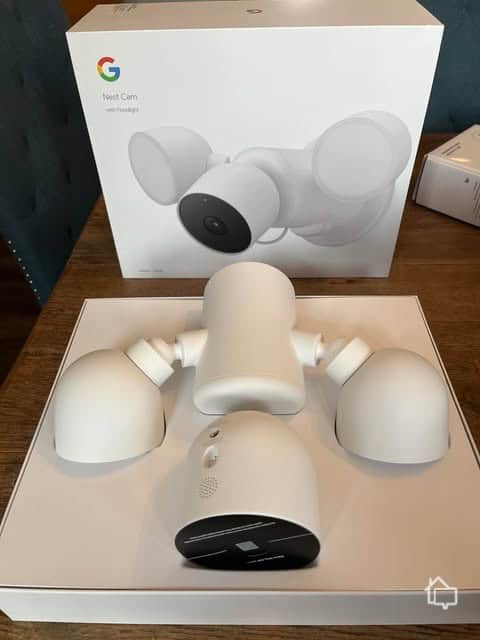
Like the rest of ADT’s Google Nest range, the Floodlight Cam is easy to install.
Pricing
Beyond offering DIY installation, ADT has also brought down some of its prices. In the past, the price of an ADT system started at around $600. Now, you can get a DIY system, though, for as little as $389.96.
ADT has also recently lowered its monthly monitoring prices from a starting point of $45 per month to just $25 per month. There are also a decent amount of ADT deals and discounts to check out. The bottom line is that there’s really never been a better time to invest in our favorite home security system than right now.
From the beginning, Vivint has been a company dedicated to combining solid home security with cutting-edge technology. It’s no surprise, then, that the company offers full Google Home integration, including lots of convenient voice commands. Vivint isn’t for everyone. It’s a bit pricey, and you have to be ready to deal with customer service agents for absolutely everything. If you’re looking for high-tech home security, you can’t really do better than Vivint.
Pros & Cons:
Pros:
Wireless equipment
Advanced home automation and customizations
7-inch touch-screen smart home hub
AI-powered outdoor, indoor and doorbell cameras
Professional installation service
Cellular monitoring with two monitoring facilities
Cons:
Equipment can be pricey
Requires a contract up to 60 months
Short three-day cancellation window
Lack of pricing transparency on its website
Our Experience:
Our Experience Testing Vivint
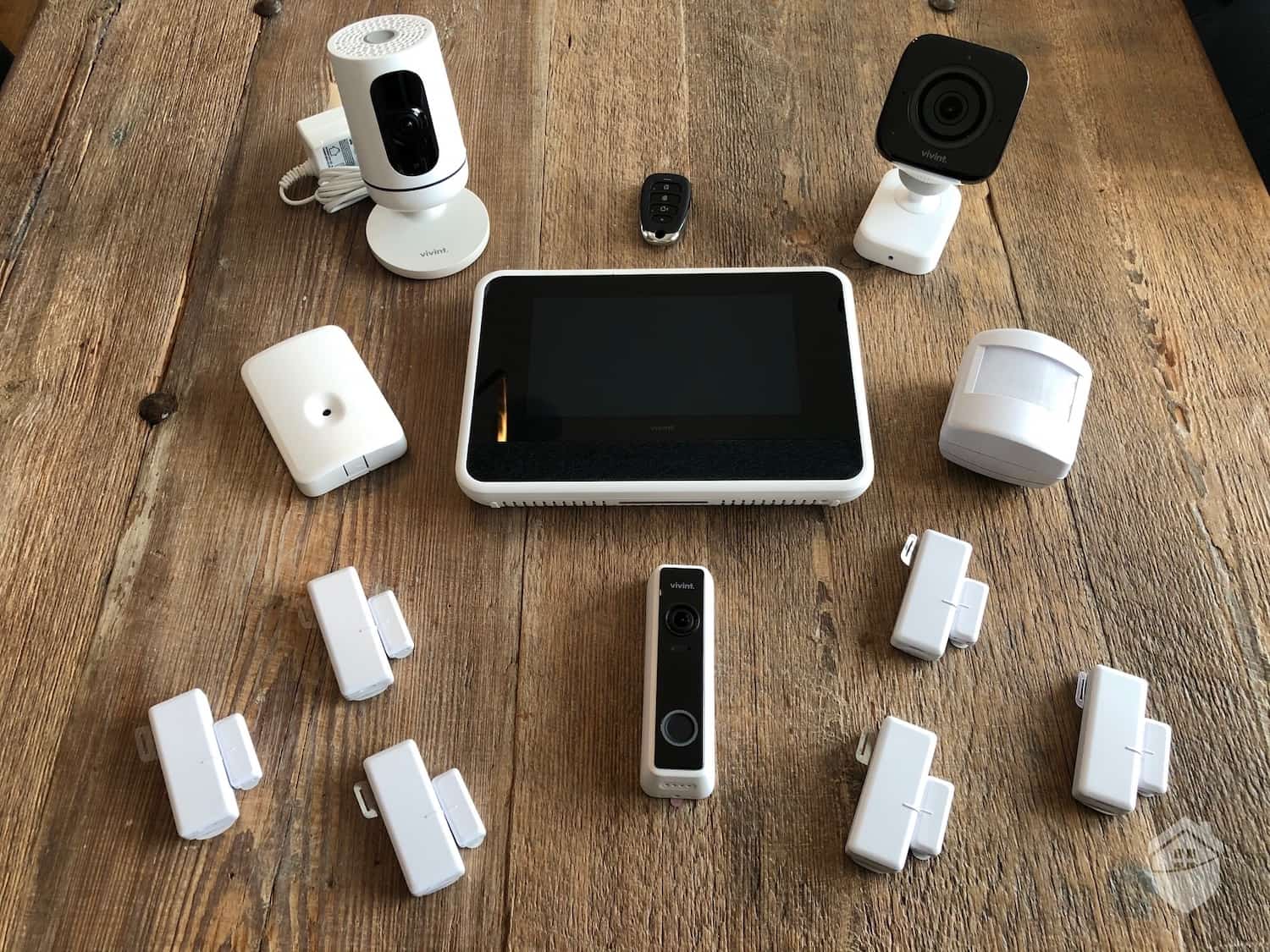
The heart of Vivint’s system is the touch screen hub. We set ours up like a CCTV monitor so we could keep track of what our dog was up to even while we were making dinner. We even used the two-way audio on the indoor camera to dissuade him from jumping on the couch. Vivint fully integrates with Google Home, making it easy to control the entire system from anywhere in our house.
Vivint’s equipment is state-of-the-art, which is why it requires professional installation.
Vivint’s indoor, outdoor, and doorbell cameras use AI to tell the difference between animals and people. That cuts down on false alarms, especially if you have a pet like we do. Plus, you get all the other standard features you’d expect in top-notch cameras, like two-way audio and 1080p HD resolution. The nice thing is that for all their sophistication, the outdoor cameras are rugged enough for most environments. It’s one of the reasons Vivint tops our list of the best outdoor security systems.
Google Functions
Like ADT, you can use Vivint and Google Home to arm your system, control lighting, change thermostat settings, and lock your doors. We liked being able to find out whether we’d remembered to lock our front door just by asking, “Hey, Google. Is the Vivint front door locked?” Even better, we liked being able to say, “Hey Google. Lock our front door,” when we found it was unlocked.
FYI: You’ve got about 30 seconds to disarm your alarm if you accidentally trip it. We got a notification immediately and a call from Vivint at the 35-second mark while we were testing it, which is the industry standard.
Installation
Since the equipment is so technologically advanced, it’s not as easy to install as the top three Vivint alternatives. But you’re better off with professional installation anyway. You can be sure that sensors and cameras will be perfectly positioned, and your friendly Vivint installer can troubleshoot your system for you. They’ll even integrate your system into Google Home.
Here’s Don, my Vivint technician, installing the Vivint Window Sensor
Pricing
All this technology costs a pretty penny. Systems can start from around $600. Add a $200 installation fee and at least $45 per month for monitoring, and the costs add up fast. On top of that, you’re locked into at least a 36-month Vivint contract. You’ll also need to talk to customer service for equipment prices, since Vivint doesn’t list them on the website.
Pro Tip: While you should watch out for upsells when speaking with Vivint’s customer service representatives, you can also use the call as an opportunity to negotiate your Vivint costs. We highly recommend you always ask them to waive the installation fee at a minimum.
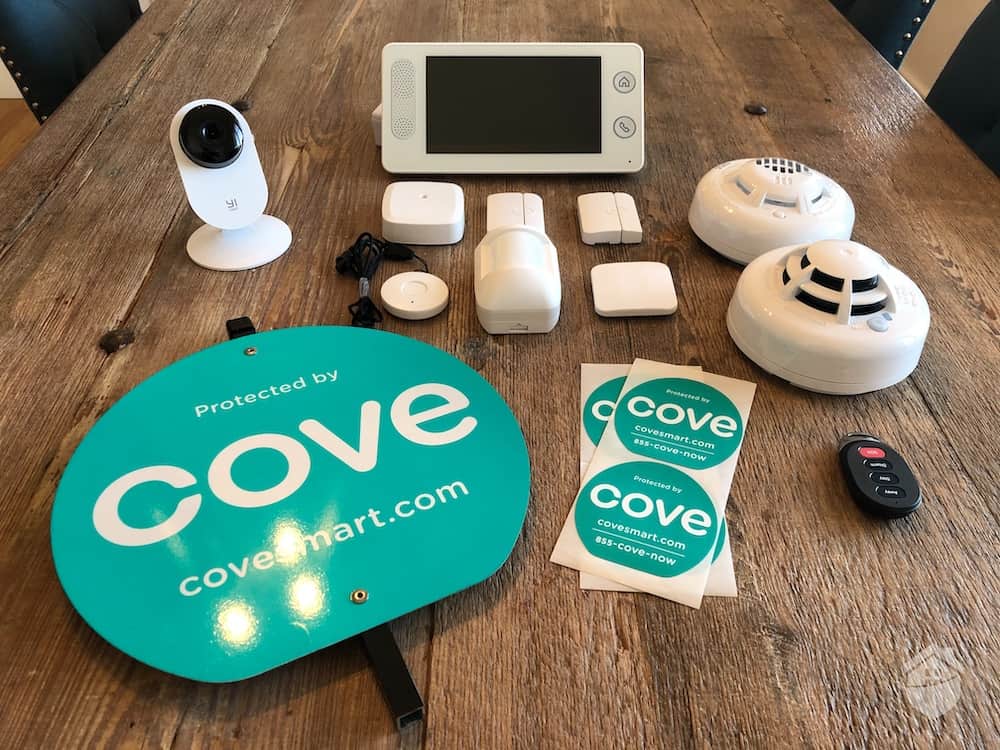
Cove has a streamlined DIY installation process that even the most tool-challenged user can handle. Even if you’re looking to integrate the system in your Google Home platform, everything is plug-and-play. To top off the user experience, excellent customer service continues long after you’ve installed your system. And one more thing, Cove has some of the best emergency response times in the industry.
Did You Know? We personally test the response times of every home security system we test. That means triggering an alarm and seeing how long it takes the monitoring service to respond. While that sometimes means the police come knocking at our door, it lets us confidently recommend security systems with the best response times in the industry.
Pros & Cons:
Pros:
Monitoring starts at $19.99 per month
Simple but functional mobile app and touchscreen controller
85 dB siren built into each Cove Hub and touchscreen keypad
Affordable equipment options
Frequently offers deals and discounts
Cons:
Security camera support is only available on the most expensive monitoring plan
Limited home automation and integrations
Doesn’t offer equipment financing
More limited equipment options than other brands
Our Experience:
Our Experience Testing Cove
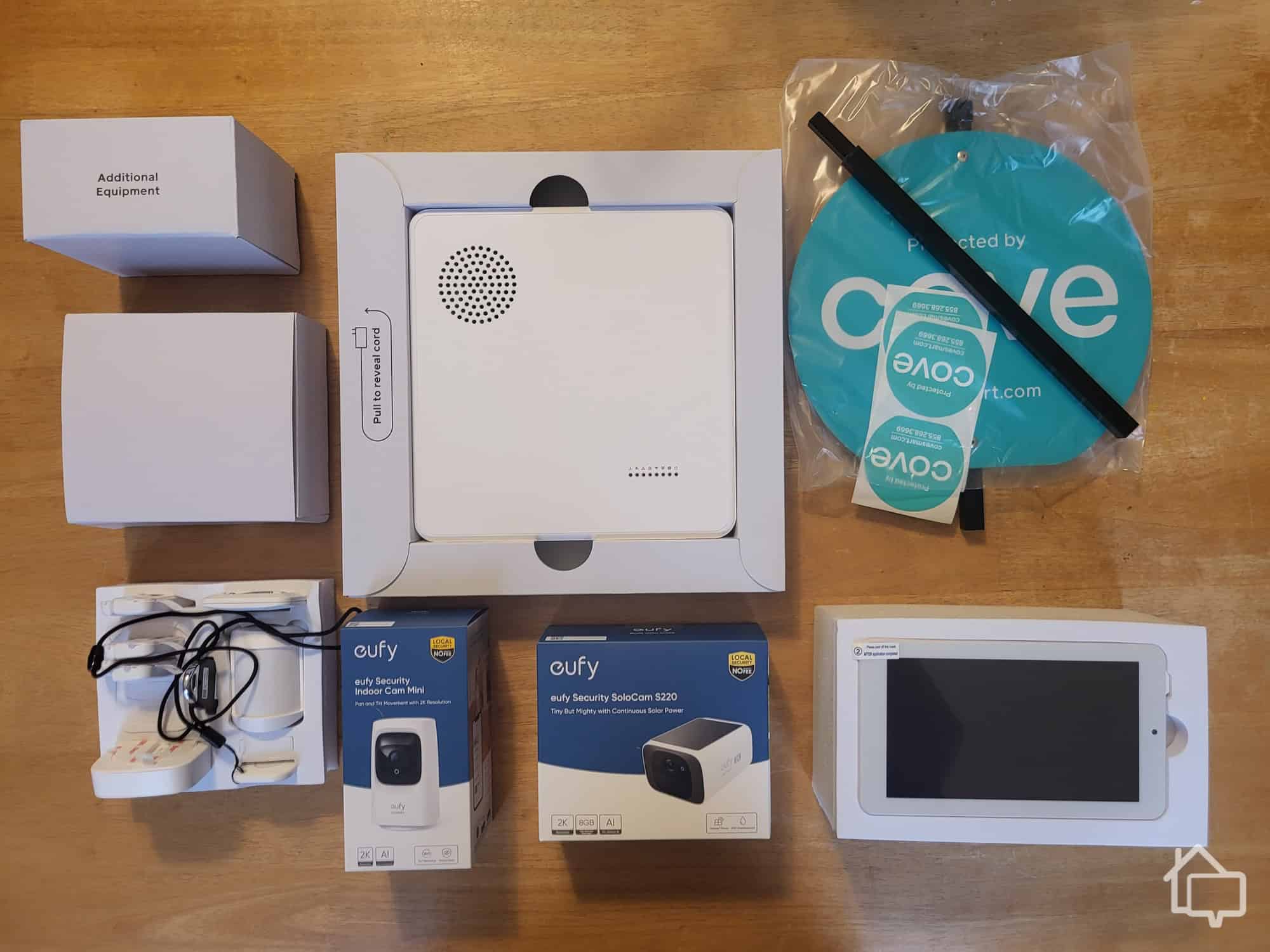
Cove’s equipment is sometimes as much as half the price of competitors. Monitoring is also reasonable, at just $29.99 per month, you get all the bells and whistles, including full Google Home integration. Plus, Cove is the first system on this list that doesn’t require a monthly contract. But like ADT, installing security cameras requires signing up for the most expensive monitoring plan.
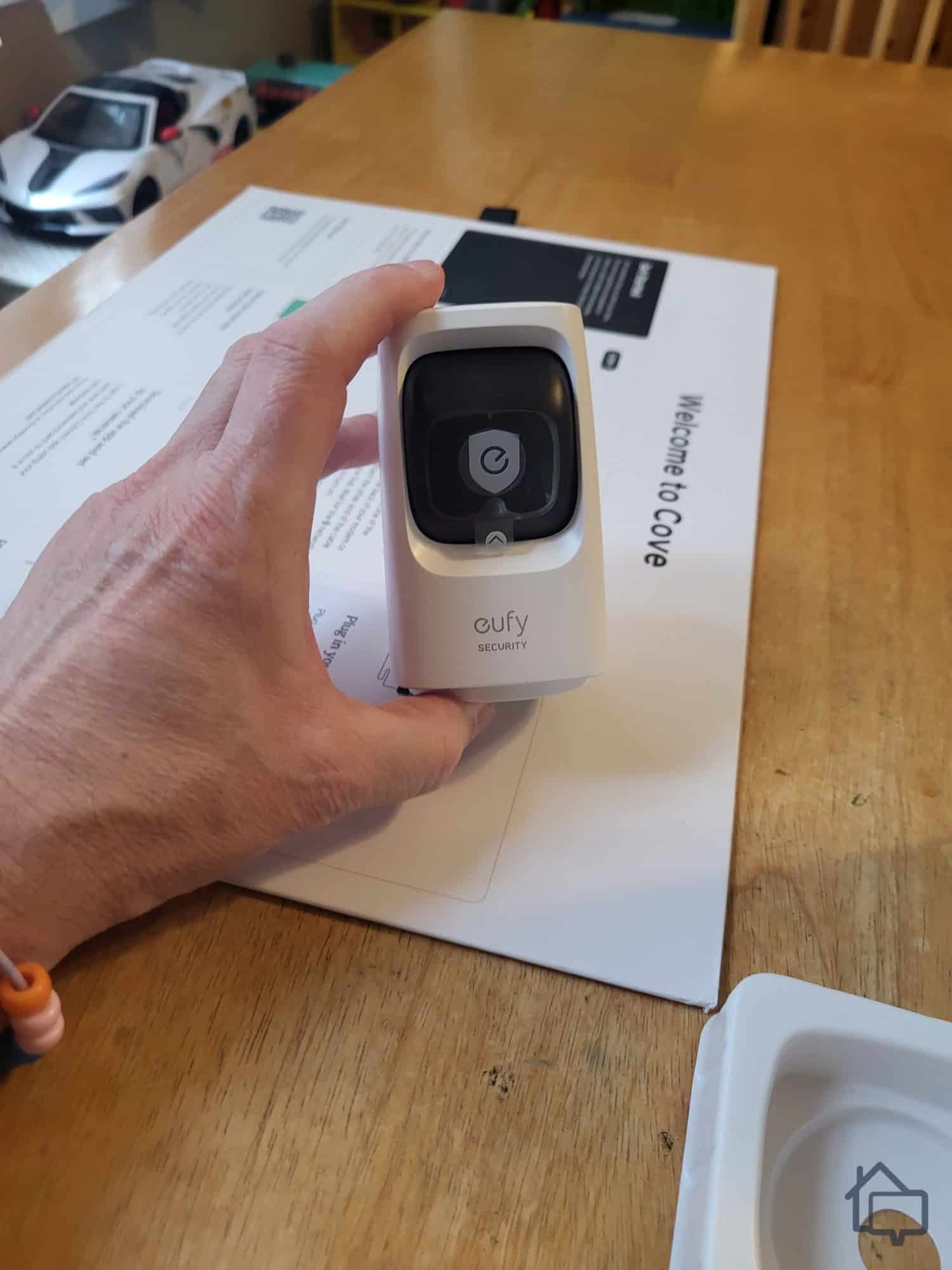
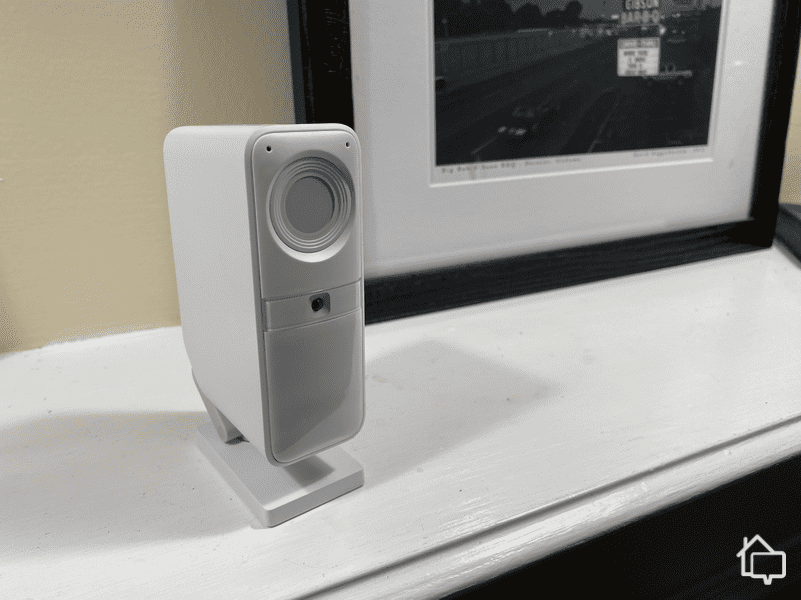
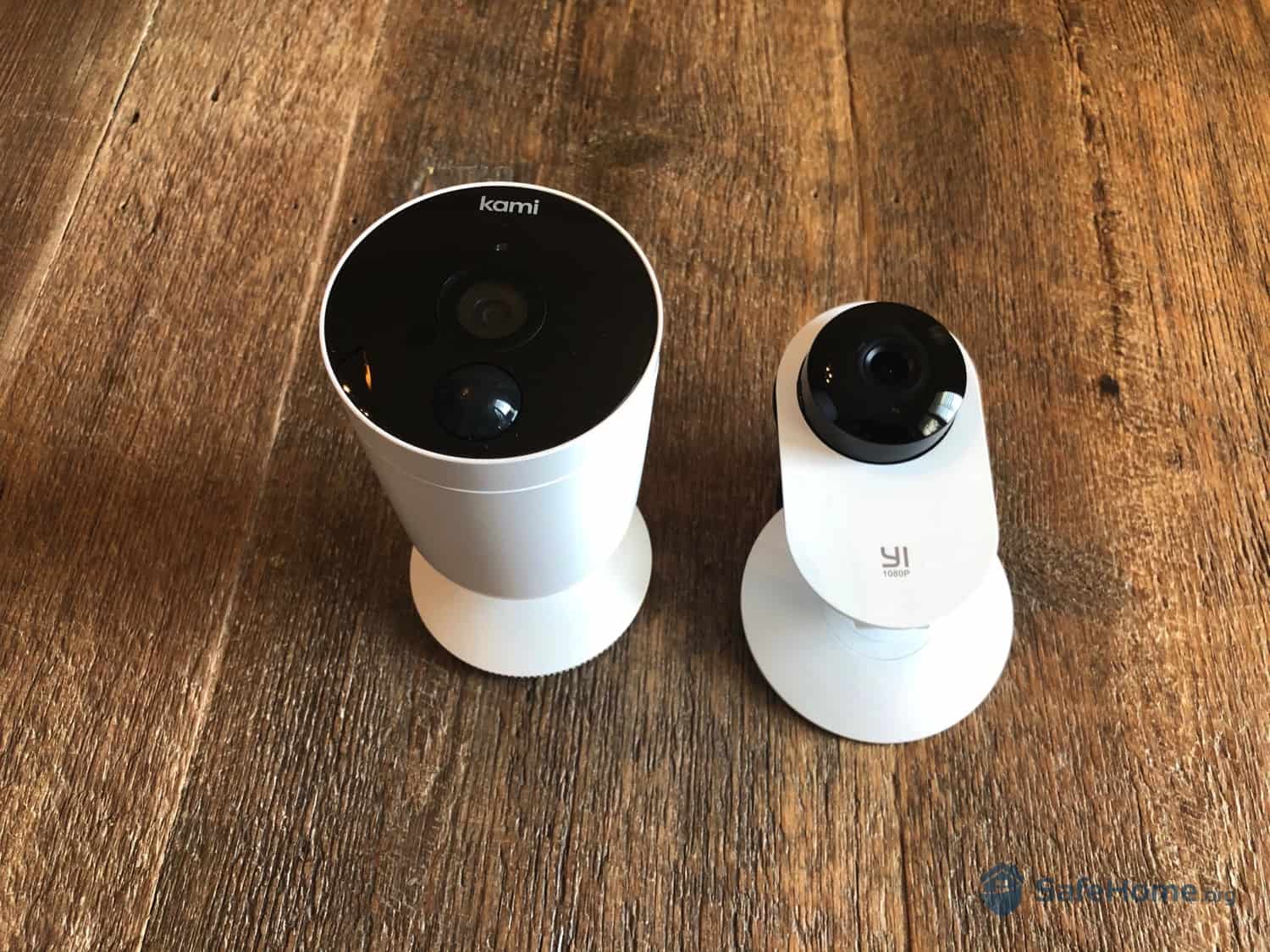
Cove’s cameras are smaller than Nest Cams, but they can pan and tilt to maximize coverage.
The first thing we noticed when reviewing Cove was how easy it is to get started. Our Cove system arrived preprogrammed, so it was ready to go out of the box. With 3M adhesives included, the whole thing took around 20 minutes. Testing the system took a little longer because we kept debating whether to mount our indoor camera on the wall or put it on an end table.
FYI: The 3M adhesives used for installing Cove’s equipment are the same type of adhesives you use when you install command strips. And it’s really that easy to install. That’s why we feature Cove in our list of the best DIY home security systems.
Cove’s equipment isn’t as high-tech as ADT or Vivint. Cove’s indoor cameras, for instance, don’t have any built-in AI. And the hub is a little clunky for our taste. But if you’re looking for an affordable home security system that still lets you work with Google Home, Cove may be the answer.
Like ADT and Vivint, Cove lets you arm and disarm your system using your voice. You can also access footage and review event history. We viewed security camera footage on our Android tablet, which has a better view than our phone. It was easier to zoom in on smaller details and scrub through footage. However, aside from voice control, there’s not much else you can do with your Cove system via Google Home.
FYI: Cove doesn’t make its own cameras; the cameras they sent us were from a brand called Eufy, which in itself works with Google Home. We suggest testing the camera integration with both the Cove app and Eufy app and see which works better for you. Here’s our Eufy review for reference.
Installation
Cove’s default is self-installation. You can get professional installation if you need it, with prices starting from $129. But we recommend saving your money. Installing your own home security system with Cove is a lot easier than you think. You let Cove know what your home setup is when you order, and all the equipment comes preprogrammed. It can take a little more time to get Google Home connected, but that has more to do with talking to Google Home than it does with anything on Cove’s end.
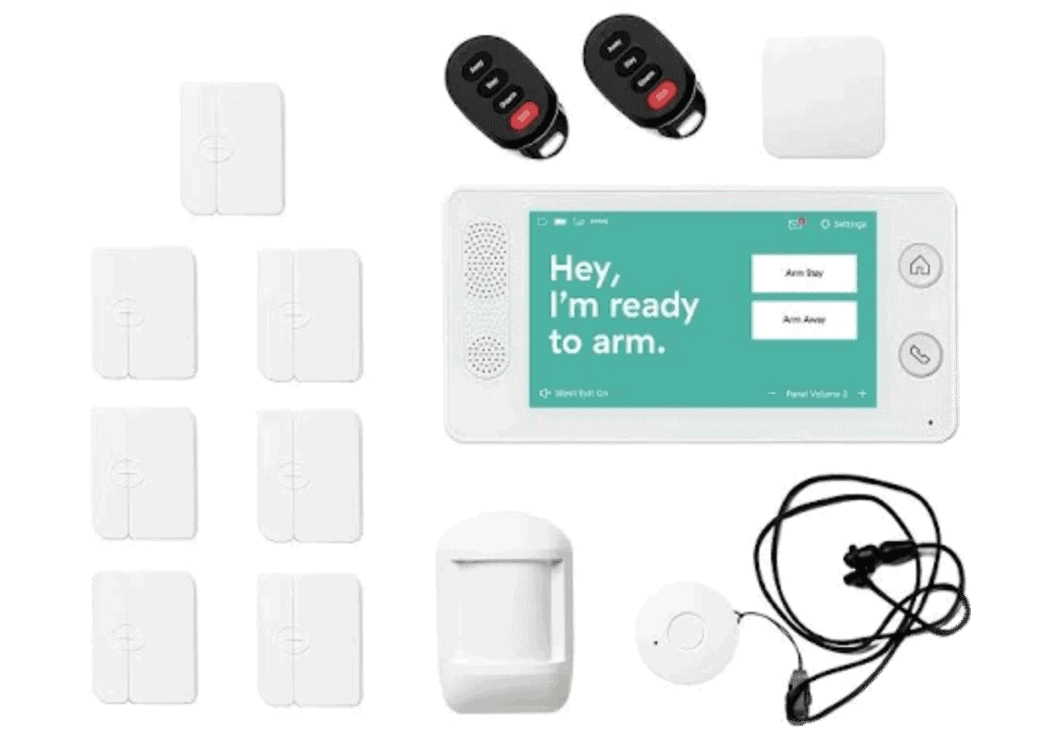
Cove’s equipment is preprogrammed, so all we had to do was decide where to put our devices.
Pricing
Cove makes it easy to order only the equipment you need. You can build a system from the ground up, or answer a questionnaire about your living situation for device recommendations. All the equipment from Cove is low-priced, sometimes as much as half of what you’d pay with other companies. Cove’s outdoor camera, for instance, costs $129.99, about $70 less than the price of SimpliSafe’s outdoor camera. Or compare Cove’s entry sensor price to Ring’s. Cove’s charges $15. A comparable entry sensor from Ring Alarm costs $20.
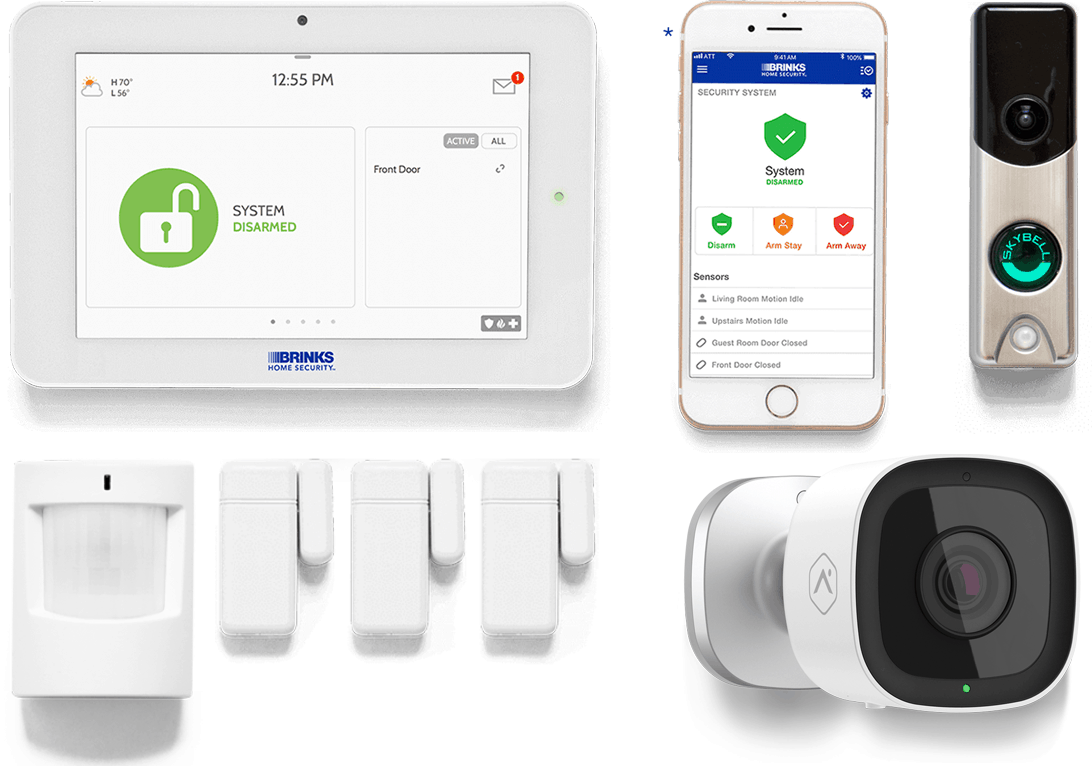
In addition to durable home security equipment, Brinks offers its own line of smart home devices, everything from light bulbs to locks. Don’t worry: Brinks also works smoothly with the Google Home platform, meaning you can connect even more smart home devices to your system.
Pros & Cons:
Pros:
Rate-lock guarantee
High-quality modern security system
Third-party smart-home integrations
Strong home automation
Alarm.com equipment
Cons:
App is new; still has bugs and kinks to iron out
Lack of pricing transparency
Requires a 36-month contract
Some components and sensors look dated
Our Experience:
Our Experience Testing Brinks
Brinks has been in business almost as long as ADT — over 100 years. But it hasn’t evolved with the times like ADT, as it still requires professional installation and a minimum 36-month professional monitoring contract.
As we mention in our Brinks review, for our money, Brinks has a couple of things going for it that ADT doesn’t. First, its equipment prices are more affordable. Second, you get all the advantages of Google Home integration with every plan. ADT requires you to invest in its most expensive plans if you want to control your system with your voice. But we will say the premium price of ADT does show in its quality of equipment and services. You also get cellular backup with every system and plan. That came in handy over the winter when we lost Wi-Fi and power for over 24 hours.
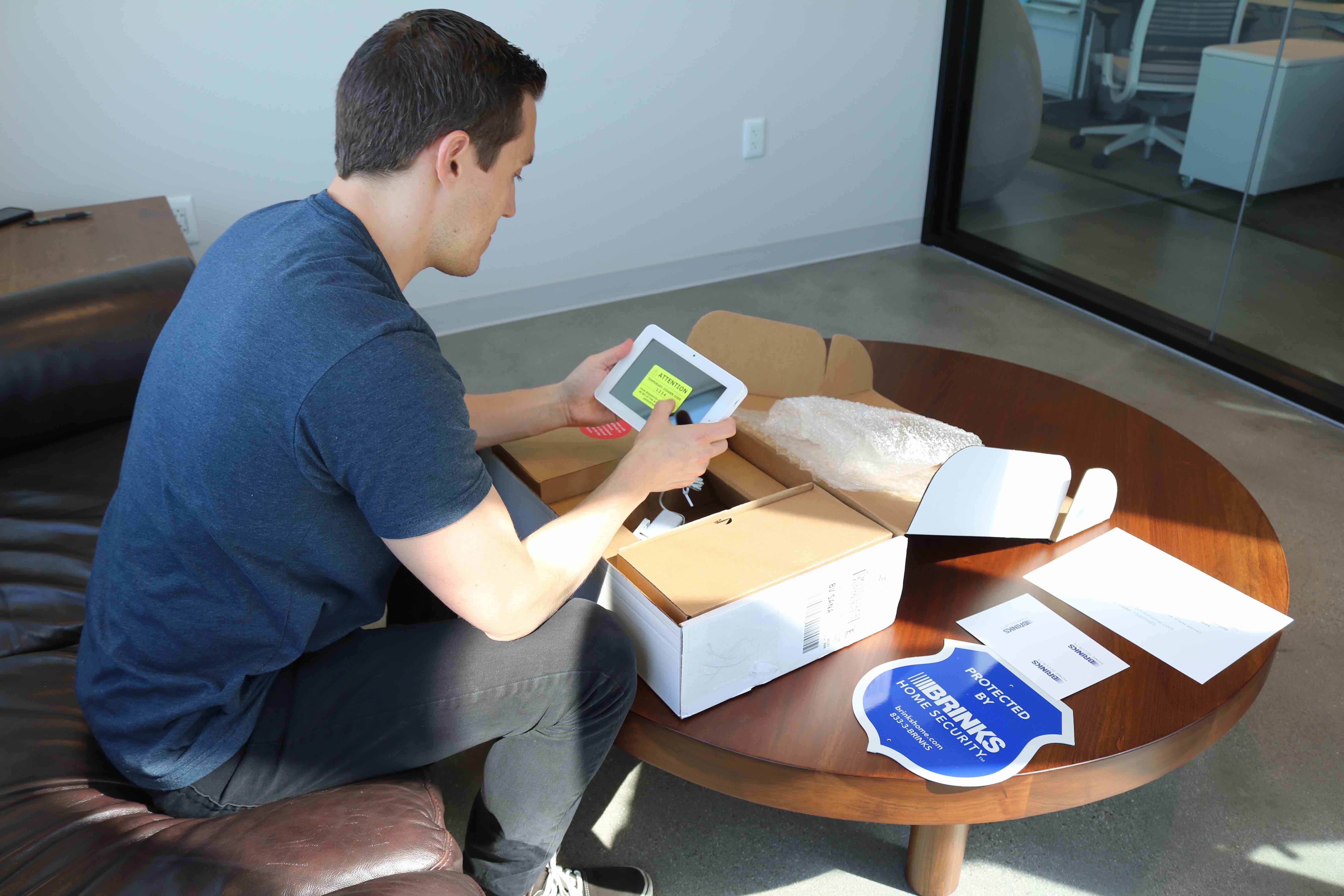
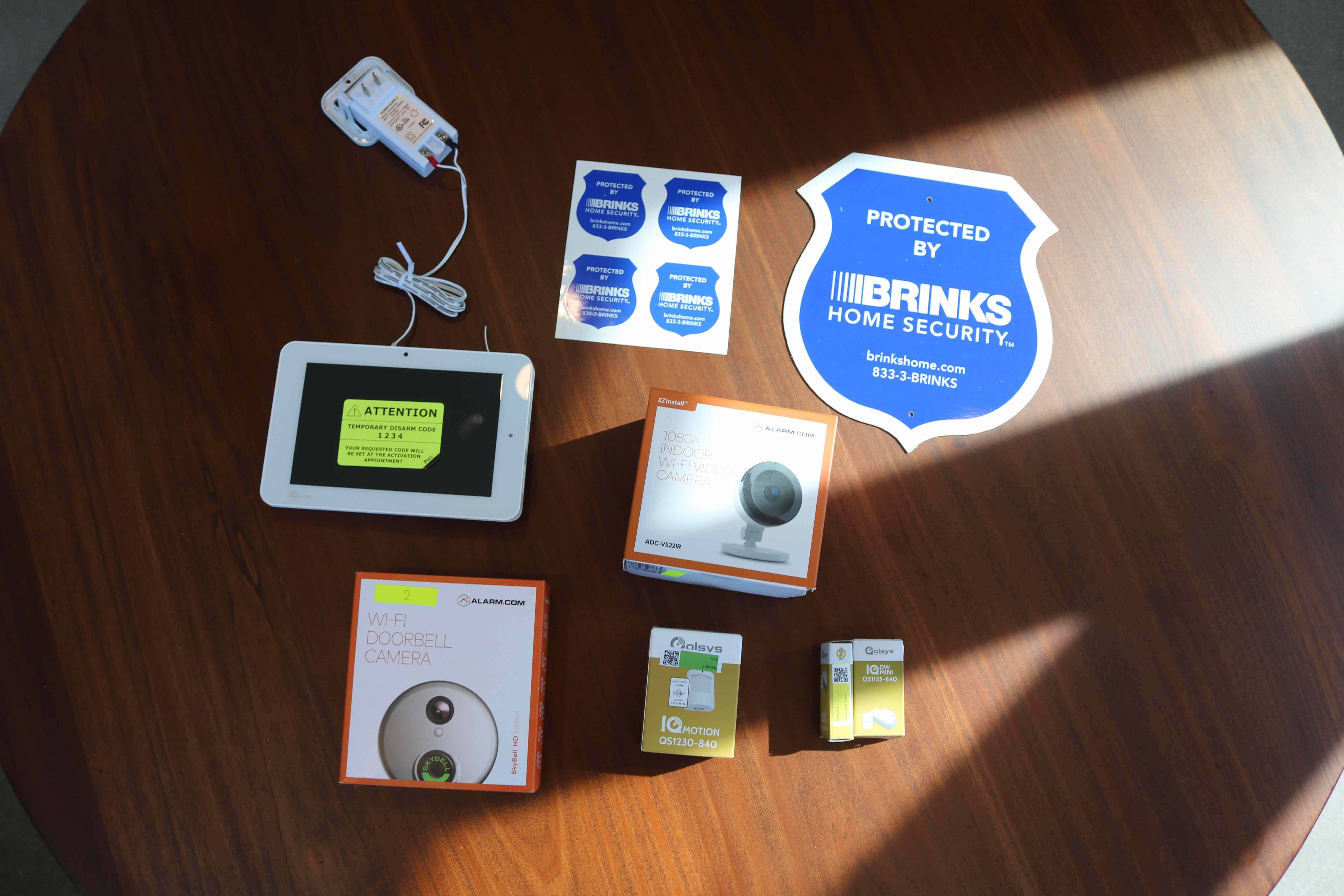
While we could unbox our Brinks equipment, we needed a professional to install it.
Pro Tip: Always check which cellular provider your security system company uses. Then, check the official FCC cellular coverage map to make sure you can actually use the cellular backup offered by your security system.
If it comes with your Brinks home security system package, it works with Google Home. We could control all our components with voice commands and create routines so that multiple devices work together. One schedule we set up armed the system automatically after locking the doors in the morning. And there are plenty of other routines you can create to strengthen your home safety practices.
Installation
Brinks is another one of those companies that requires professional installation. As we’ve mentioned with other companies, that’s not necessarily a bad thing, especially if you’re looking to connect your system to Google Home. Our installation tech showed up early, was incredibly friendly, and answered all our questions. We should point out that Brinks doesn’t have quite enough techs to handle its volume, so our appointment was three days out from when we ordered.
Some of the Brinks equipment looks dated compared to Google Nest and other company’s products.
Pricing
Just make sure you really like Brinks before you invest. Its monitoring fees aren’t exactly the cheapest on the market, ranging from $40 to $50 per month depending on the system you purchase. Plus, as we mentioned, you’ll need to sign a 36-month contract.
But at least Brinks systems are personalized. The only issue is that you’ll have to speak with a sales representative to organize a system. That can mean fighting the hard sell. Brinks’ cheapest packages are around $360, which is at the low end of the market. The nice thing is that even that basic package comes with full Google Home functionality.
Pro Tip: Brinks offers no-interest equipment financing through GreenSky if you decide to splurge on a home security system. We bought a lot of devices and were able to spread out the costs of our setup over 36 months.
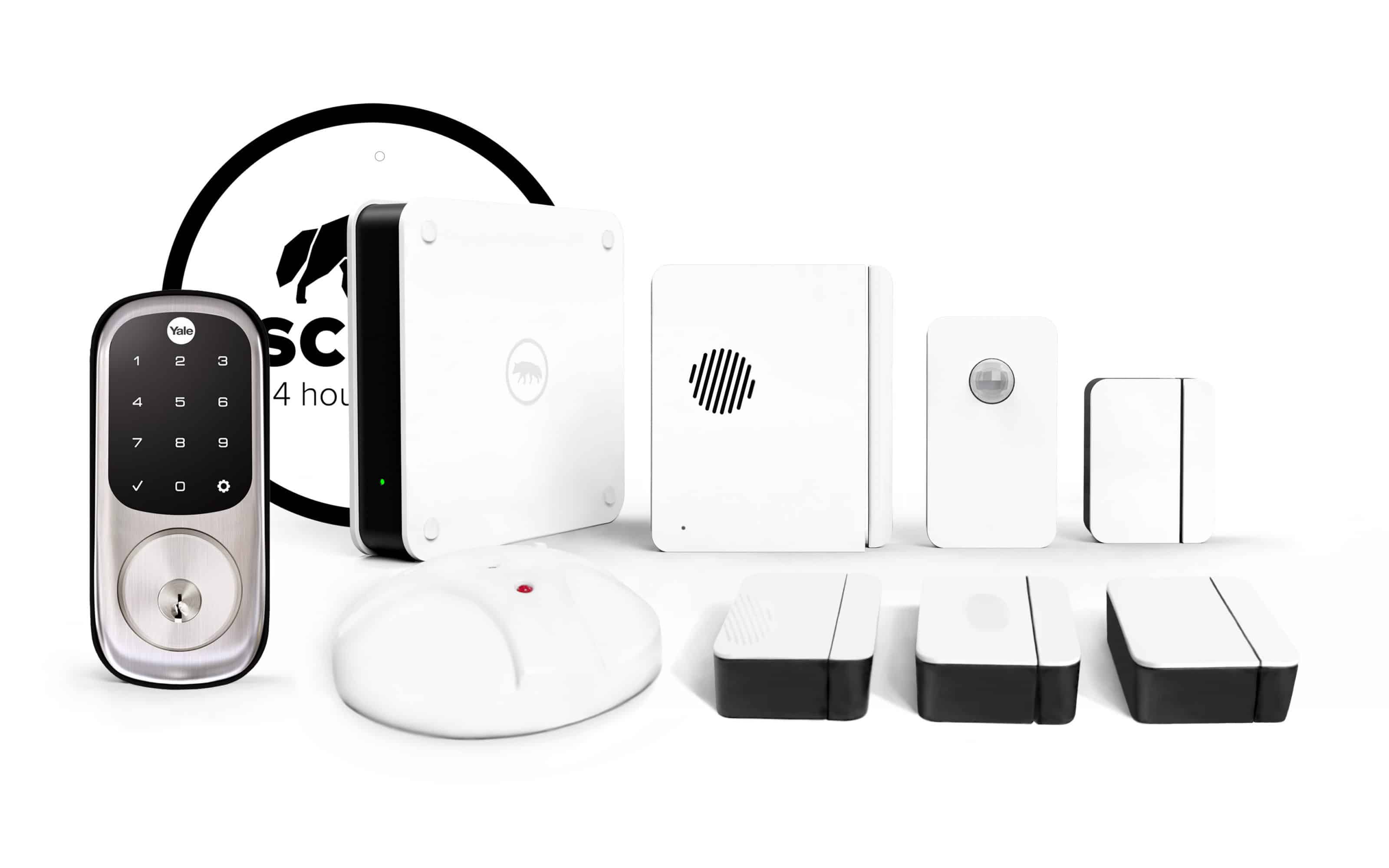
Not only does Scout work with Google Home, but it also works with IFTTT. This lets you design all sorts of custom routines for connecting your smart devices. Plus, with a self-monitoring option, Scout lets you save money on monthly monitoring fees, something you won’t get with any other system on this list.
Pros & Cons:
Pros:
Low Monthly Rates
DIY Installation
No Long-Term Contracts
Wireless Equipment
Wi-Fi Communication w/ 4G Cell Backup
Mobile Control
Compatible with Smart Home Devices
Compatible with Environmental Sensors
60-Day Return Policy
Cons:
No Professional Installation
Up-Front Equipment Expense
Narrow Range of Scout Products
Scout Products On Backorder
Backup Power Just 12 Hours
Our Experience:
Our Experience Testing Scout
Scout offers self-monitoring, but you’ll pay $10 per month plus $3 per camera for video storage. For most users, the $20/month professional monitoring plan is a better value. That said, having the self-monitoring option is nice if you want to save money.
With either plan, Scout provides full Google integration and cellular backup. Thanks to IFTTT support, we connected our system to other devices—like triggering our TV to turn on when motion is detected—giving the illusion that someone’s home, even when we’re away.
Did You Know? Not every IFTTT integration is equal. IFTTT lets supported brands enable different triggers for controlling the device. The more triggers, the more capabilities the device has. In our guide to the best IFTTT-compatible home security systems, we dive deep into the capabilities of every system we test.
Be warned: This isn’t a Vivint-style, sophisticated system. You won’t find any AI features with Scout. The company doesn’t even offer a dedicated outdoor camera, let alone a high-quality outdoor camera. But if you’re looking for affordable security with some nifty smart integration, Scout’s a pretty solid option.
While Scout systems connect to Google Home, we’re more impressed by its compatibility with other smart platforms and devices, like Yale, Hue, Z-Wave, and IFTTT. It used to integrate with Nest devices, but the partnership ended in 2019.
Google Home functionality is limited to voice controls. We could arm and disarm the system as well as get status updates, which is similar to Cove and Brinks.
Installation
Scout isn’t quite as plug-and-play as Cove. Most sensors are peel-and-stick, which was easy, but the system isn’t preprogrammed, so connecting everything to the hub took about 30 minutes. We also ran into a minor hiccup with the indoor camera—it wouldn’t power on until we twisted the lens slightly. Small issue, but it added a bit of extra setup time.
Pro Tip: It was easier to link each device to the mobile app one by one. We learned this the hard way after accidentally entering the wrong password, which reset the app and forced us to start the entire process from scratch.
Pricing
Scout isn’t the cheapest option compared to Cove or SimpliSafe, but its equipment is reasonably priced. Entry sensors run about $20—comparable to Ring—though premade packages can offer additional savings.
Scout also frequently runs promotions, like giving the basic package free when you commit to a year of professional monitoring. At just $20 per month, that’s a solid value. After the first year, you can switch to self-monitoring for $10 per month, which includes push alerts and live camera monitoring.
Product Specs:
Monitoring Options
DIY or professional
Installation
DIY
Smart Platform Integration
Alexa and Google Home
Equipment Cost
From $120
Monthly Monitoring Cost
From $9.99
Contract Length
Monthly
Does Google Offer a Security System?
You might be wondering—why not just buy a Google security system instead of integrating a third-party option? The short answer: Google no longer offers a complete solution.
In April 2024, Google discontinued Nest Secure, and its sensors and Nest Tags no longer work with the app. You can still use products like the Nest Doorbell and Nest Cam, which we’ve tested.
For a closer replacement, Google partnered with ADT to create ADT Plus, released in July 2024. It mirrors many Nest Secure features, including keypad and sensor design, and integrates seamlessly with Nest smart speakers, displays, Cams, and the battery-powered Nest Doorbell. Right now, ADT Plus is the closest thing to a full Google Home security system.
Expert Examined
From Anthony Travaglia, Retired Police Officer, Home Security Expert
“Monitoring companies can notify police within seconds of a triggered alarm. This is especially helpful when you aren’t home or you miss an alert on your phone. Getting police to the scene as quickly as possible gives them the best chance of catching the intruders in the act or in the area. Arriving officers are always on the lookout for suspicious persons in the area, not just at the scene. When officers notice persons in the area that look nervous, dressed suspiciously, or acting strangely, they will conduct a reasonable suspicion stop to try and find out if the person was involved in the crime. Time is of the essence when it comes to crimes in progress and a good monitoring company can help get law enforcement there asap!” Learn more about Anthony
Google Voice Commands for Security Systems
All the best Google Home security systems have a voice control feature. That’s usually the main highlight. If you’re sitting in the living room with a 3% phone battery, you can use your voice to operate your home security system. Here are some of the commands to shout out after saying “Hey Google”:
Arm the security system
Disarm the security system
Set the alarm to home mode
Set the alarm to away mode
Turn on the indoor lights
Turn on the outdoor lights
Lock the doors
Show me a live feed from the cameras
What was the last notification for my security system?
What is the status of the security system?
Google Home and Security
You’ve got Google Home. You’ve got a home security system. What differences does it make whether they’re connected to one another? Plenty. Here’s the extra functionality you get by connecting Google Home to your security system:
Google Home is listening: At a very basic level, a Google Home device can double as a home security device because it records what’s said in your home. You’ll want to mute that when you’re home with your family, but it’s nice to have ears in your home when you’re away.
Hands-free options: You might not think it matters that you can use your voice to operate your home security system. The fact is that there are times when your hands just aren’t free to push a button on a hub or a cell phone.
Connected devices: Connecting your home security system to Google Home lets you connect it to other devices. So, for instance, you can set your television to come on any time your system detects someone poking around your property.
Convenience: While it doesn’t directly connect to home security, if your system is easier to use, you’re more likely to use it. And that makes your home safer.
You not only gain this functionality, but you also avoid becoming another crime statistic by strengthening your home security defenses. Some of the alarming numbers are:
Over 35 percent of Americans had a package stolen in the past year.1
83 percent of burglars look for an alarm before attempting to break in, and 60 percent will try another property if they spot a security system.2
Our research found homes without security systems are 300 percent more likely to experience a burglary.
Rob Gabrielehttps://www.safehome.org/author/rob-gabriele/https://www.safehome.org/author/rob-gabriele/Best Home Security Systems That Work With Google HomeADT’s partnership with Nest products is why it’s our top pick for security systems compatible with Google Home.
Rob Gabriele
Conclusion
Connecting your security system to Google Home makes managing your home effortless. A simple voice command—“Hey Google, arm my system”—can secure your entire house. ADT takes this further with Nest integration, offering advanced features like Trusted Neighbor for automated alerts and smarter home security.
This convenience does come at a premium, but reliable alternatives exist. Vivint, Cove, Brinks, and Scout also work with Google Home, letting you control devices with voice commands and integrate them into your smart ecosystem, even if their features aren’t quite as advanced as ADT’s.
Not anymore. Google has partnered with ADT to sell its Nest line of products. Nest Aware subscriptions are still available for Nest Cams. However, we recommend signing up with ADT or choosing a security system that integrates with Google products.
Yes, SimpliSafe works with Google Home. But it only lets you arm your security system, which limits its functionality a lot. SimpliSafe says the limited functionality is for security purposes, but we’re a bit skeptical.
Yes. As long as your home security system is Google Home compatible, you can control it with your voice. Different systems offer different levels of compatibility. That means you can’t use every voice command with every system, so make sure to check your system’s compatible commands.
The best home security system for working with Google Home is ADT. It offers top-tier equipment from Google Nest, DIY and professional installation, and 24/7 monitoring.
Voice commands differ depending on how well a home security system integrates with Google Home. It’s also possible to create and store your own individual voice commands. Some of the most common and useful Google Home security commands include the following:
As a home security expert and Managing Editor for SafeHome.org, Rob Gabriele has written and edited over 1,000 articles related to home security. His expertise is in smart home protection with thousands of hours of testing and research under his belt. Formerly a reporter and producer for the USAToday network, Rob has been a writer and editor for over 10 years. He holds a Master’s of Science with an emphasis on writing from the University of Montana, and he currently lives in Indianapolis, IN.