SafeHome.org may receive compensation from some providers listed on this page. Learn More
We may receive compensation from some providers listed on this page. Learn More
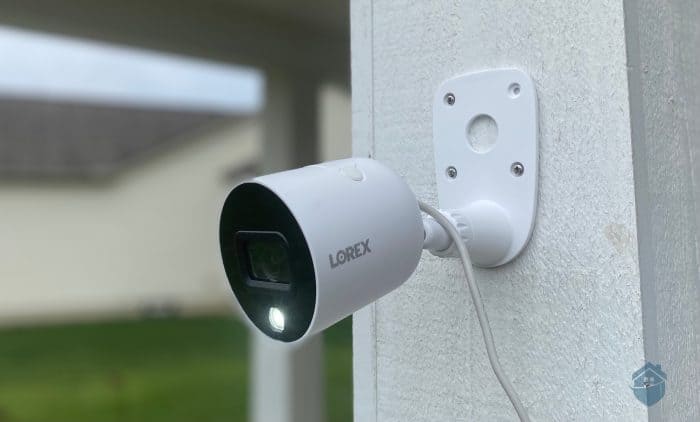
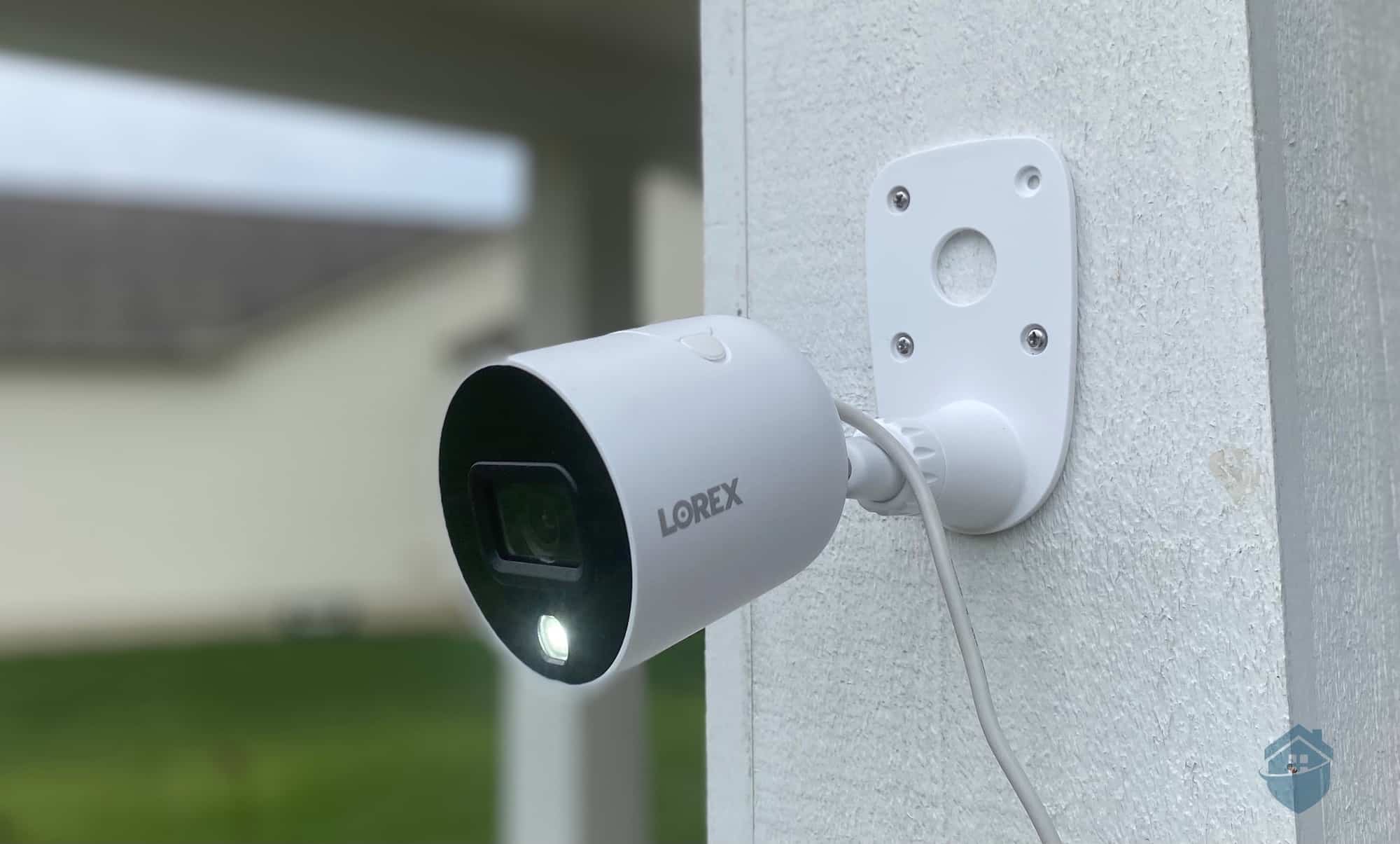
Lorex has a camera for every budget and security requirement. Their top-of-the-line 4K surveillance cameras now come with state-of-the-art facial recognition — as long as you have a local recording device.
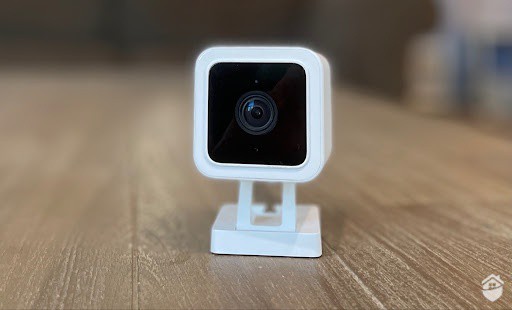
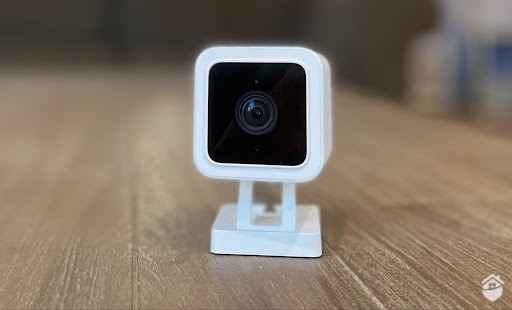
The Wyze Cam v3 is one of the cheapest top models we’ve tested. Now, with advanced face recognition and professional monitoring, it’s a true powerhouse.
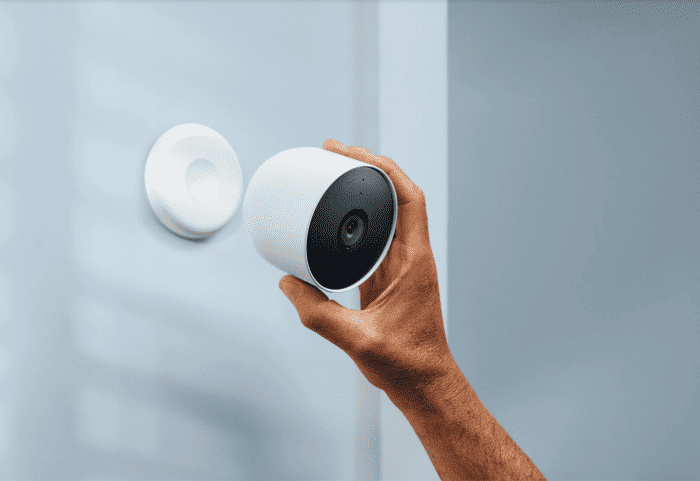
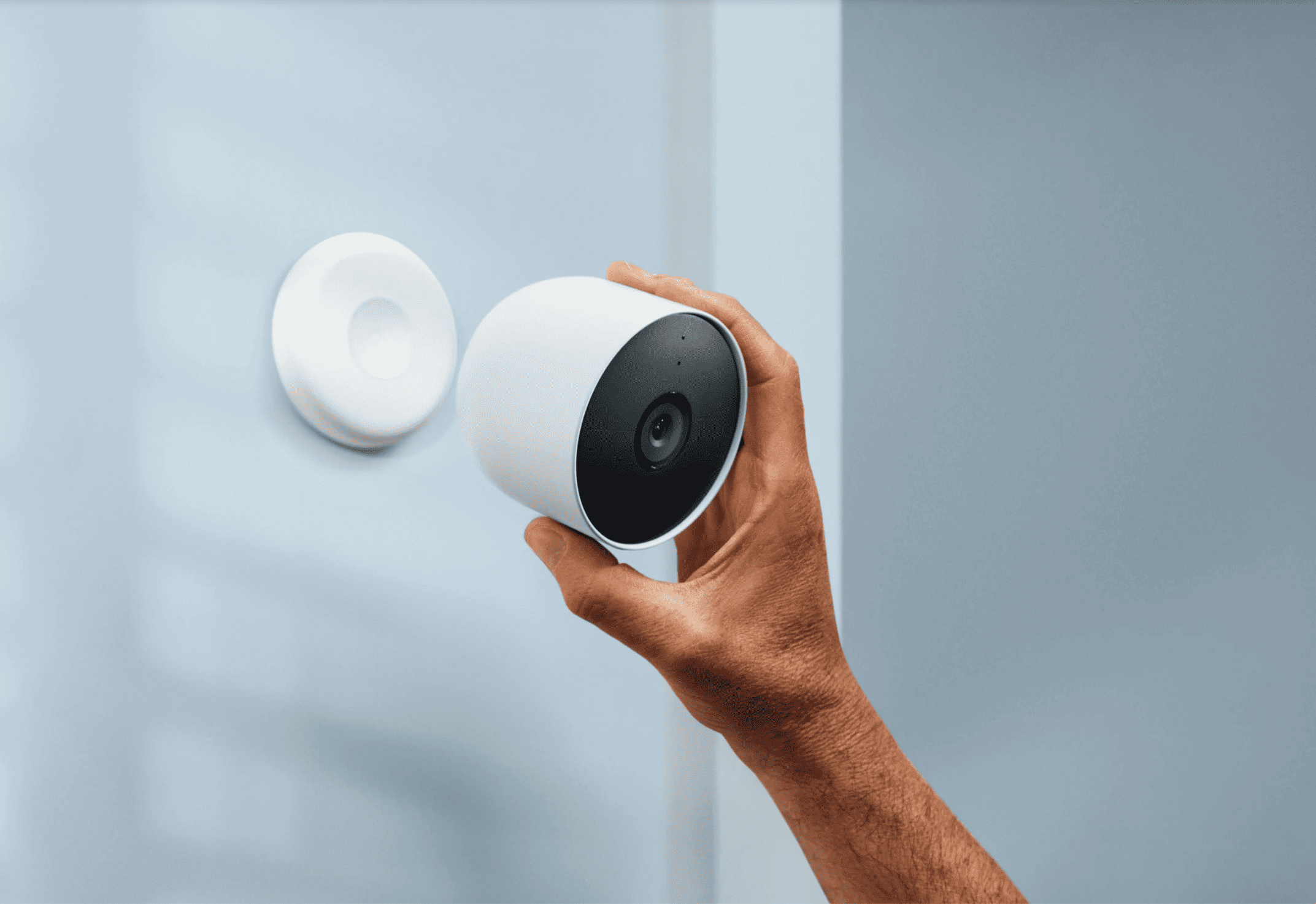
The Nest Cam is our definition of hassle-free smart home security. It’s also one of the first DIY cameras to offer AI-powered facial recognition backed by Google.
Editor’s Note: Facial recognition cameras can be on the pricier side, and it’s not always worth the money. We highly recommend vetting a camera based on the overall performance of its home security system. Check out our best home security systems page to learn more.
Once upon a time, a home security system was an alarm and a sensor. A thief tripped the alarm and wham! The alarm went off and he skedaddled. The idea worked, but without affordable hi-res security cameras, we were more or less blind.
All of that changed when DIY home security systems hit the scene. Brands like SimpliSafe, Lorex, and Ring introduced cameras that could pick up a ketchup stain from 25 feet away in the dark. Today, with the right facial recognition software under the hood, the very best home security cameras have gone one step further. Forget ketchup stains — these heavy hitters can tell you whether it’s the UPS driver or a stranger at your door.
While face recognition is a genuine leap forward in smart home security, most cameras don’t offer the feature yet — and even fewer get it right. Below are our picks for the top home security cameras with facial recognition right now. Once you've browsed the list, scroll down for a breakdown of the key factors to consider before buying an AI-equipped surveillance camera.
Early on, Lorex decided to focus exclusively on security cameras. The decision has paid off. Today, Lorex’s arsenal of prowler-proof security cameras is pretty much unbeatable. But cameras are as far as Lorex goes.
You can’t build a smart ecosystem with Lorex, for example, like you can with Wyze or Nest (see below). You won’t get any professional monitoring either, like you do with ADT or Vivint. But if it’s reasonably-priced, pro-quality surveillance equipment you’re looking for, you can’t go wrong with Lorex.
In terms of facial recognition, Lorex steals the show with its precision. The Lorex 4K Outdoor Camera performed very well in our hands-on tests, comfortably IDing faces from the sidewalk, day or night. But there are a few technical idiosyncrasies to consider.
One, Lorex has some road to cover in the user-friendliness department. Configuring the face recognition feature is a multi-step process that, on the desktop version, might alienate non-technical users. Two, we found that face recognition only works if you’ve got a digital video recorder (DVR) or a network video recorder (NVR). And, weirdly, you’ve got to disable package and vehicle detection to set up face recognition with Lorex.
Is any of that a dealbreaker? Not in my book. Just be forewarned that if you want the world’s most sophisticated household camera, you’re going to have to get a little technical. If that’s not for you, don’t worry, we’ve got another option for you.
| Connectivity | Wi-Fi, Ethernet, or PoE |
|---|---|
| Power | Wired, battery, or PoE |
| Field of View | Up to 180° |
| Resolution | Up to 4K |
| Storage | Free local, optional cloud |
| Smart Platform Compatibility | Alexa and Google Home |
The folks at Wyze had a genius idea. Build a powerful, cheap, user-friendly camera that could basically double as a whole home security system. Hats off to Wyze — they pretty much succeeded. While we appreciate a heavy-duty, professionally-installed security system like ADT (see below), Wyze’s latest home security cameras are pretty much one-man security shows that now include their new AI-driven face recognition feature, Friendly Faces.
Friendly Faces is basically a library of faces your Wyze camera has been trained to recognize. It doesn’t happen automatically. Friends, family, and anyone else you want to invite into your circle of trust have to stand within six feet of your Wyze Cam so it can catalog their image. Once it does that, you tag the face with a name. The next time they show up at your door, you’ll get a notification: “Connie’s here.”
Before you reach for your credit card, there are two things you should know. One, if you live in Illinois, Texas, or the city of Portland, sorry, but your local surveillance laws don’t allow Friendly Faces.
Also, enabling Friendly Faces isn’t free. You need to subscribe to Wyze’s Cam Unlimited plan, which costs $9.99 per month (or $99.99 per year) for unlimited cameras. It’s one of the more affordable cloud storage and processing plans on the market. Check out our complete Wyze camera review for the details.
| Connectivity | Wi-fi |
|---|---|
| Power | Wired |
| Field of View | Up to 110° |
| Resolution | Up to 1080p |
| Storage | Cloud, local |
| Smart Platform Compatibility | Alexa and Google Home |
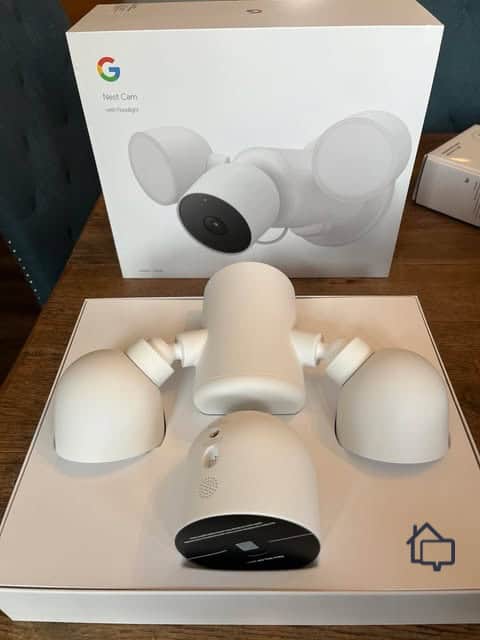
Google’s big advantage in the facial recognition race — besides a solar-system-sized R&D budget — is how easy their products are to use and connect to each other. There is simply no user experience around that can match the Nest in overall ease of use.
However, the stylish Nest Cam, which comes in plug-in and battery models, is no budget home security option. The entry-level plug-in Nest Cam wired costs a hair under 100 bucks. Battery-powered models go for $179.99.
On the other hand, video quality is pretty good for the Nest Cam’s kind of wimpy 1080p video resolution. If you invest in a Google Nest Hub, the Nest Cam fits right in, becoming the security arm of your Google smart home ecosystem.
The catch is that facial recognition requires a Google Home Premium plan — essentially a cloud storage plan that enables AI features as well. The Standard plan costs $10 per month (or $100 per year) for all of your Google devices. For extended event history and additional perks, the Advanced plan costs $20 per month or $200 per year. Neither tier includes professional monitoring, but for most users the base plan hits a solid sweet spot between features and cost.
| Connectivity | Wi-fi |
|---|---|
| Power | Wired |
| Field of View | Up to 130° |
| Resolution | 1080p/2K |
| Storage | Cloud |
| Smart Platform Compatibility | Google Home and Amazon Alexa |
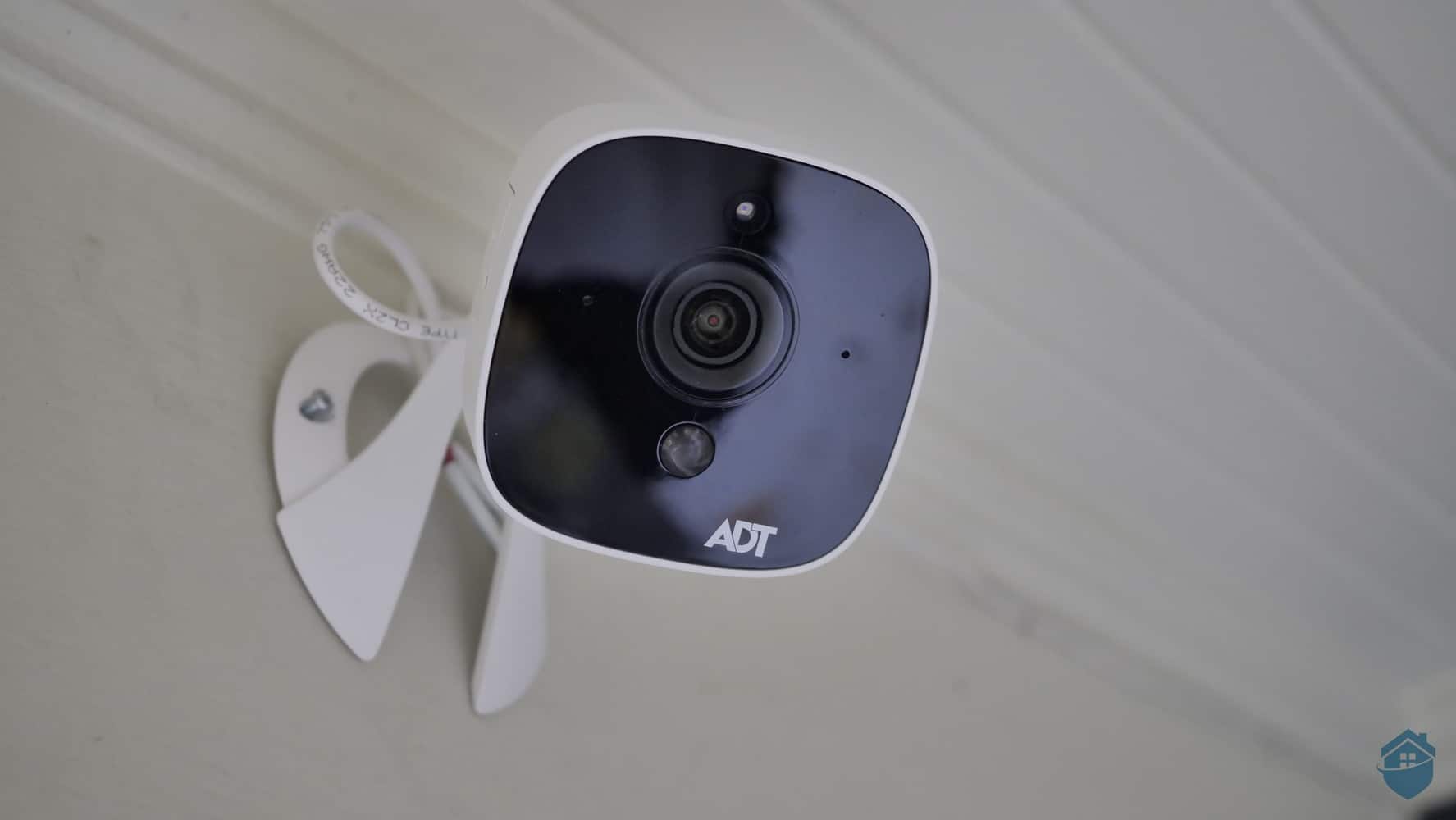
With all the talk of DIY home security systems these days, it’s easy to forget that traditional, hardwired security systems are still around. But they are, and ADT security systems are still king of the hill.
And, actually, ADT has read the writing on the wall. They now sell their own line of DIY home security equipment — ADT Self Setup. In a similar vein, ADT has also teamed up with Google so homeowners can start integrating smart products into their ADT-secured homes.
In other words, ADT cameras don’t support face recognition yet, but you can integrate Google’s Nest Cams into your ADT system, and control them with the ADT app. From time to time, ADT will through in a free Nest Cam or Nest Doorbell, valued at $99 and up. Here are ADT’s latest deals. If you’re considering a hardwired security system for your home, take a look at our complete ADT security review.
How did Google’s new “familiar faces” feature perform in our tests? Pretty well. After a “get to know you period” where the Nest Cam stumbled a few times — it didn’t know what to do with hoodies — it was smooth sailing. My front door Nest Cam told me (via alert) who had entered my home. Anyone that wasn’t supposed to be there was an “unfamiliar face.” (Sorry, Bob from next-door). Just be prepared, when you start using this feature, for a little recording downtime in between back-to-back events. The Nest is notorious for this.
The indoor/outdoor battery-powered Nest also has pet, package, and vehicle detection, which worked well in my tests. So did the Nest’s Activity Zones feature, which segmented the Nest Cam’s field of view (FOV) into security-worthy areas and areas to ignore. Street traffic is a good example of the latter. I didn’t want my Nest to record it, and drain my battery with a non-stop torrent of alerts in the process. I didn’t have to pay for either of those features, by the way, but to unlock familiar faces (above) I did — $10 per month for a Google Home Premium subscription.
The great news here is that ADT waives this fee for its customers, so in addition to face recognition, you get 30 days of cloud storage — or 60 with a Google Home Premium Advanced plan, but you’d need to pay for that.
| Connectivity | Wi-Fi |
|---|---|
| Power | Wired and battery |
| Field of View | Up to 135º |
| Resolution | 1080p |
| Storage | Limited local, cloud included |
| Smart Platform Compatibility | Alexa and Google Home |
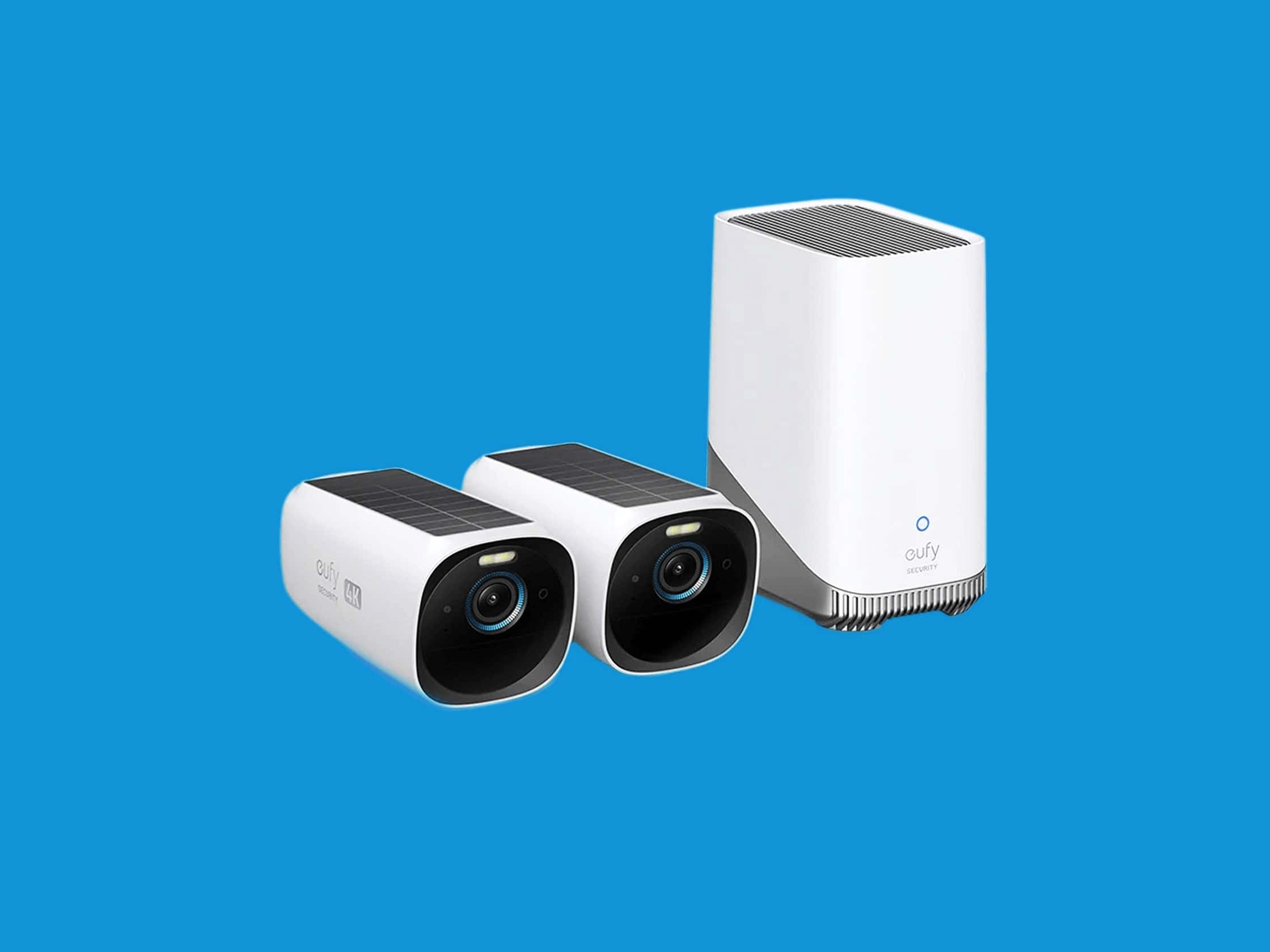
You may not know eufy yet. They used to sell robovacs and have only recently moved into home security. But based on what we’ve seen, in another year or two, their flagship camera, the eufyCam, will be a household name.
As things stand now, our experience with the eufyCam left a little to be desired. To get our hands on their latest-gen camera, the eufyCam 3, Eufy bumped us up into a higher price bracket (over $600 for two cameras and a hub). Connectivity was limited, solar power wasn’t an option, and Eufy didn’t have any monitoring or cloud storage plans.
That said, eufy has made a serious commitment to two things homeowners care deeply about — video quality and smart features like face recognition. The eufyCam 3’s 4K video is genuinely impressive, a major step up from the sometimes grainy eufyCam 2. And eufy’s proprietary face recognition tech, BionicMind™, while still maturing, performed reliably in our hands-on testing.
Overall we found that the eufyCam 3 is a capable, well-built security camera. The main hurdle is value. Cheaper competitors are offering comparable performance, so eufy will need to sharpen their pricing if they want to break into the mainstream. Fix that, and they’ll be a serious contender.
Did You Know? Facial recognition software has actually been around since 1964, when a computer scientist named Woodrow W. Bledsoe tried to get a computer to recognize a human face.1
| Connectivity | Ethernet (home base) |
|---|---|
| Power | Battery and solar |
| Field of View | Up to 135° |
| Resolution | 4K |
| Storage | Local |
| Smart Platform Compatibility | Alexa and Google Home |
| Face recognition | Yes |
Many of us are already familiar with facial recognition. We’ve used it to unlock our phones. In the case of our personal devices, the logistics are simple — one user, one photo.
If we scale up a bit to our home security systems, our surveillance cameras might have a database of 15 “friendly faces” they need to learn to recognize. After that — a lot after that — would be an entity like the FBI, which, according to the ACLU, has a facial recognition database of over 640 million of (our) faces.2
No matter the scale, the principle is the same. It works like this.
FYI: Despite what we’ve been seeing in Hollywood sci-fi films for years, 2D, not 3D, is what law enforcement uses for most face recognition. That’s because their databases are filled with 2D photos.
Face recognition is evolving rapidly, but it isn’t perfect yet. Considering its limitations at present, you should pay special attention to the following four factors and features when shopping for a camera equipped with an AI helper.
The smartest cameras aren't very good at identifying infrared images. So, if you're counting on your security camera to keep watch over your property at night, look for a model that has color night vision. Lorex and Google Nest Cam both offer it on top of facial recognition. If you can do without facial recognition, Blink cameras and certain Arlo models have color night vision, too.
A powerful ultra HD camera, like the Lorex 4K or the Reolink RLC-810A, won’t help you out much if your internet is slow. Those crisp, high-def faces will turn into a grainy soup on your app. Keep that in mind before you put facial recognition at the top of your home security shopping list.
Ok, so a stranger is standing on your porch. You know because your brand new 4K eufyCam 3 with color night vision told you. Now what? Now you want to get them off your porch! To do that, you need something called two-way audio, which essentially turns your camera, or video doorbell, into a powerful walkie-talkie. This is a pretty common feature, but double check that your next AI-powered surveillance camera has it before you click purchase.
Video storage might not be your top concern when shopping for a security camera, but there are situations where it matters. Take the Nest Cam, for instance. Without a paid storage plan, you get three hours of footage, which means that at six in the morning, anything you recorded at midnight will be gone. So, if facial recognition is a priority, choose a storage plan that lets you use it.
Pro Tip: If you’re wary of having your security footage uploaded to the cloud, and potentially being used by law enforcement or worse, choose a camera with local storage options, like Lorex or Eufy.
If you’re thinking about facial recognition for your next security camera, you’re thinking in the right direction. Pretty soon many of our neighbors are going to be using cameras with AI to tighten their circles of trust.
But there are concerns. Not everybody wants to have their photo filed away in a mini security database, for instance.3 That’s the ethical dimension. Technically, to run face recognition now, you need a high-res camera, above-average internet speeds, and a cloud storage/monitoring plan. In other words, it isn’t going to be cheap.
That said, you can find reasonably-priced cameras equipped to identify friendly faces, and our top picks are a great starting point.
A camera that can detect faces distinguishes them from a vehicle, package, or pet. Not very helpful if you want to know when your kids are home from school. A camera with facial recognition, on the other hand, uses a database of images you feed it to identify faces you trust.
Only a handful of top brands currently offer this feature — Lorex, Google, Wyze, and Eufy are our top picks. If you’re not sure, you can check your app settings. The facial recognition toggle should be near your package, pet, and vehicle detection controls.
Facial recognition is rarely 100 percent accurate right out the gate. The more often people appear — and the more images you teach your camera with — the higher the accuracy. Over time, your AI-powered camera should get pretty good at identifying people you trust and weeding out the loiterers.
If you purchase a Google Nest Cam with cloud storage, the answer is yes. Your data is now public. But if you choose a camera with a local recording device, like the Lorex 4K DVR with Smart Motion Detection, your data remains private.
In order to use face recognition at night, you need a camera with color night vision. Lorex, Google (Nest Cam), Blink, and Arlo all have models that can see colors in the dark. Here’s a full list of our favorite night vision cameras of 2026. If you’re going the hardwired route, check out Vivint home security systems, which also offer facial recognition.
Thales. Facial recognition history.
https://www.thalesgroup.com/en/markets/digital-identity-and-security/government/inspired/history-of-facial-recognition
American Civil Liberties Union. (2019). The FBI Has Access to Over 640 Million Photos of Us Through Its Facial Recognition Database.
https://www.thalesgroup.com/en/markets/digital-identity-and-security/government/inspired/history-of-facial-recognition
Consumer Reports. (2023). Facial Recognition Is Coming to Your Neighborhood Through Home Security Cameras and Video Doorbells.
https://www.consumerreports.org/electronics/privacy/facial-recognition-and-home-security-cameras-video-doorbells-a9500287020/