SafeHome.org may receive compensation from some providers listed on this page. Learn More
We may receive compensation from some providers listed on this page. Learn More
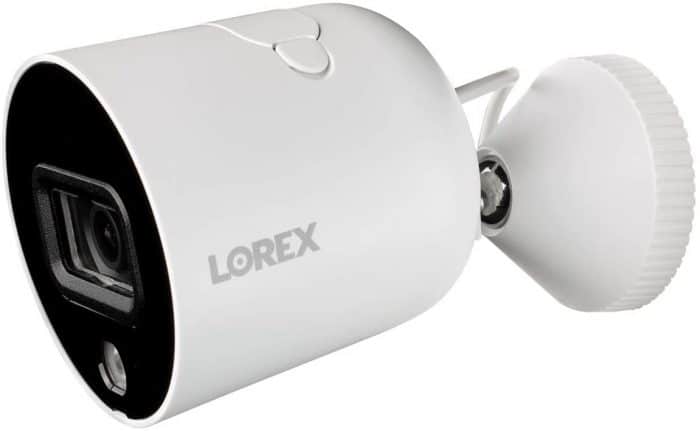
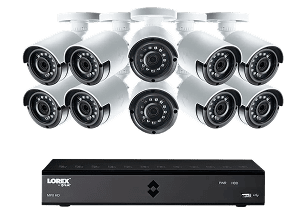
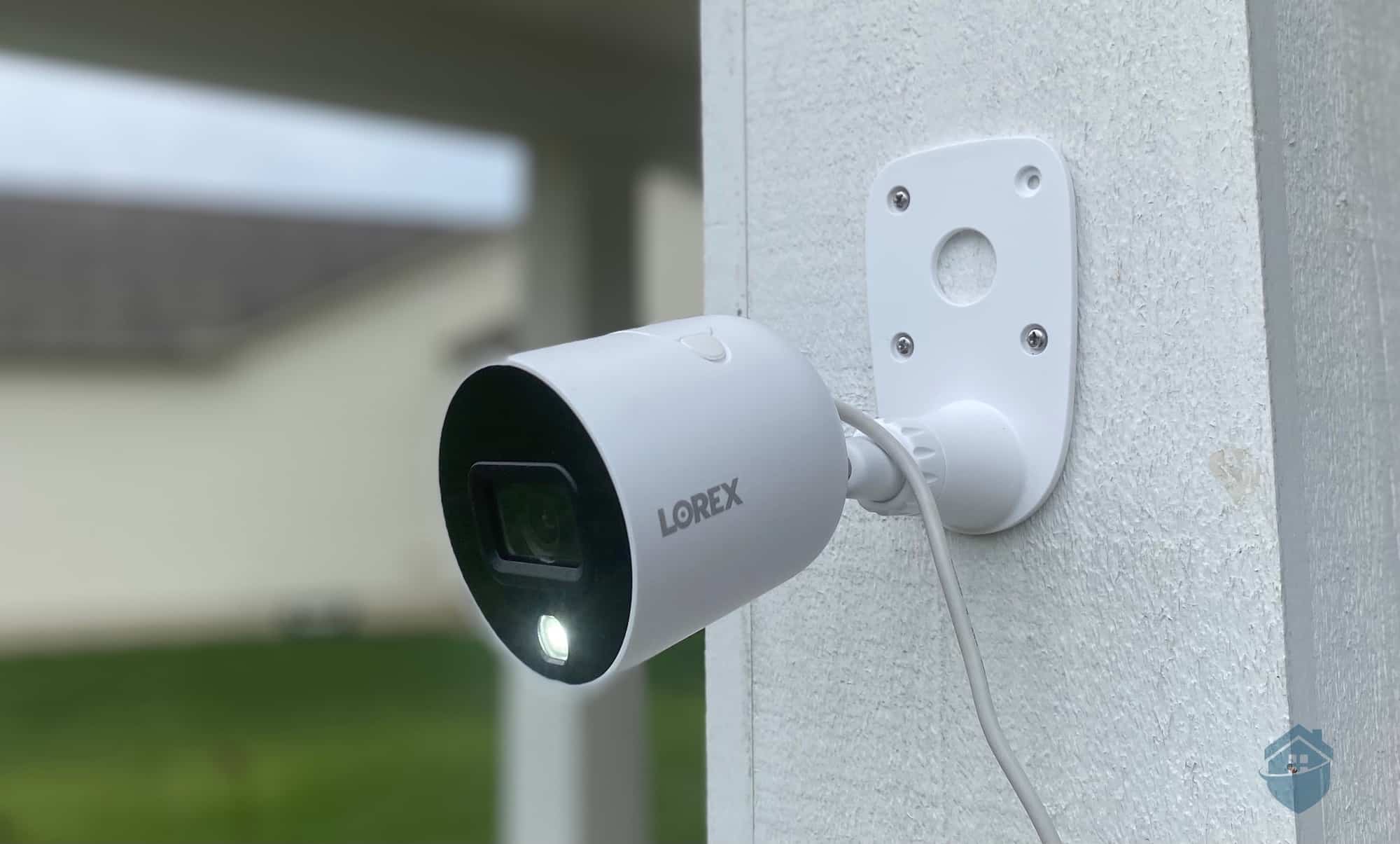
From major commercial applications to making sure porch pirates don’t steal your latest Amazon delivery, Lorex offers something for everyone. And with no subscription plan or monthly fees, what you see is what you get.
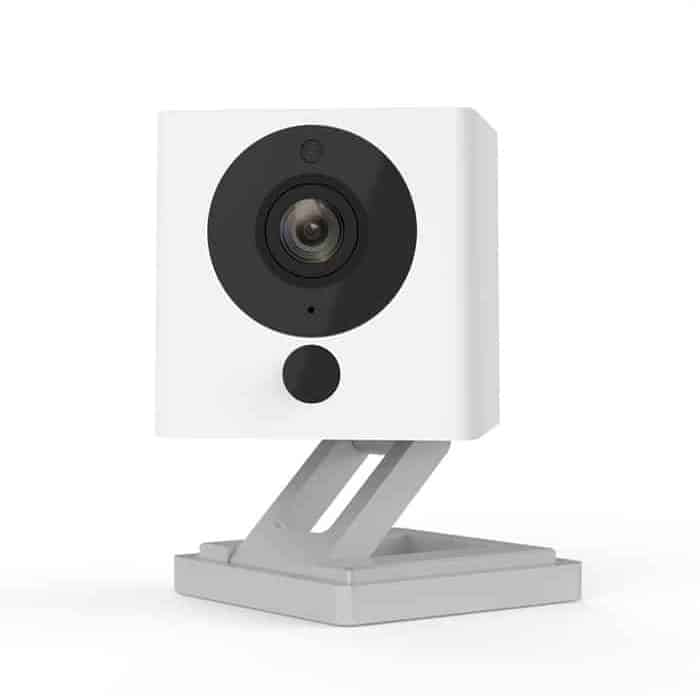
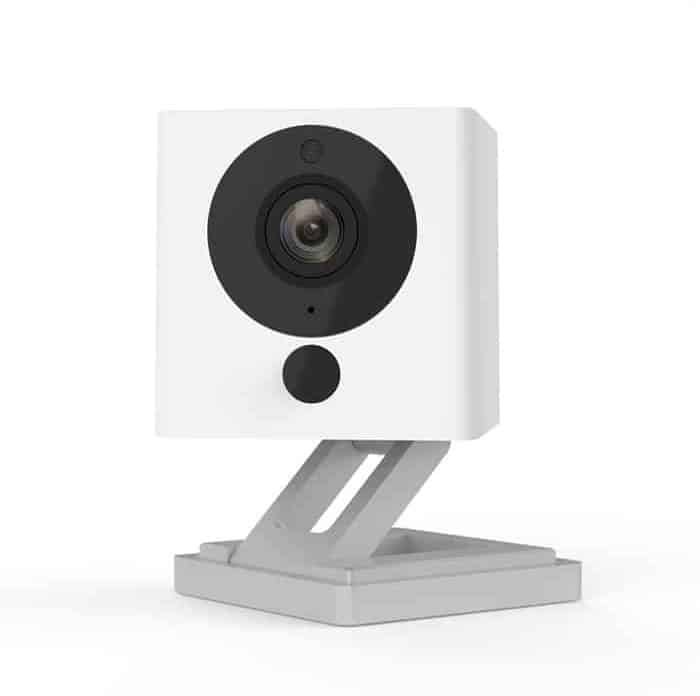
Impressive features offered at a great value, Wyze is another affordable option for folks who don’t want to get locked into a security system subscription.
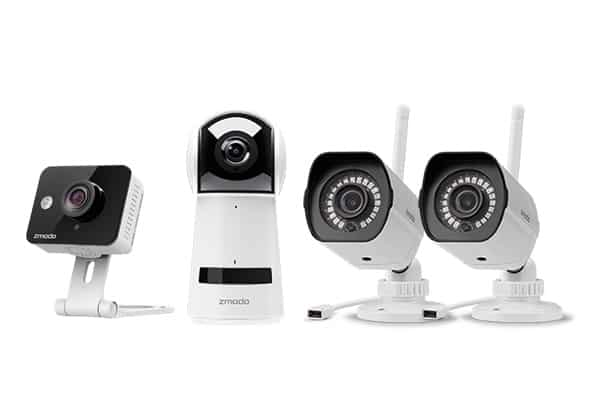
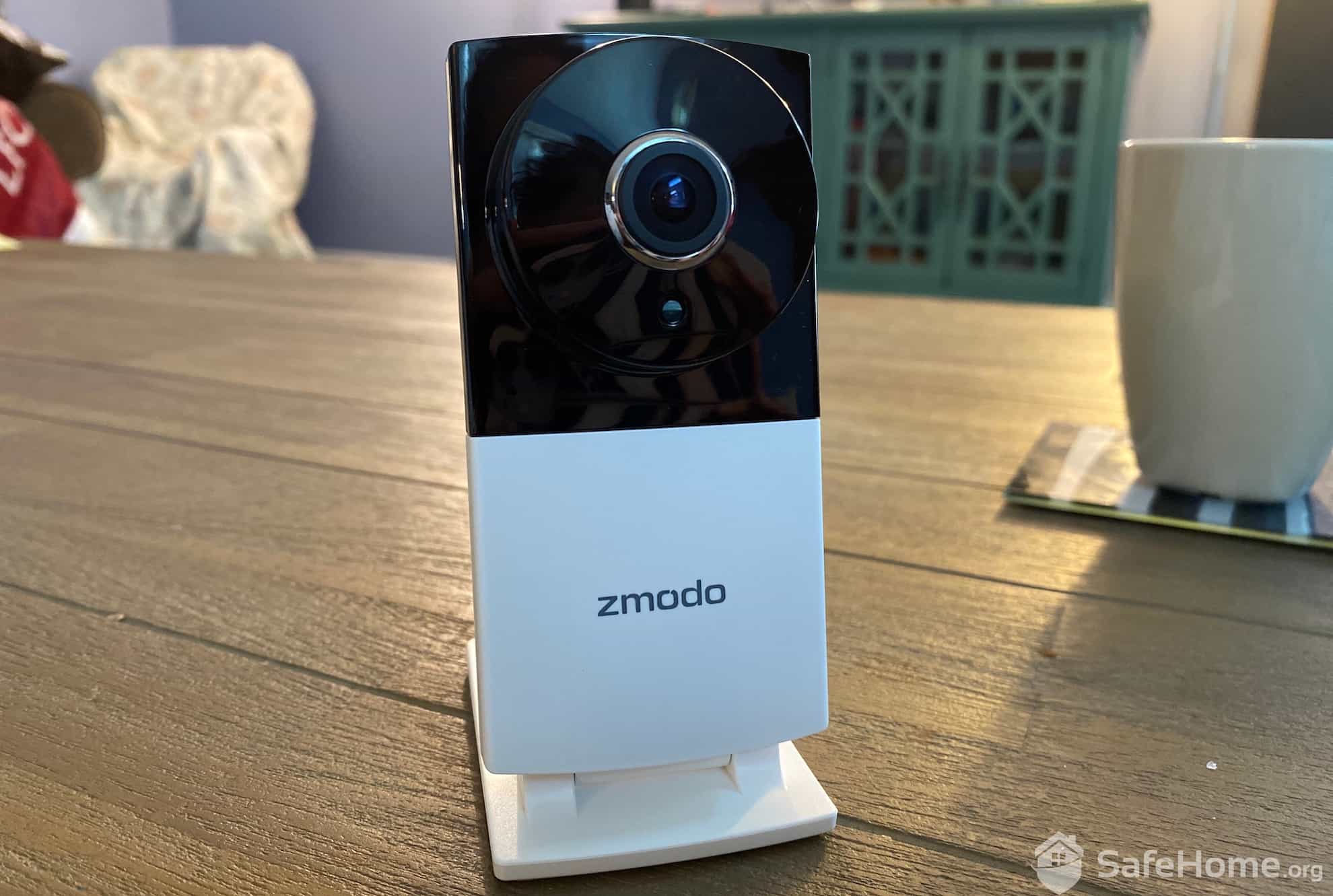
When you just want basic security cameras that work, Zmodo delivers. Every model is affordably priced with solid video quality and a robust design. Just don’t expect features that wow.
Editor’s Note: If subscription prices are getting in the way of you choosing a security camera, we have good news for you. Our roundup of the home security systems without monthly fees is the perfect combination of security systems with cameras at the best prices.
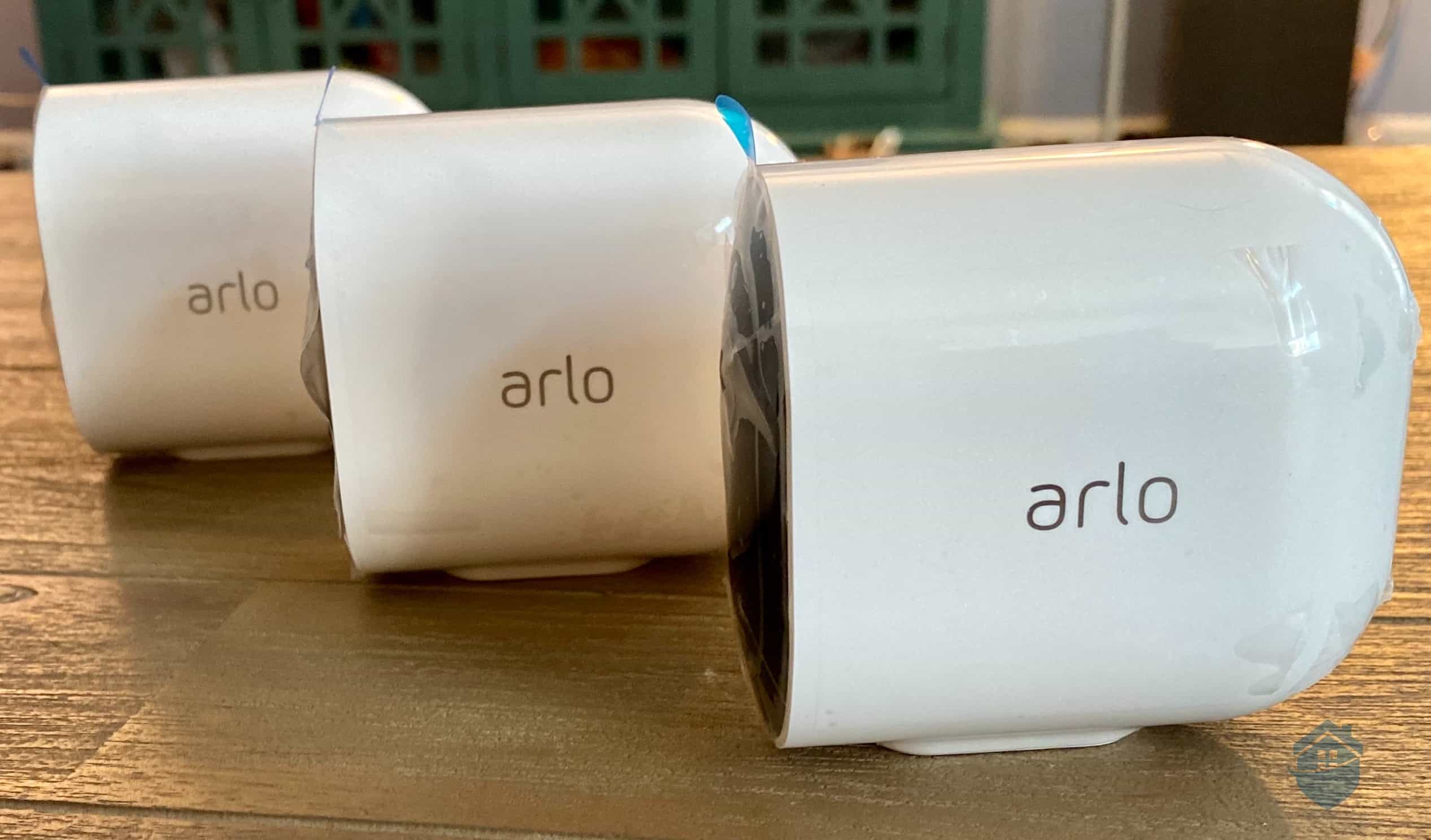
When looking to buy security cameras, you have to take into account that most manufacturers require a subscription for video storage or additional features. This is true even for many of the best security cameras – Google Nest, Ring, Arlo, etc. – which can feel a bit like buying a new car and having to pay $5 per month to run the air conditioner.
That’s not the case with all manufacturers, though. We’ve tested some options that can run without a subscription, and we picked the best ones to go here. You may have to make some compromises, such as checking alerts and recordings from your cameras more often, but with our top picks headlined by ADT and Lorex, you can more than sufficiently secure your home without paying monthly fees.
From Joshua Lee, Active-duty Police Sergeant
Lorex simply offers some of the best quality cameras we’ve ever tested. They’re strong as nails with impressive tech that gives industry leaders like Ring a run for their money. To top it off, they also offer a lot of flexibility with how you store your video footage including options for continuous recording.
We picked Lorex as the top option due to its superior-quality security cameras. It topped our list of the best 4K cameras because it has not one or two, but nearly a dozen 4K options. It also offers some of the best power-over-Ethernet (PoE) cameras, which is what we recommend because they’re easier to install than typical Lorex cameras. You only need one cable to power a camera and connect it to its DVR.
We’ve tested multiple Lorex cameras over the years and have always been impressed by their reliability. Some models might not all have the most advanced features, but they catch anything and everything that happens in their field of view.
In Our Experience: The latest Lorex system we tested was a four-camera unit with a 1 TB DVR. That amount of storage was enough to store about eight or nine days of rolling videos. Once full, the DVR wrote over the oldest recordings.

Having security cameras can help deter and prevent office crimes.
We have to warn you, though, buying Lorex cameras requires a significant investment. Not that Lorex cameras are expensive – they’re actually more affordable than most on the market – but you will typically need a system with four or more cameras to cover your home. Lorex packages that include a DVR starts at around $300, but can range up to $1,500 depending on the camera quality and features.
| Connectivity | Wi-Fi, Ethernet, or PoE |
|---|---|
| Power | Wired, battery, or PoE |
| Field of View | Up to 180° |
| Resolution | Up to 4K |
| Storage | Free local, optional cloud |
| Smart Platform Compatibility | Alexa and Google Home |
Wyze is the most affordable security camera on this list. You’ll struggle to find a camera over $100, even if it has 2K resolution. You also don’t need a subscription to access features like person detection or activity zones. Wyze cameras might not match the quality of Lorex, but you still get good bang for your buck.
Like Lorex, Wyze offers local storage. The Wyze Cam we tested included a microSD slot. We used a 32-GB card, but you can use one as large as 256 GB. Keep in mind that these devices don’t record continuously like Lorex cameras. You’ll only get motion events.
What we really like about Wyze is that we were able to configure the detection to capture everything we want to and ignore the events we don’t want recorded. We set that up using activity zones for each camera. We simply highlighted the areas we want each camera to monitor. That’s it. If the movement occurs outside the highlighted grids, Wyze will ignore it and won’t record. If it occurs within the highlighted grids, we get an alert and Wyze records the event.
We noticed some lag when streaming live video, even when we’re on the same network. It’s only a couple of seconds, but it was still noticeable. The audio quality is not as crisp as Lorex cameras either. We consider this an essential feature, so you can deter criminals. It will get the job done, but it’s subpar compared to other brands.
| Connectivity | Wi-fi |
|---|---|
| Power | Wired |
| Field of View | Up to 110° |
| Resolution | Up to 1080p |
| Storage | Cloud, local |
| Smart Platform Compatibility | Alexa and Google Home |
While Wyze cameras are affordable, they don’t match the quality of Lorex. Zmodo is another alternative that offers some similar features and connectivity options. You also don’t need a subscription to use them. Zmodo prices start at $39.99, and you’ll save more if you buy in bulk.
We have a mixed experience with Zmodo. On one hand, we think their cameras work as intended. They have good video quality, most have two-way audio now, and thanks to their DVR, they can record videos without a subscription. They are actually like Lorex because they can record continuously.

Our Zmodo indoor camera we got for less than $50.
That said, Zmodo cameras aren’t as smooth to use as Lorex – or other brands on this list, for that matter. Live streams are laggy and alerts aren’t customizable. We also found that some camera models still don’t have two-way audio, which is a surprise to see in this day and age. And speaking of surprises, we were also shocked to see that Zmodo still offers 720p cameras. That would have been fine 10 years ago, but not today. 720p is simply not clear enough to capture important details.
We like that Zmodo cameras can continuously record without a subscription. We still don’t recommend it over Lorex or Wyze, but it’s a solid alternative if your budget is tight and this type of feature is a non-negotiable.
Funny name aside, Zmodo offers high-quality cameras at an affordable price point. And with no monthly subscription, you’ll end up saving even more when you go with this manufacturer.
| Connectivity | Wi-fi, ethernet |
|---|---|
| Power | Wired, battery, PoE |
| Field of View | Up to 360° |
| Resolution | Up to 1080p |
| Storage | Cloud |
| Smart Platform Compatibility | Alexa and Google Home |
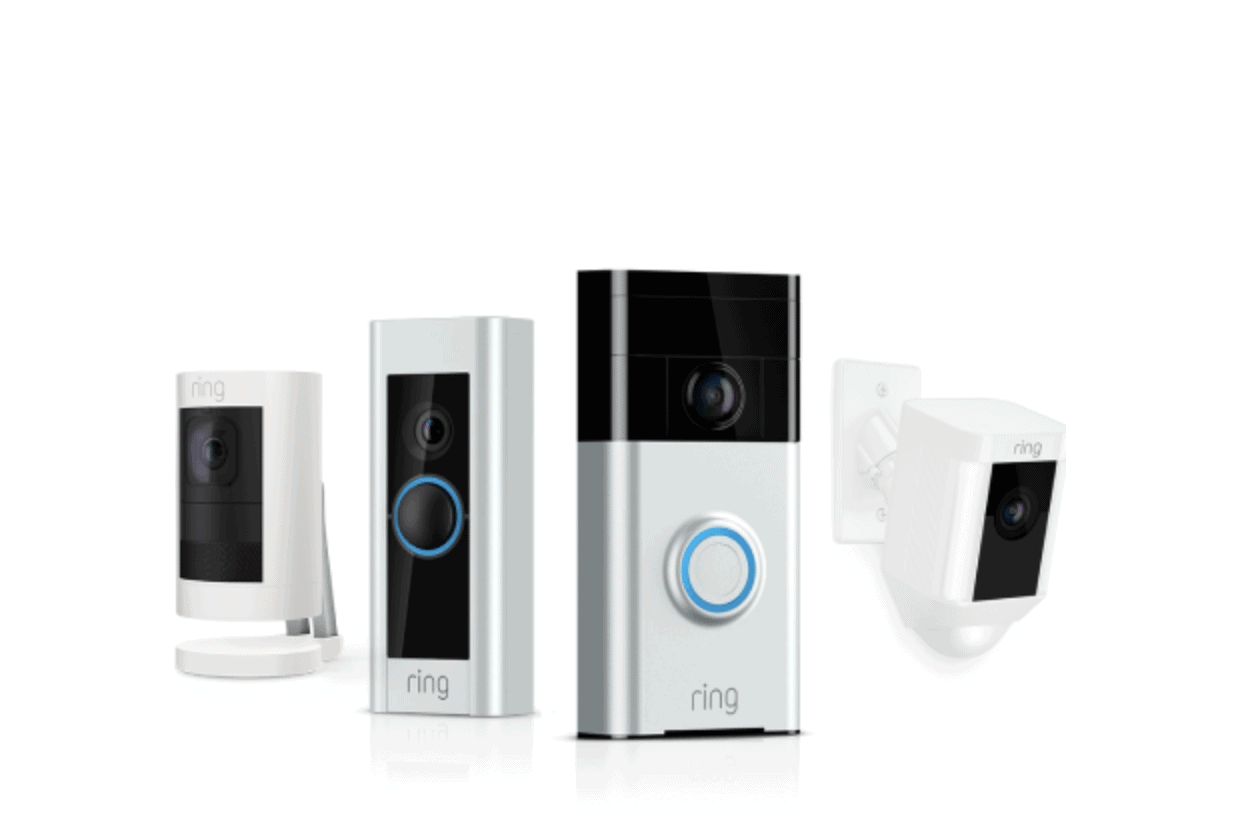
If you want no-subscription security cameras now with the option to expand into whole-home security later, Ring’s a great option. Their high-quality cameras provide basic functionality without a subscription. Once you’re ready to expand, you can integrate them into a full Ring Alarm system. This flexibility helped Ring earn a spot on our list of the best no-contract security systems.

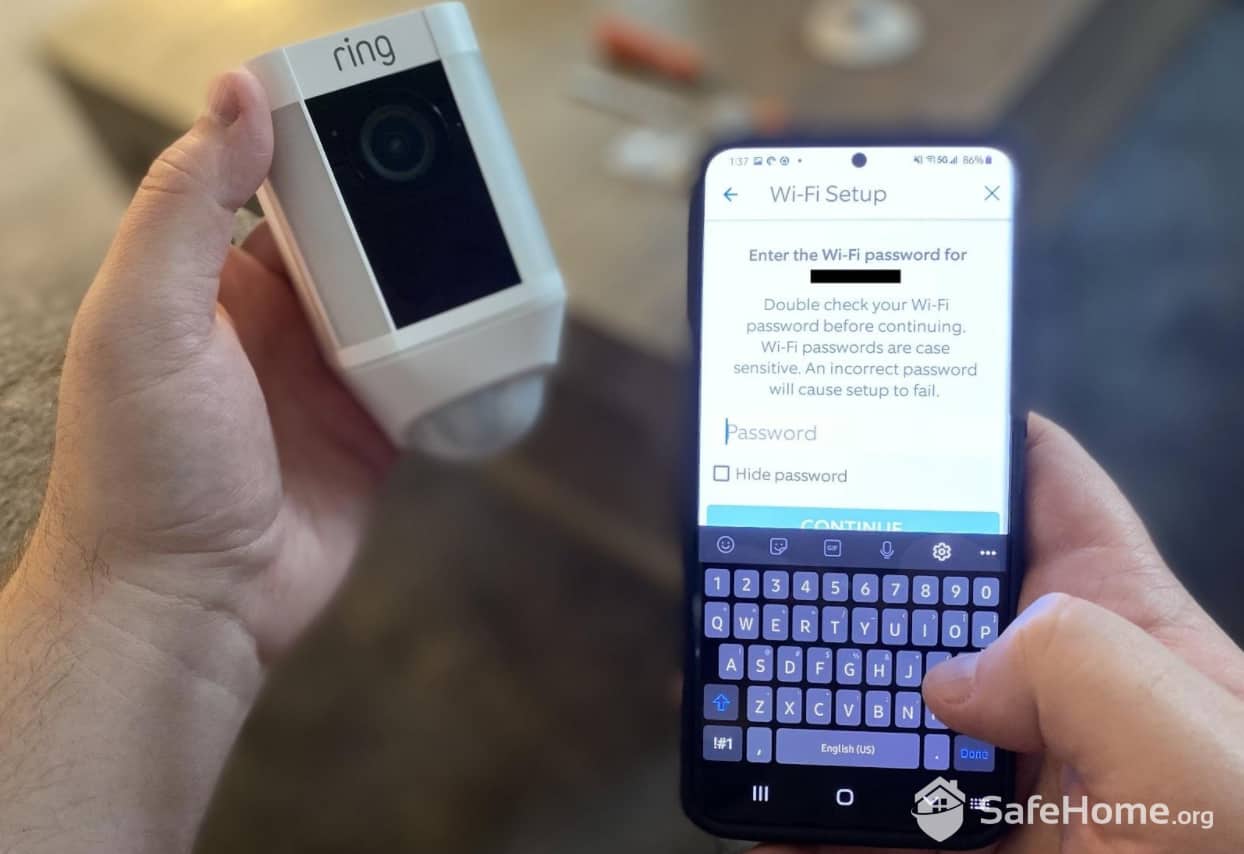
To set up our Ring Spotlight Cam, we simply followed the onscreen instruction in Ring’s app.
To rip the band-aid off, most Ring cameras do not support local storage. That means the only way to record your footage is with one of their Ring Protect subscriptions, which include cloud storage. These plans are generous as they offer up to 180 days of storage for video events, whereas most competitors only offer 30 days. Despite that, they charge competitive rates with $9.99 per month plans covering unlimited cameras. Still, this kept Ring off our list of the best self-monitored security systems.
Aside from that issue, Ring makes high-quality cameras with impressive features and top-of-the-line specs. Even still, they keep prices low. Indoor cameras start at just $49.99. Not quite Zmodo-cheap, but still better than industry averages.
The big benefit of opting for Ring cameras is the option to expand into a full security system through Ring Alarm later down the line. You’ll be able to keep using your Ring cameras, controlling everything from a unified app. This also gives you the option for professional monitoring with a Ring Pro plan, one of the best value security subscriptions we’ve tested.
FYI: When we tested Ring Alarm, we started with free self-monitoring and then opted for a Ring Pro plan after two weeks. We found it was well worth the price as it unlocks most features on the Ring cameras and 24/7 professional monitoring. Head over to our Ring price guide for a full breakdown.
| Monitoring Options | 24/7 professional and DIY |
|---|---|
| Installation | DIY |
| Smart Platform Integration | Alexa |
| Equipment Cost | From $199.99 |
| Monthly Monitoring Cost | From $19.99 |
| Contract Length | Month-to-month or 1-year |
While some people might be okay paying a few bucks a month to access all of their security camera’s features or to have their feed professionally monitored, we certainly understand how that could be a turnoff for some consumers. Luckily there are some really solid security camera manufacturers out there that agree with this notion and have made their equipment fully functional without the need to continue paying for it.
Our top recommendation is Lorex because of the great build quality on the cameras as well as the option for continuous recording. Wyze is our second choice with its smart detection features that make self-monitoring easier. If you’re on a budget and want a basic security camera that simply works, Zmodo is a good alternative. Finally, we recommend Ring for anyone who wants cameras that can scale into a full security system later down the line.
Subscribing to a security camera service will usually get you video storage, additional features, professional monitoring, or some combination of the three.
Not necessarily. Some people prefer to be in complete control of their security camera network and want all of their equipment’s features to work right out of the box.
It depends on the service and the manufacturer, but generally speaking, subscriptions cost between a few dollars to dozens of dollars per month.
Our favorite brands that don’t require subscriptions for their security cameras include Lorex, Wyze, Zmodo and Ring.
It depends on what you’re looking for, but in most cases, security cameras that require subscriptions will offer a few more features than those that don’t.