SafeHome.org may receive compensation from some providers listed on this page. Learn More
We may receive compensation from some providers listed on this page. Learn More
SafeHome.org may receive compensation from some providers listed on this page. Learn More
We may receive compensation from some providers listed on this page. Learn More
What this Ring doorbell camera might lack in form, it more than makes up for in function
 Updated August 6, 2026
copied!
Updated August 6, 2026
copied!

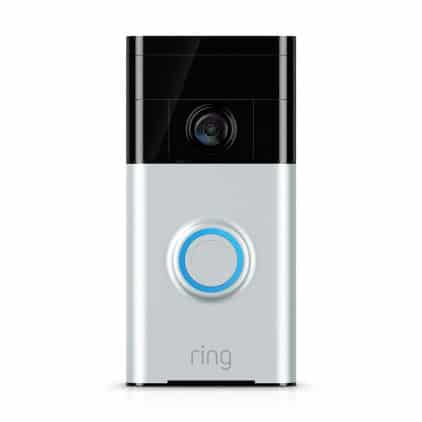
Ring is the first brand we think of when it comes to video doorbells. The company practically popularized them with its simple installation, advanced features, and user-friendly app. Over the years, Ring has continued to upgrade its catalog by adding up to 4K resolution, head-to-toe field of view, and color night vision.
Despite popularizing video doorbells, Ring is no longer the only option out there. We still think it’s one of the best video doorbells around, but it’s got stiff competition from brands like Google, Vivint, and SimpliSafe. To see if it’s right for you, we’ve tested the latest Ring doorbell range. Here’s what we learned.
FYI: Doorbell cameras offer great protection for the front porch. If you need full coverage over your property, though, we recommend checking out our guide on the best security cameras. Better yet, take a look at our guide on the best security systems.
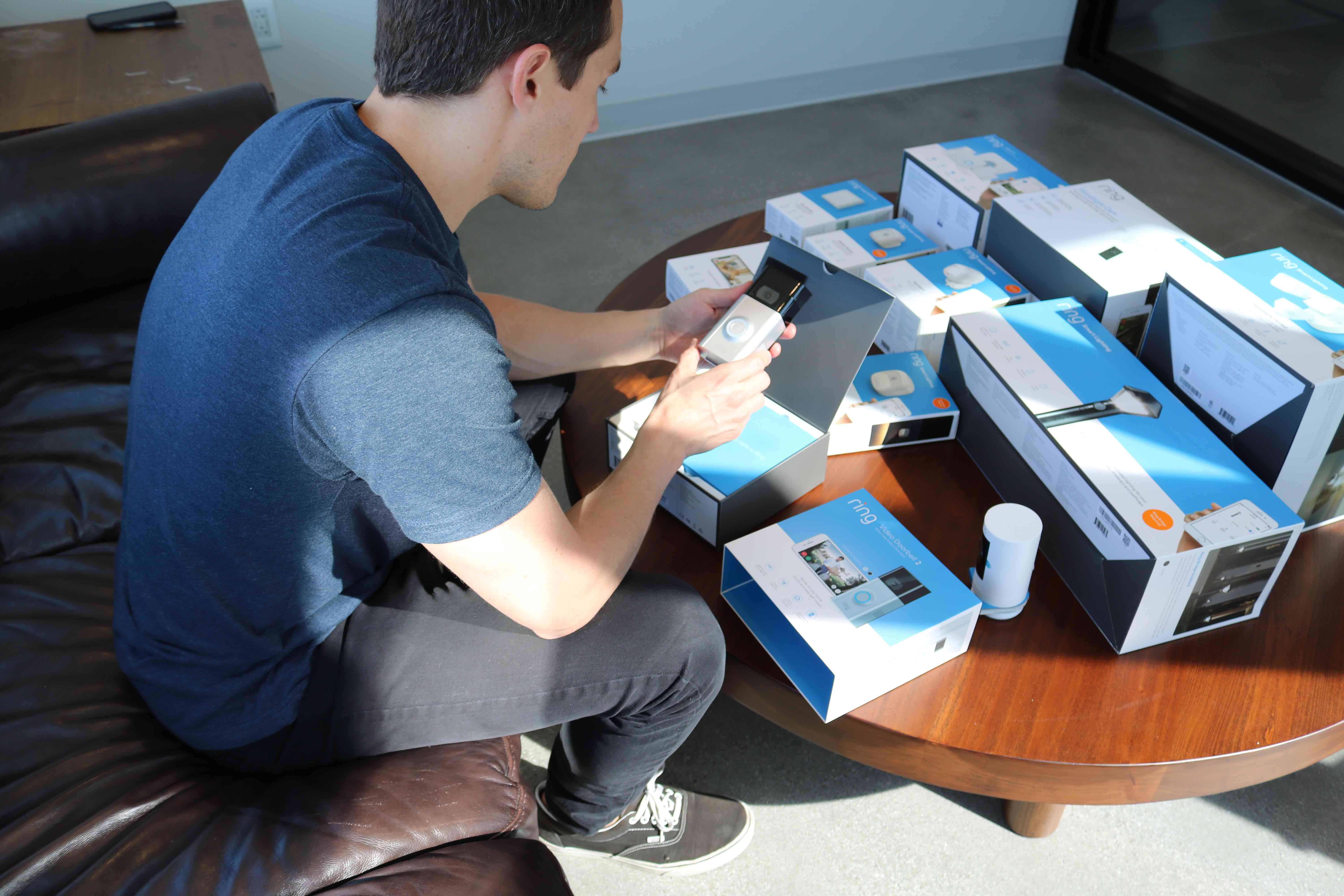
Some of the Ring doorbell cameras we bought to test.
Ring offers seven doorbell cameras, ranging from a budget-friendly entry-level model to a professional-grade PoE device. Here’s a rundown of each option.
All Ring doorbell cameras give you access to the same features in Ring Protect plans. The main decision you need to make is whether you want to recharge the battery every few months or connect the doorbell camera to your internal wiring.
We tested a Ring battery and wired doorbell model. Both were easy to set up thanks to the installation guide in the app. For the battery doorbell, we named the device, mounted it to the doorframe, and slid in the battery. Lastly, the app asked us to scan a QR code on the back to sync the device. The whole process took less than 15 minutes.
The wired doorbell is a little trickier if you don’t have existing wiring. If that’s the case, we recommend hiring an electrician to set it up for you. Fortunately, we have existing wiring because of all the video doorbell cameras we test. All we had to do was turn off the power at the breaker and install the chime kit to our existing chime. Next, we connected our internal wiring to the back of the Ring doorbell camera. After that, all we had to do was mount the camera to the doorframe and flick the power back on. We also scanned a QR code to sync the device to the app.
Pro Tip: After syncing the doorbell camera to the app, you’ll still need to connect the device to your Wi-Fi. We recommend choosing the 2.4 GHz channel, as not all Ring doorbell cameras offer dual-band Wi-Fi.
Ring equipment prices are on par with other top brands. They also have budget models that won’t break the bank. Here’s a rundown of how much the doorbell cameras cost.
| Ring Doorbell Camera | Price |
|---|---|
| Battery Doorbell | From $99.99 |
| Wired Doorbell | From $79.99 |
| Battery Doorbell Plus | From $179.99 |
| Wired Doorbell Plus | From $179.99 |
| Battery Doorbell Pro | From $249.99 |
| Wired Doorbell Pro | From $249.99 |
| Wired Doorbell Elite | From $499.99 |
If you’re just sticking with the Ring doorbell camera, you can self-monitor for free or pay $4.99 a month for a Ring Protect Solo plan to unlock extra features. The free option gives you real-time alerts and access to live footage in the Ring app. The Ring Protect Solo plan adds up to 180 days of video event history. You can also pay $49.99 annually to bring that monthly rate down a bit.
If you’re adding Ring security cameras or a Ring Alarm setup, you’ll want to look at the Multi or Pro plan. Ring Protect Multi is $10 a month (or $100 a year) and covers all devices at a single location with the same video storage perks. Ring Protect Pro runs $20 a month or $200 a year and includes 24/7 professional monitoring for your Ring Alarm, plus AI detection features. Most of these features are geared toward Ring Alarm users, but the video history applies across your Ring cameras and doorbells too.
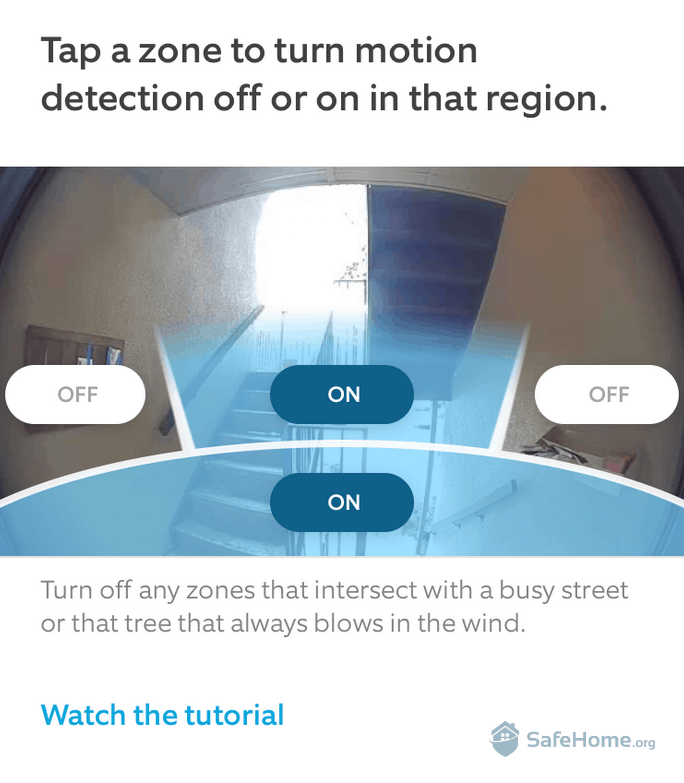
Setting up motion detection zones in the Ring app
The Ring–Always Home app is all we needed to customize our doorbell camera. The app walked us through how to set up motion detection zones, which can reduce false alarms. It was also simple to adjust the sensitivity of the camera. This reduces the number of events the device captures. We even used the Ring app to choose from a selection of greetings, in case we weren’t available to respond to a ring.
When we did speak to someone through the app, we found the audio quality reliable enough. On occasion, there was a slight delay that made conversations a little awkward. It’s not as if we were talking for hours, though, so it wasn’t a dealbreaker. Video playback was smoother. It was easy to look through footage, zoom in on specific details, and delete a clip if it isn’t worth keeping.
FYI: The Ring–Always Home app also shares safety alerts in your neighborhood. Neighbors can share if they’ve spotted a lost pet, a traffic incident, or a weather event. It’s an easy way to keep your community safe.
Ring doorbell cameras aren’t perfect. During our testing, we did run into a few issues. We don’t think they hold Ring back significantly, but they are worth considering before you finalize your purchase.
Ring doorbell cameras can’t store videos locally. If you opt for Ring’s free self-monitoring plan, there is no way to access recordings. You’ll need the Ring Solo plan as a minimum to retrieve videos. On the plus side, you get 180 days of video history storage, which is significantly more than what most providers offer.
While Ring advertises that batteries last between six and 12 months, this is in optimal conditions. In real life, it depends on motion frequency, weather, and how often the device is used. Our battery lasted about three months before needing a recharge. It also takes about eight hours for a full charge, which is a long time to leave your front porch unprotected.
Ring doesn’t have the greatest track record when it comes to privacy. The Federal Trade Commission revealed employees had the ability to spy on customers through cameras.1 Ring has been known to give law enforcement and federal agencies access to doorbell footage.2 The company claims to have taken steps to improve its practices, but it’s worth putting on your radar.
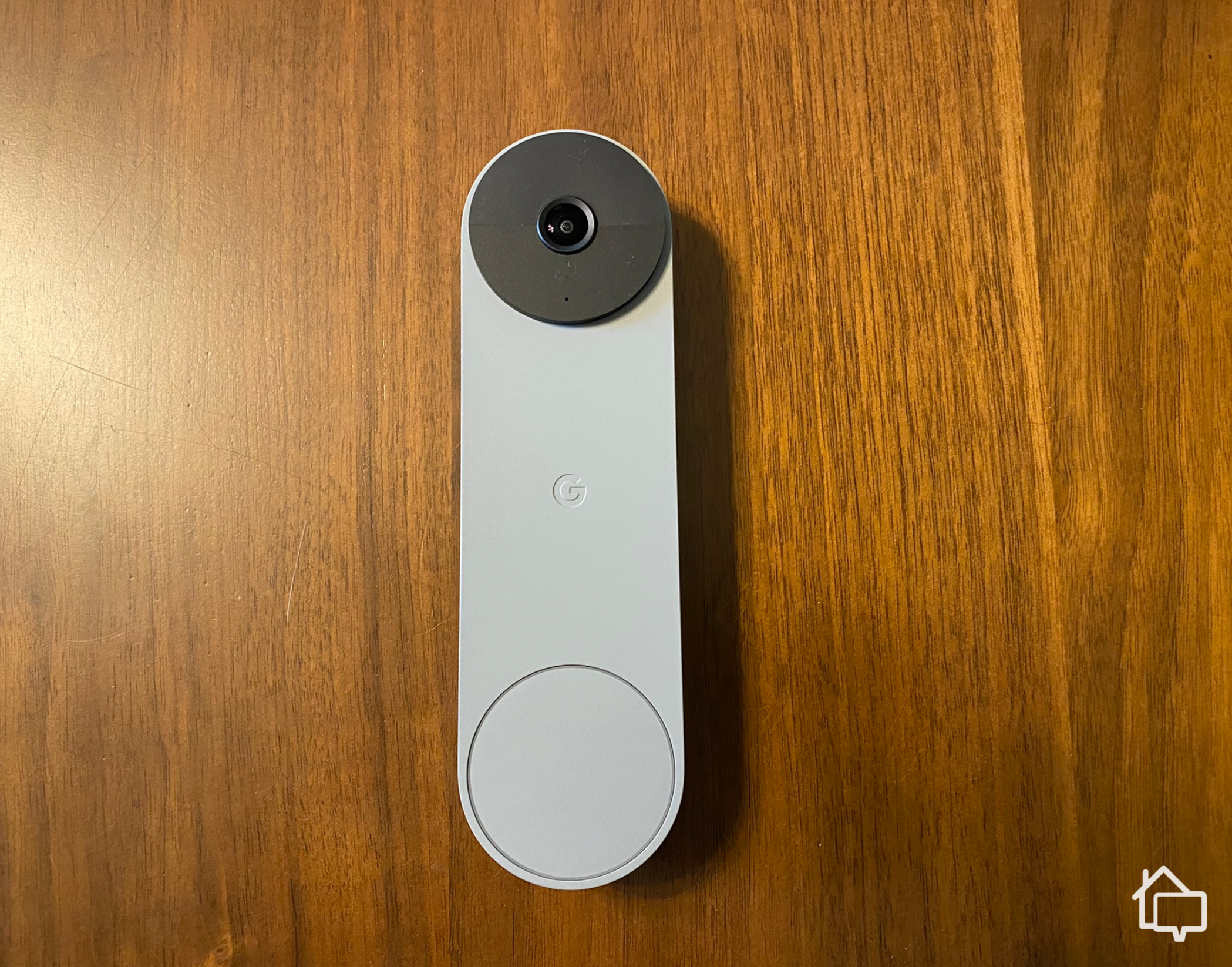
The Google Nest Doorbell we also tested
Google is Ring’s closest competitor. Like Ring, it offers battery and wired options. Equipment prices are on par with Ring Doorbell Plus models, but subscription costs are more expensive. The price jumps further if you integrate Nest Doorbells with an ADT home security system.
Nest Doorbells offer a better field of view. The battery model is 145 degrees, while the wired option is 166 degrees. The wired option also offers 2K HDR, which is where it maxes out. Ring also beats Google on cloud storage. With a Google Home Premium subscription, you can access up to 60 days of video event footage. That’s half what Ring offers. Google subscriptions also start from $10 a month.
SimpliSafe is another competitor that’s worth considering. The Video Doorbell Pro costs $169.99 and offers a 162-degree field of view. SimpliSafe only offers a wired model, though. Video storage is also capped at 30 days. Where SimpliSafe has Ring beat is in its intruder deterrence features. It does require a subscription starting from $49.99 a month, but it allows SimpliSafe agents to access live feeds and scare off intruders. The same feature with Ring costs $99.99 a month.
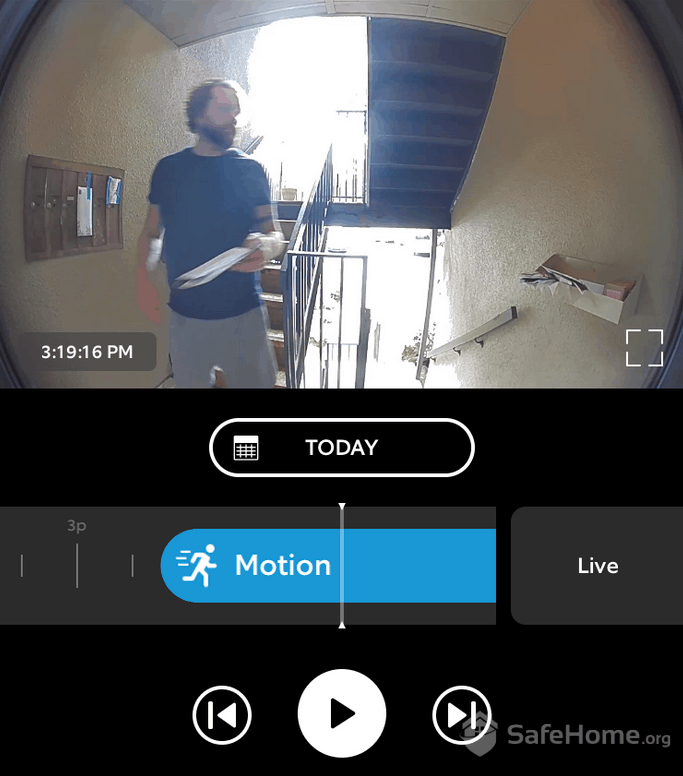
Reviewing a video event in the Ring app.
Ring doorbell cameras deliver strong value at every price point. Entry-level models start at $79.99, and a Ring Protect subscription runs as low as $4.99 a month. Even at that base tier, you’re getting a solid doorbell camera with smart detection features, customizable motion zones, and up to 180 days of video event history.
The premium models add better video quality, color night vision, and 3D motion detection if you need it. We think they’re worth the asking price. If you just want to keep porch pirates at bay or find out who’s at the front door, though, you don’t need to break the bank with Ring.
You don’t need to pay a monthly fee to use a Ring doorbell camera. Without a Ring Protect subscription, you can still access real-time video, receive notifications, and use the two-way talk feature.
Some of the downsides of Ring doorbell cameras are the lack of internal storage, ongoing subscription costs for specific features, and low battery life. Ring is also dependent on your Wi-Fi connection, which isn’t ideal if your internet drops out regularly.
Studies show that doorbell cameras force about 50 percent of burglars to consider other targets. It’s not likely to stop determined intruders who want to steal packages or belongings on your front porch, though.
According to Ring, doorbell cameras last up to five years before needing to be replaced. Rechargeable batteries may need replacement earlier, depending on how frequently they are used and charged.
No, Ring doorbell cameras need an internet connection to send alerts, stream live video, and save recordings to the cloud.
Digital Trends. (2018). From sharks to Shaq: Ring CEO Jamie Siminoff’s unusual road to success.
https://www.digitaltrends.com/home/ring-ceo-jamie-siminoff-unusual-road-to-success/
Vice. (2019). How Ring Went From ‘Shark Tank’ Reject to America’s Scariest Surveillance Company.