



When it comes to choosing your identity protection service, you need to make a decision based on more than just the bottom line alone. LifeLock scored slightly better than Aura overall, but there are other aspects you need to compare before putting down your credit card.
In this comparison guide, we’ll show you how Aura and LifeLock compare to each other in key areas such as pricing, identity, credit, and device protections, and most importantly, privacy and data protection. Let’s start!
Aura vs LifeLock: The Main Takeaway
After testing both LifeLock and Aura, we can say that they are two of the best options in the industry. They clearly have different strengths, though.
Why Choose Aura
We recommend Aura to budget-conscious users. Don't get us wrong, though. It may be more affordable than LifeLock, but the level of protection it provides is top-notch. All plans include full identity, credit, and cybersecurity features, so even with the cheapest plan, you still get top quality protection from Aura. With LifeLock, you need to be on the highest available subscription plan to get similar features.
Aura is a good fit for larger, multi-generational households, since its Family plan covers up to five adults and unlimited children. LifeLock, on the other hand, covers only up to two adults in its family plans, although they include protection for up to 10 children which is enough for most households.
Why Choose LifeLock
If you’re willing to invest in high-quality identity theft protection service, then LifeLock is a solid choice. We particularly recommend their plans bundled with Norton 360. These plans include cybersecurity tools such as antivirus software, a password manager, and a VPN. And with a name like Norton delivering those features, you can be sure you’re getting top-notch protection.
We also recommend LifeLock if you want a healthy safety net. Its most expensive subscriptions include identity insurance, stolen fund coverage, and legal/personal expense reimbursements up to $3 million. That’s three times the $1 million industry average coverage.
Aura & LifeLock Prices
Comparing their prices side by side, it’s clear that Aura is the more affordable option. There’s more to the story, though. We think Aura and LifeLock offer equal value. They’re both worth it – you get tons of features at affordable prices from Aura, while you get premium, white-glove service from LifeLock’s more expensive plans.
Aura
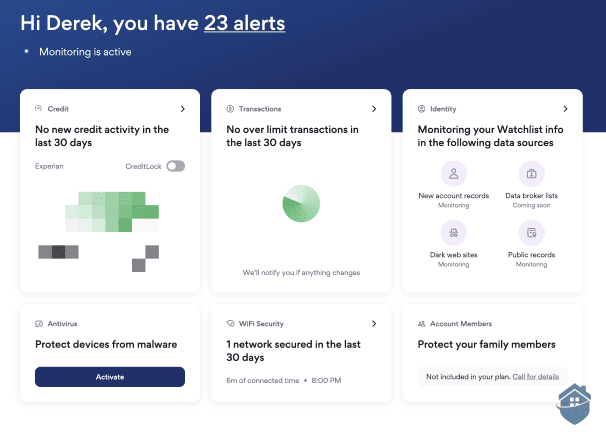
Aura Dashboard
Aura makes it easy to choose a plan that suits you and your family. Here’s a quick look at Aura’s subscriptions:
| Aura Individual | Aura Couple | Aura Family | |
|---|---|---|---|
| Monthly Cost | $12/month | $20/month | $30/month |
| Annual Cost | $108/year ($9/month) | $204/year ($17/month) | $300/year ($25/month) |
The Individual, Couple, and Family subscriptions all come with the same core identity theft and credit protection tools. This includes full identity monitoring, three-bureau credit monitoring, a VPN, antivirus, and a password manager. The main differences come down to how many people are covered.
Individual covers one adult, Couple covers two adults, and Family covers up to five adults plus an unlimited number of children. The Family plan also adds parental controls and child identity monitoring features. You can also purchase all child identity monitoring features in the Family plan on their own under the Child plan. It starts at $10 per month.
Aura offers a free 14-day trial across all its subscriptions, giving you a solid window to test-drive the service. If you commit to an annual plan, you're also backed by a 60-day money-back guarantee — so there's very little risk in giving it a shot.
>>Read More: Aura Identity Theft Protection Review
LifeLock
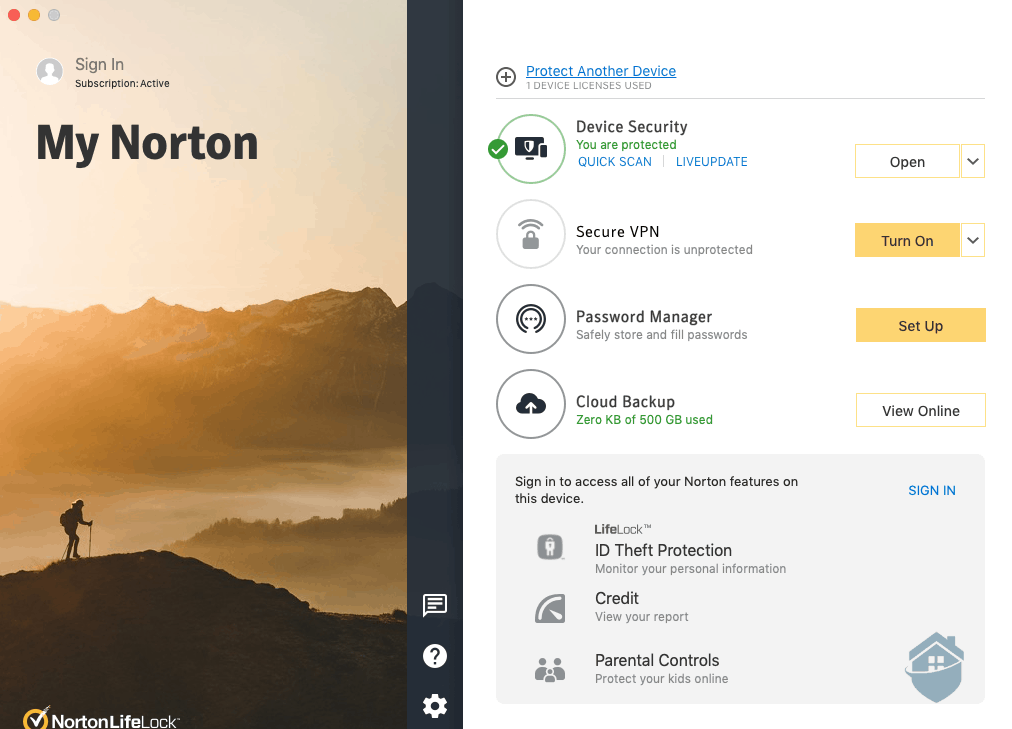
LifeLock Dashboard
LifeLock has tiered subscriptions with plans tailored for individuals, couples, and families. It also has a subscription that’s bundled with Norton 360. So, its pricing can be a bit confusing.
To keep things simple, let’s start with an overview of the main LifeLock subscriptions:
| LifeLock Core | LifeLock Advanced | LifeLock Total | |
|---|---|---|---|
| Individual Plan (Monthly Cost) | $12.49/month | $19.99/month | $34.99/month |
| Individual Plan (Annual Cost) | $124.99/year ($10.42/month) | $199.99/year ($16.67/month) | $349.99/year ($29.17/month) |
| Couple Plan (Monthly Cost) | $22.49/month | $35.99/month | $62.99/month |
| Couple Plan (Annual Cost) | $224.99/year ($18.75/month) | $359.99/year ($30.00/month) | $629.99/year ($52.50/month) |
| Family Plan (Monthly Cost) | $34.49/month | $47.99/month | $74.99/month |
| Family Plan (Annual Cost) | $344.99/year ($28.75/month) | $479.99/year ($40.00/month) | $749.99/year ($62.50/month) |
In addition to those subscriptions, there's also the Norton 360 with LifeLock plans. These budnles layer identity theft protection and credit monitoring on top of Norton 360's security suite. You get an antivirus, a password manager, a VPN, and parental controls all in one package. However, they’re only available as annual plans. Aura also bundles similar extra security features, but conveniently includes them across all of its subscriptions, so you never need to purchase a separate add-on.
There's a 30-day free trial for all LifeLock-only subscriptions, and a 7-day free trial for the Norton 360 with LifeLock subscriptions. The service backs all annual plans with a 60-day money-back guarantee, and all monthly plans with a 14-day money-back guarantee.
>>Learn More: LifeLock Review: A Hands-On Test in 2026
Aura & LifeLock Feature Comparison
Aura and LifeLock are both very feature-rich. We’ll go over how they handle identity theft protection, credit monitoring, extra security features, and child protection in this section.
Identity Protection
It’s pretty much a draw between the two services since they both have essential and extra identity theft protection features. Here’s a quick look at some of the features Aura and LifeLock offer:
| Identity Theft Feature | Aura | LifeLock |
|---|---|---|
| Identity Theft Insurance | Yes (up to $1 million per user) | Yes (up to $3 million per user) |
| Identity Restoration | Yes | Yes |
| Dark Web Monitoring | Yes | Yes |
| Breach Notifications | Yes | Yes |
| Personal Information & SSN Monitoring | Yes | Yes |
| Home Title Monitoring | Yes | Yes |
| Criminal Records Monitoring | Yes | Yes |
Both services provide great identity theft insurance. We have to note that LifeLock’s insurance is more comprehensive. Not only does it go up to $3 million per user, but its Family Plan (2 Adults + 5 Kids) even offers identity theft insurance for children (up to $1.05 million per child) — this is something very few identity theft protection services offer.
On top of all features mentioned in the above table, Aura and LifeLock also come with more tools for keeping your identity safe. They also have USPS address change monitoring, lost/stolen wallet protection, and ID verification monitoring. LifeLock also has a few extras that Aura doesn’t, like social media monitoring, phone takeover monitoring, and file-sharing network searches (this means LifeLock looks for personal data leaks on file-sharing networks). The same goes for Aura; it offers features like auto title monitoring that LifeLock doesn’t.
Aura's advantage here is that every subscription includes the same identity protection features regardless of which plan you choose. LifeLock's plans are tiered, meaning what you get depends on how much you spend. That said, its entry-level Core plan includes social media monitoring and data broker removal requests — features that are normally locked behind higher tiers. If you want more advanced protections like phone takeover monitoring and investment account alerts, you'll need to step up to LifeLock's Advanced or Total plans.
Credit Monitoring
Both Aura and LifeLock come with essential credit monitoring and protection features. Here’s what you get with each one:
| Credit Monitoring Feature | Aura | LifeLock |
|---|---|---|
| Transaction Monitoring | Yes | Yes |
| Bank Account Monitoring | Yes | Yes |
| 3-Bureau Credit Monitoring | Yes | Yes (on Advanced and Total plans) |
| Monthly Credit Score | Yes | Yes |
| 401(k) & Investment Account Monitoring | Yes | Yes (only on Total plan) |
| Credit Lock | Yes | Yes |
Both services provide triple-bureau monitoring, and LifeLock has narrowed the gap here. LifeLock's mid-tier Advanced plan ($19.99/month) now includes triple-bureau monitoring too, not just its top-tier Total plan. Aura still includes it on every subscription, including its cheapest plan, so it remains the more consistent option if triple-bureau monitoring is a must-have at every price point.
FYI: Three-bureau credit monitoring is the gold standard for identity theft protection services. It provides alerts of any changes that occur on reports from Experian, TransUnion, and Equifax. Check out our roundup of the best credit monitoring services to see which providers meet our standards.
Aura still has an edge in that all credit monitoring and protection features are included on every subscription. With LifeLock, monthly one-bureau credit reports and scores are now included on every plan, including Core, but triple-bureau monitoring and 401(k)/investment account monitoring remain reserved for the Advanced and Total tiers.
Additional Security Features
Aura and LifeLock both provide access to extra security features. This includes an antivirus and a password manager. The antivirus protects your device against malware infections, and the password manager secures your logins. Each service also has a VPN, which secures your internet traffic and hides your real-time location by masking your IP address.
Aura includes these tools on all of its subscriptions, while LifeLock offers them through its Norton 360 bundles at an added cost. But that added cost buys a meaningful upgrade: Norton 360 is one of the more comprehensive antivirus products on the market, with real-time protection across nearly every platform, compared to Aura's Windows-only real-time coverage.
LifeLock has also closed part of the gap on standalone extras. Automatic data broker removal is now included on every LifeLock plan, not just the Norton 360 bundles, matching Aura's data removal feature without requiring an upgrade. Aura still has a couple of extras LifeLock doesn't offer:
- Email Alias. Lets you create and use a fake email when you sign up on certain websites. This protects you from spam emails and scams.
- Spam call and message protection. Aura uses AI to protect you from robocalls and phone scams. This tool is included for free with the Family subscription, and is available as a paid add-on on the other subscriptions.
Child Protection
Both services are among the best identity theft protection services for families on the market. Aura and LifeLock both scan billions of public records to determine if someone else uses your child's SSN. In addition, they both offer help with freezing your child's credit. And for extra protection, they both offer sex-offender geo-alerts, notifying you of new or known offenders within a one mile radius of your address,
They also both provide access to parental controls, which let you filter content and sites, schedule screen time, and monitor device locations. But Aura is more convenient since it includes the parental controls in its Family subscription. With LifeLock, parental controls are only available via the Norton 360 bundles.
Both Aura and LifeLock offer solid child protection features, but LifeLock has the edge for larger families. Aura's Safe Gaming feature is a thoughtful bonus for households with PC gamers. That said, most families will prefer LifeLock’s broader coverage with more well-rounded, comprehensive child protection.
>> Read About: 5 Child Identity Theft Statistics Every Parent Should Know
Comparing Aura & LifeLock’s Privacy Policies
To keep you safe, identity theft protection services need to collect a lot of your personal information. But before we started handing it over, we looked into what Aura and LifeLock do with it.
Aura
You won’t need a lawyer present to decipher Aura’s privacy policy. It’s presented well and easy to read.
But one line that stands out is that Aura can use your data to promote co-branded offers with partners. This may include contacting you about services from companies it thinks you might be interested in. However, it restricts the usage of your details to communicating, evaluating, and improving offers.
FYI: While Aura may share your data with partners, it clearly states in its privacy policy that it does not sell your information as defined by the Consumer Data Protection Act (CDPA).
This isn't entirely surprising, given that several of Aura's features are powered by third-party providers. Its VPN is a reskin of Hotspot Shield, Circle powers the parental controls, and gaming and cyberbullying alerts are backed by ProtectMe by Kidas. Some of your details are shared with these partners specifically to make those features work.
LifeLock
LifeLock’s privacy policy is very straightforward about what data the service collects. This includes account data, device data, identity data, service data, and more. The privacy policy makes it clear that LifeLock only uses this data to authenticate your account, deliver you the services you have selected, communicate with you, troubleshoot issues, and improve the LifeLock service.
Since LifeLock is a Gen Digital product, we also checked out Gen Digital's general privacy policy. We found that the company shares your data with:
- Data analytics providers
- Payment processors
- Public authorities and legal proceedings
- Social media and internet platforms
- Restoration services
But none of these raised alarm bells for us, as most identity theft protection services partner with third-party providers to improve their services.
Did You Know? LifeLock experienced a data breach in December 2022.3 It didn’t affect other Gen Digital products, but customers using the password manager had financial and personal information leaked.
Bottom Line: Our Recommendations
There’s no doubt in our minds that Aura and LifeLock are two of the best identity theft protection services. Our latest head-to-head testing proves this. However, your choice depends on what exactly you’re looking for.
Overall, we think LifeLock is better. It scores higher across Features & Technology, Ease of Use, and overall SecureScore, and its insurance coverage, up to $3 million, is triple the industry average. If comprehensive protection and a stronger safety net matter most to you, LifeLock is the stronger choice.
Aura, on the other hand, remains the better pick if budget is your top priority. Its flat, all-inclusive pricing makes it easy to get full protection at a lower monthly cost, even if its coverage ceiling doesn't go as high as LifeLock's.
Both are great options, but which identity protection service is right for you?
FAQs
- Is Aura a good identity theft protection solution?
Aura offers an extensive list of identity theft protection and credit monitoring features. And you get access to them no matter what subscription you pick. What’s more, it also comes with extra security tools, like an antivirus and a VPN.
- What is the downside of LifeLock?
LifeLock previously limited triple-bureau monitoring to its priciest plan, but its Advanced tier now includes it too. LifeLock also simplified its plan lineup in 2026 down to three clear tiers, Core, Advanced, and Total, making it easier to pick the right one.
- Has Aura been hacked?
As of this time of writing, Aura has not had any hacks or reported breaches.
- Can LifeLock be trusted?
Yes, as its privacy policy makes it clear it doesn’t compromise your personal data. Plus, the service also offers great identity theft protection features.
- Does Aura sell your data?
Aura’s privacy policy clearly states that it does not sell information as defined by the CDPA.