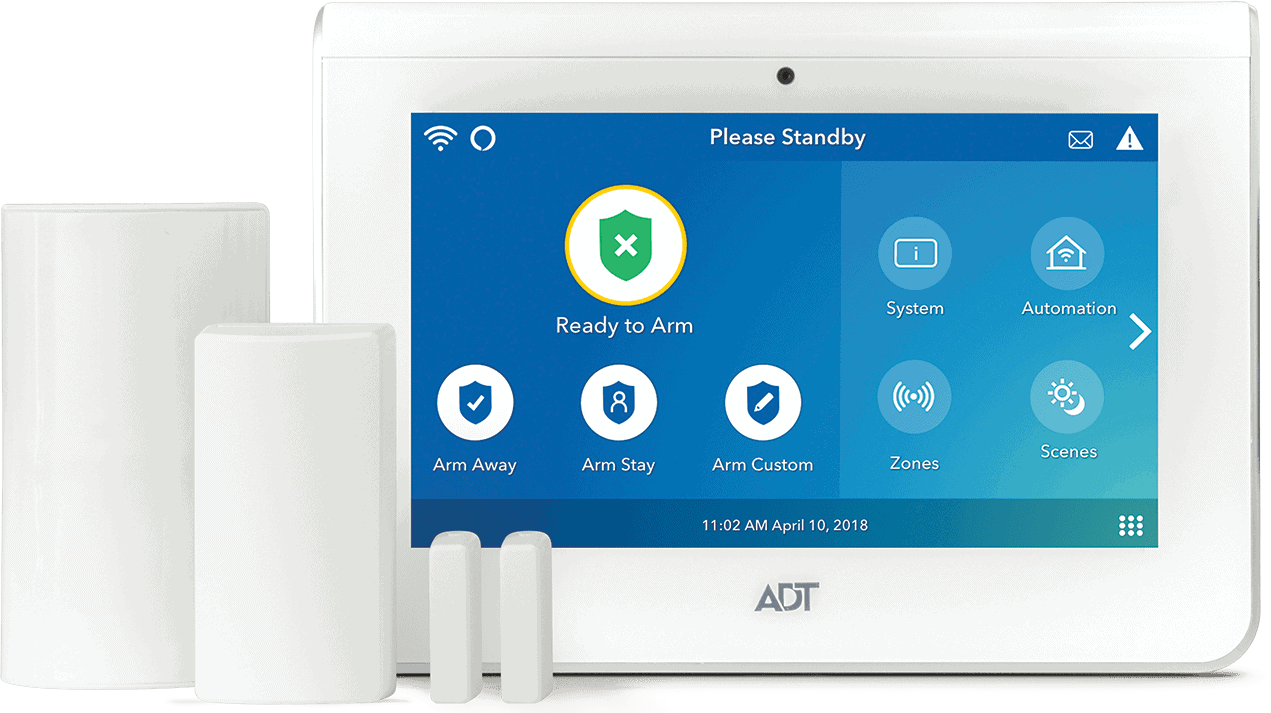


In our latest ADT review, we saw how critical sensors are to the company’s security setup. Sure, ADT security cameras are the highly sophisticated Google Nest Cams, but when it comes to providing the first line of defense, sensors play a vital role. They detect everything from intruders to environmental hazards like water leaks and carbon monoxide. And because of that, ADT security systems are able to provide early warning to users. This speedy alerting process is one of the reasons ADT ranks so highly in our 2026 list of the best home security systems.
Because we have extensive experience with ADT security systems, we decided to create an expert’s guide solely focused on ADT’s available sensors. Here, we’ll break down each sensor type, what makes it tick, and whether we think it’s worth your investment.
Quick Facts: Studies show that homes without a working home security system are 300 percent more likely to be burglarized.1 This highlights the importance of having reliable sensors – not just for peace of mind, but actual protection.
Motion Sensors
ADT Motion Sensor Overview
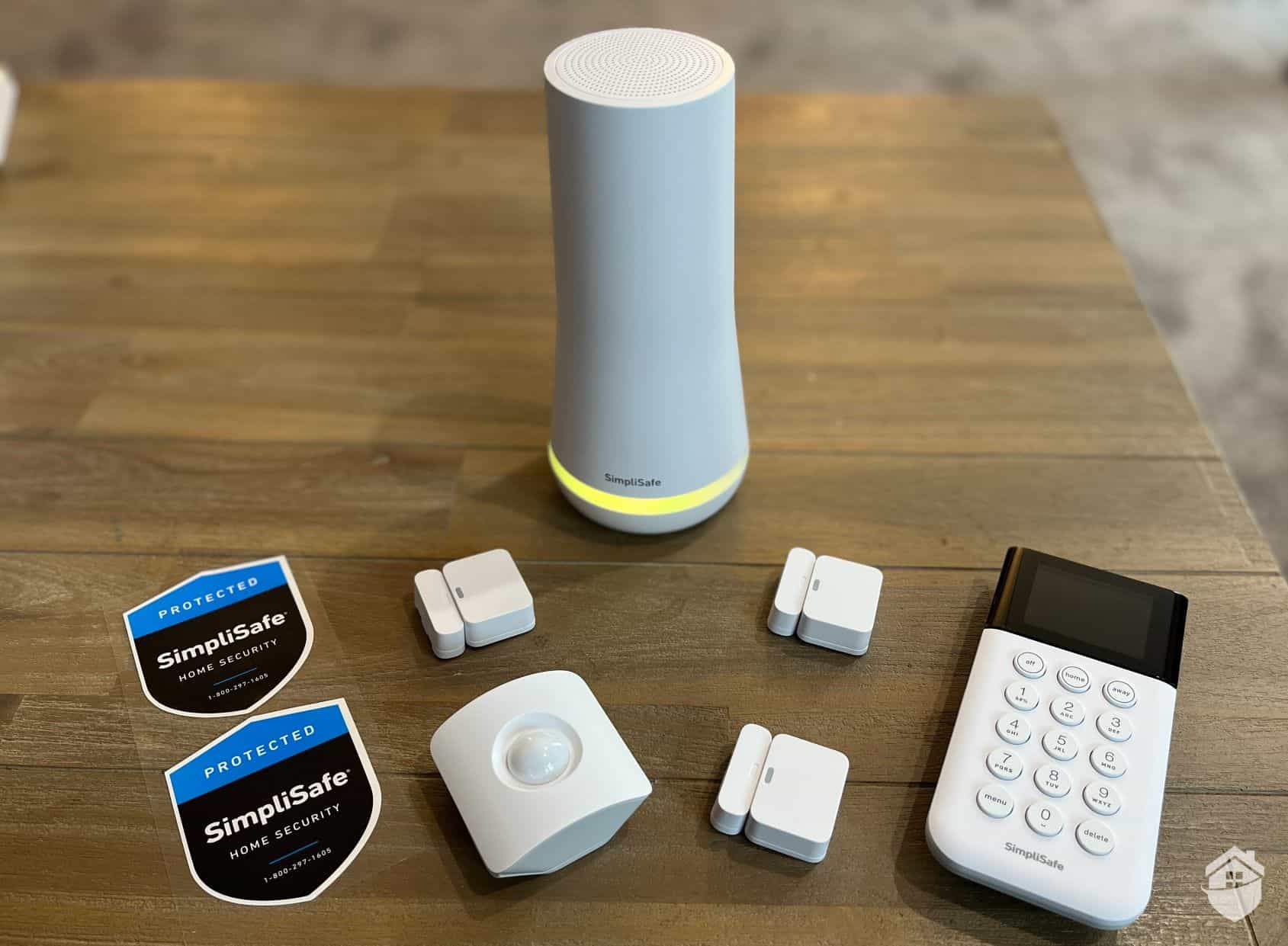
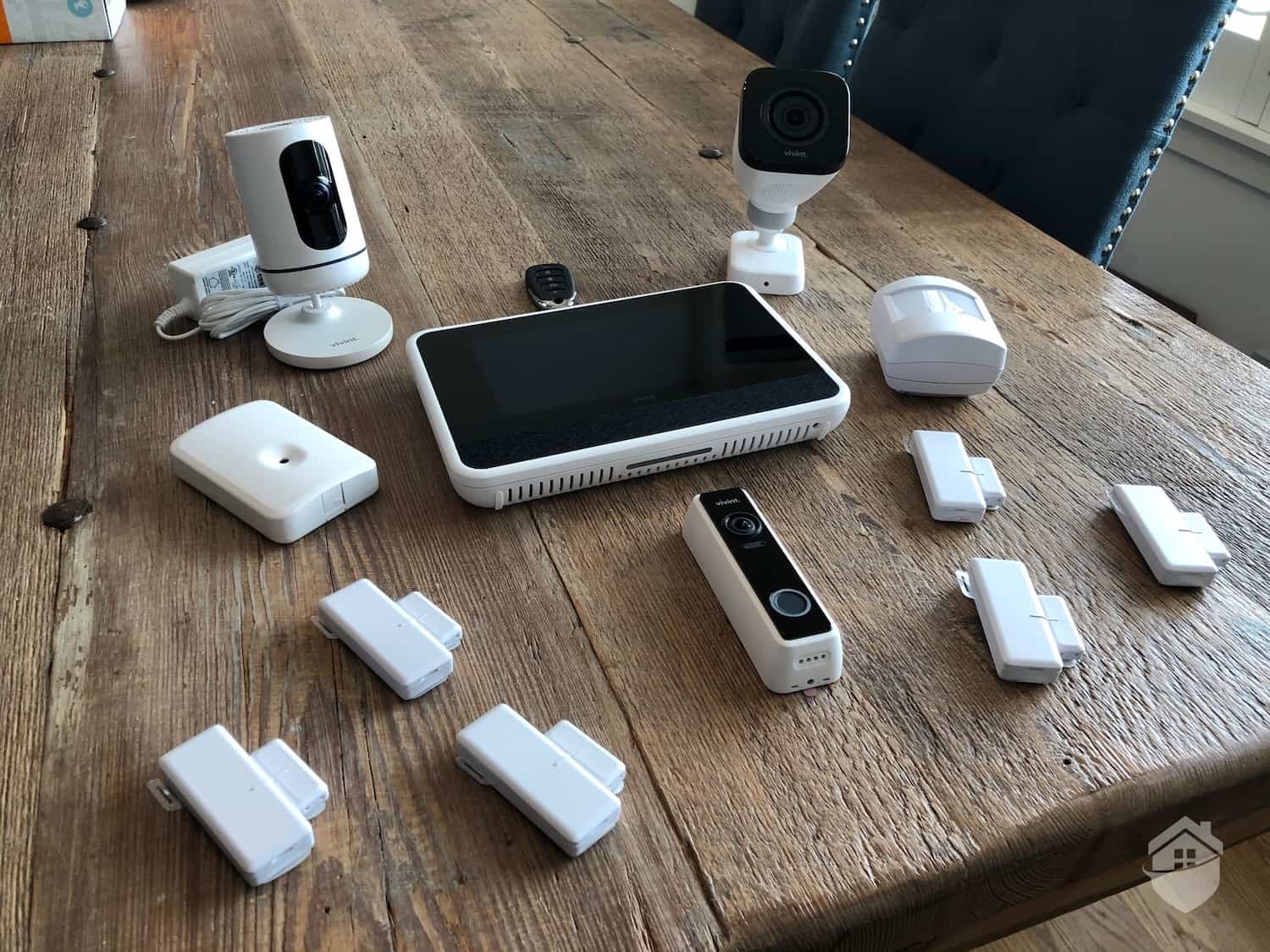
ADT's motion sensors use passive infrared (PIR) technology to detect heat signatures moving through a room. When a warm body crosses the sensor's field of view, it triggers an alert to the ADT Base – a screenless hub that acts as the brains of the system – which then decides whether to sound the alarm based on your system's current mode.
During testing, we confirmed the 90-degree detection arc and 40-foot detection range. That’s pretty normal in the industry, but we’re glad to know it stays true to ADT’s words. We placed several motion sensors in high-traffic areas like hallways and living rooms. They consistently picked up movement, confirming their reliability.
Pet-Friendliness
ADT’s motion sensors pick up movement by both people and pets, which brings us to an important point – ADT’s sensors are pet-immune to a certain degree. The sensitivity is adjustable on a per-sensor basis, and they are capable of ignoring pets up to 85 pounds. Generally speaking, since PIR motion sensors detect movement of objects with body heat, smaller and lower heat signatures get ignored.
We created a guide on how to test and calibrate PIR motion sensors, and while ADT’s technician did it for us when they installed our ADT system, we found the process generally similar. The adjustments were effective, too, which is why we named ADT one of the best security systems for pet owners.
Friendly Tip: Mount motion sensors in corners at about six to seven feet high for maximum coverage. Avoid placing them near heating vents or sunny windows, which can cause false triggers.
Detection
Another thing that impressed us was the response time when we simulate break-ins. It takes only about two seconds from the moment we walk into the sensor's range to when our ADT+ app buzzes with an alert. That's fast enough to matter in a real break-in scenario.
That said, we’d suggest running tests every once in a while. ADT’s motion sensor runs on lithium batteries that ADT claims can last three to five years. Battery levels barely budged during testing, so that estimate seems realistic. ADT’s technician also said we’d get an alert when batteries run low. Still, on such devices that last so long on a single charge, our security system experts recommend regular checking and testing.
Entry Sensors
ADT Entry Sensor Overview
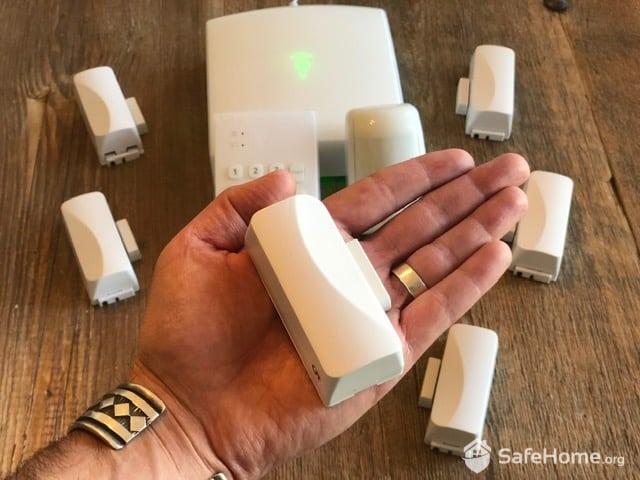
Entry sensors are also known as door sensors or window sensors, depending on where they are placed. They are the workhorses of any security system, and ADT's version consists of two pieces: a magnet and a sensor that attach to doors and windows. When the door or window opens and the magnet separates from the sensor, the system registers a breach. It's simple physics, but it works incredibly well.
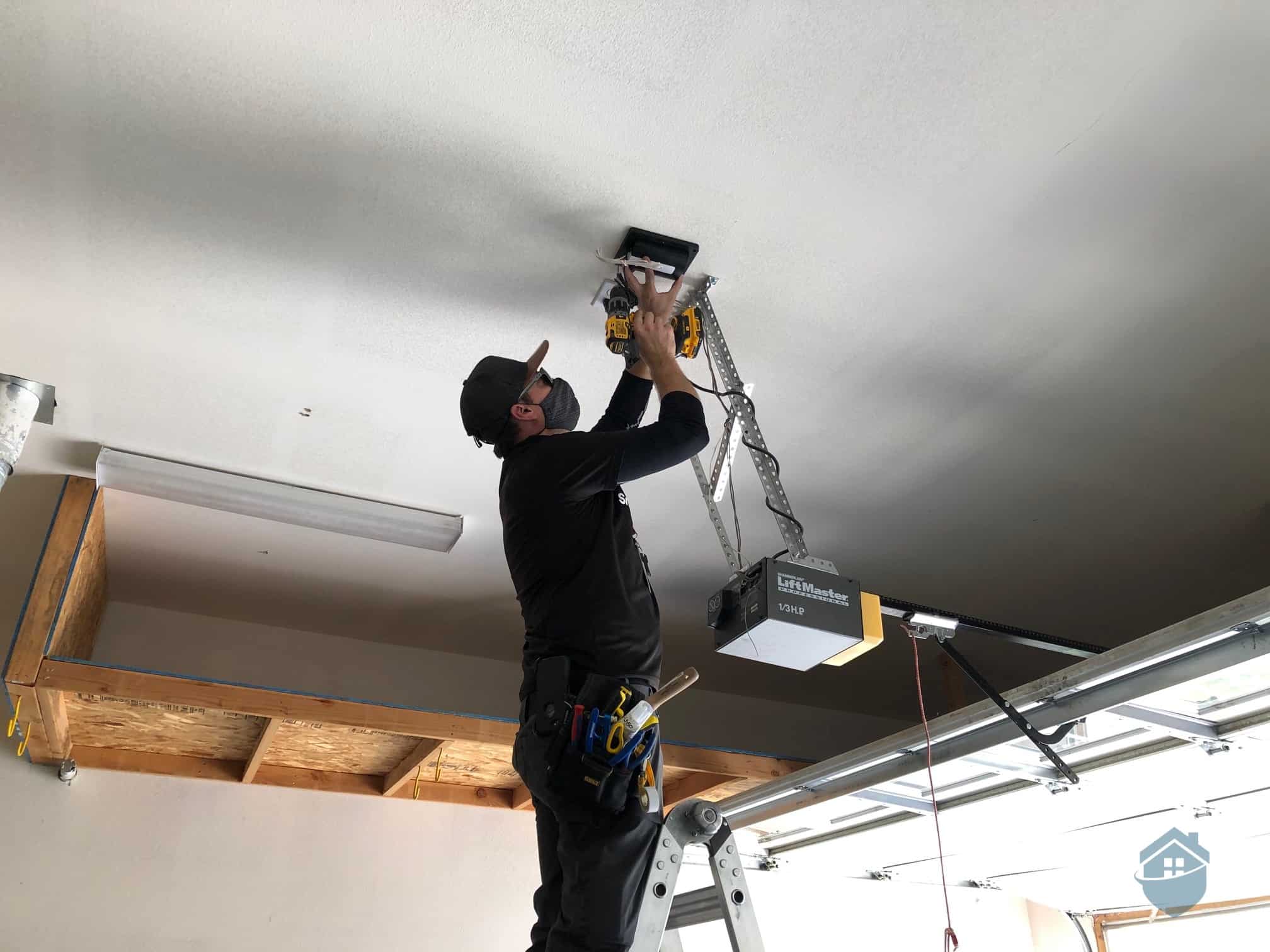
These sensors are compact—about the size of a pack of gum—and come in white plastic that blends reasonably well with most door frames. Installation took the technician about two minutes per sensor using the included adhesive strips. It required no drilling. The adhesive is strong enough for most applications, but we've seen entry sensors from other brands fall off in extreme heat or humidity.
Pro Tip: Sensor placement is crucial. Place entry sensors on all ground-floor windows and doors, plus any second-floor access points near trees or roofs.
Standard vs. Premium
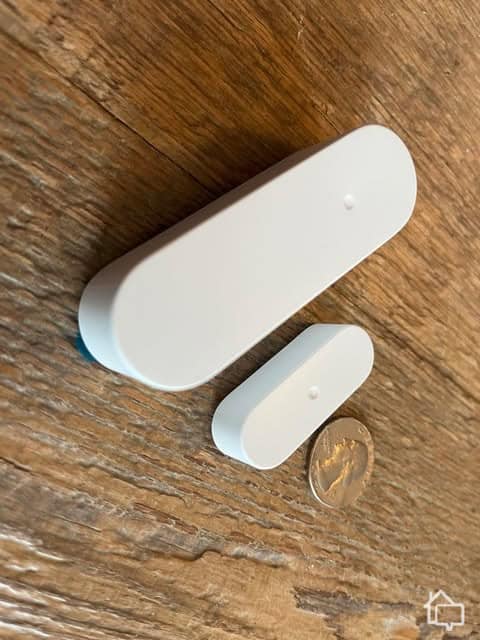
ADT’s standard entry sensor next to a penny
ADT actually offers two types of the entry sensor – the standard and the premium version. At $40 per unit, the premium version costs twice as much as the standard version. The reason for that is that it comes with a shock sensor, which can let you know if someone knocks on your door or if someone tries to break it down. It also has a convenient bypass switch that would allow you to open your door without triggering an alarm.
Real-World Testing
In real-world testing, ADT’s entry sensors never missed a single opening. Whether we cracked a window an inch or flung a door wide open, alerts came through immediately. The sensitivity is adjustable through the app, too. That can be useful if you have older doors that don't close perfectly flush and might trigger false alarms on the highest sensitivity setting.
We noticed one limitation though: the sensors need to be within about 350 feet of the ADT Base for reliable communication. That's fine for most homes, but if you've got a sprawling property or thick concrete walls, you might experience connectivity issues in far corners. ADT sells range extenders for this scenario, but that's an additional cost.
>> Other Options: Best Security Systems for Large Homes
Environmental Sensors
Environmental sensors are where ADT Plus really separates itself from basic security systems. These devices monitor for water leaks, smoke, and carbon monoxide – hazards that can cause far more property damage and deaths than burglaries.
Quick Fact: According to the National Fire Protection Association’s (NFPA) annual fire loss data, residential structure fires in 2021 resulted in an estimated $8.9 billion in direct property damage, along with thousands of civilian injuries and deaths.2
Water Leak Sensors
ADT's water sensors are small pucks that sit on the floor near potential leak sources like water heaters, washing machines, sinks, and sump pumps. They have metal contacts on the bottom that complete a circuit when water bridges the gap. The moment water touches those contacts, you get an alert.
We tested these by placing them under a bathroom sink and intentionally creating a small leak. The sensor detected the water within seconds and sent an alert to our ADT+ app. We recommend at least one sensor on areas with plumbing or areas where leaks might occur. The sensors are battery-powered and last about three years. Watch out for the low-battery warnings on the app – they should give you plenty of notice to replace the batteries.
Smoke Detectors
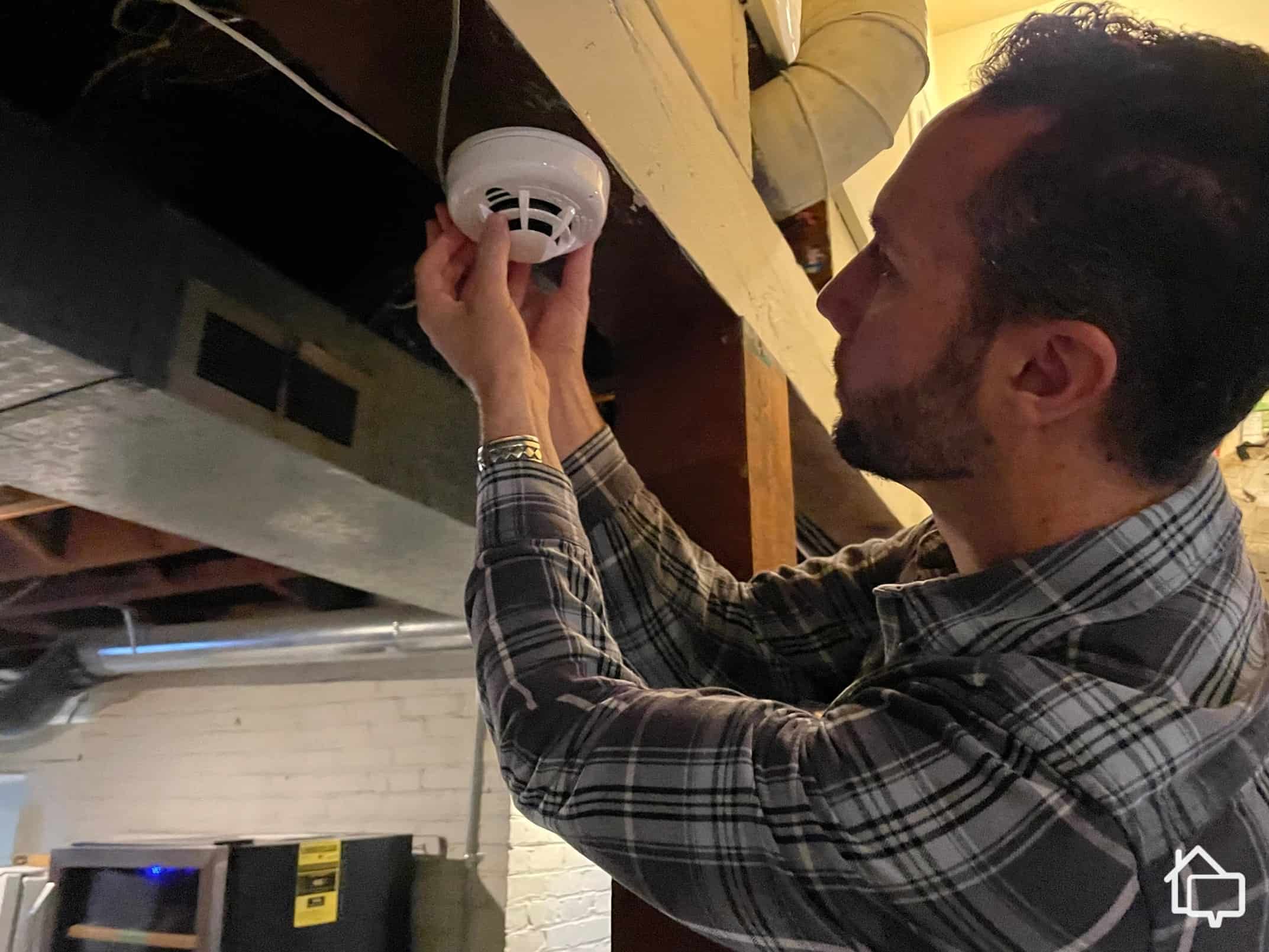
Testing ADT’s smoke detector
ADT's smoke detectors use both ionization and photoelectric sensing technologies, making them effective against both fast-flaming and slow-smoldering fires. Our resident fire safety experts consider this dual-sensor approach best practice because it reduces false alarms while catching fires in their earliest stages.
What makes these different from standard smoke detectors is the professional monitoring integration. When smoke is detected, ADT's monitoring center is notified immediately and can dispatch the fire department even if you're not home or unable to respond. ADT is among the security systems with the fastest emergency response times, thanks to its fully redundant monitoring network.
During testing, we used canned smoke to trigger the detector. The alarm was loud – 85 decibels, which is about as loud as a garbage disposal – and the monitoring center called within 30 seconds. That response time could mean the difference between a small kitchen fire and a total loss.
>> Read More: Residential Fire Prevention Tips and Guide
Carbon Monoxide Detectors
Carbon monoxide is invisible, odorless, and deadly, which makes detection equipment absolutely essential if you have any fuel-burning appliances, attached garages, or fireplaces. ADT's CO detector uses an electrochemical sensor that measures carbon monoxide concentration in parts per million (ppm).
The device triggers at different thresholds based on exposure time. At 70 ppm, it'll alarm within 60 to 240 minutes. At 150 ppm, it alarms within 10 to 50 minutes. At 400 ppm, it alarms within 4 to 15 minutes. These graduated thresholds follow Underwriters Laboratories (UL) standards and help prevent false alarms while ensuring protection.
Like the smoke detectors, CO detectors connect to ADT professional monitoring. We couldn't safely test this with actual carbon monoxide (obviously), but the self-test function confirmed it was communicating properly with the ADT Base and monitoring center.
>> Learn More: The Best Home Security Systems with Professional Monitoring
Pricing and Packages
ADT sensors are available through professional installation packages, and ADT’s pricing varies based on your home's size and specific needs. Here's what you can expect based on current ADT offerings:
| Sensor Type | Individual Cost | Typical Package Inclusion |
|---|---|---|
| Motion Sensor | $40 | 1 sensor in base packages |
| Entry Sensor (Standard) | $20 | 1 to 2 sensors in base packages |
| Entry Sensor (Premium) | $40 | Add-on |
| Water Leak Sensor | $60 | Add-on |
| Smoke Detector | $60 | Add-on |
| CO Detector | $60 | Add-on |
| Smoke and CO Detector | $115 | Add-on |
Smart Savings: Ask about seasonal promotions before signing up. ADT regularly offers deals that waive installation fees or include free equipment upgrades, potentially saving you several hundred dollars.
Conclusion
ADT security systems sensors deliver on the brand’s core promise to offer reliable, professional-grade security monitoring that actually works when it matters. After extensive testing, we’re confident these sensors will catch intrusions, detect environmental hazards, and provide the quick response times that make security systems effective. The sensors themselves are well-designed, easy to use once installed, and backed by a company with over 150 years in the security business. That kind of institutional knowledge shows in the product quality and support infrastructure.
For homeowners serious about comprehensive protection—not just basic intrusion detection but also fire, carbon monoxide, and water damage prevention—ADT's sensor lineup covers all the bases. Just make sure you understand the long-term monitoring commitment and factor that into your security budget.
Frequently Asked Questions
- Do ADT sensors work with smart home devices?
Yes, ADT sensors integrate with Google Home, Amazon Alexa, and other smart home platforms through the ADT app. You can use voice commands to arm and disarm your system, check sensor status, and create automation routines.
- How far can ADT sensors be from the Base?
ADT sensors can communicate reliably up to 350 feet from the Base in ideal conditions. Thick walls, metal structures, and interference can reduce this range, so ADT offers wireless range extenders for larger homes.
- What happens if an ADT sensor malfunctions?
ADT’s professional monitoring includes equipment warranties and technical support. If a sensor malfunctions, you can contact ADT support for troubleshooting or replacement at no additional cost during the warranty period.
- Do ADT motion sensors work in the dark?
Yes, ADT motion sensors use infrared technology that detects heat signatures, not visible light. They work equally well in complete darkness, detecting movement based on body heat rather than visual changes.