SafeHome.org may receive compensation from some providers listed on this page. Learn More
We may receive compensation from some providers listed on this page. Learn More
Best Security Bundle
LifeLock’s dark web scanning is bundled with the full Norton 360 suite, giving you alerts, a VPN, and antivirus protection in one subscription built around Norton’s decades of threat data.
Best Insurance Value
Coveron backs its dark web monitoring with up to $2 million in identity theft insurance starting under $7 a month, and in our testing it caught a leak that every other service on this list missed.
Best All-in-One Protection
Aura folds dark web monitoring into every plan alongside a VPN, antivirus, and password manager, with no cheaper stripped-down tier to worry about picking wrong.
Best Security Bundle
Best Insurance Value
Best All-in-One Protection
Most identity theft doesn't start with someone hacking you directly. It usually starts with a company you do business with getting breached, and your email, password, or Social Security number ending up in a file that gets sold or posted online. Dark web monitoring watches for that specifically, so you find out before someone else acts on it.
We compared five identity theft protection services specifically on how well they watch the dark web, along with what they back that monitoring up with. If you want to see how these stack up against every other provider we've reviewed, our full best identity theft protection roundup covers the broader field. LifeLock takes the top spot here on the strength of its alert system and Norton 360 bundle. Coveron lands at number two, and while it's newer to this space, it pairs solid dark web monitoring with the best insurance-to-price ratio we found. Keep reading for the full breakdown, plus what to look for if you're shopping around further.
LifeLock dark web monitoring alerts
LifeLock, backed by Norton, built its reputation on catching identity threats early, and dark web monitoring is central to that. There are Norton 360 bundles available, which pair the dark web scan with antivirus protection, a VPN, and anti-phishing tools, so you're not just getting notified after the fact. You're also reducing how much of your data ends up exposed in the first place.
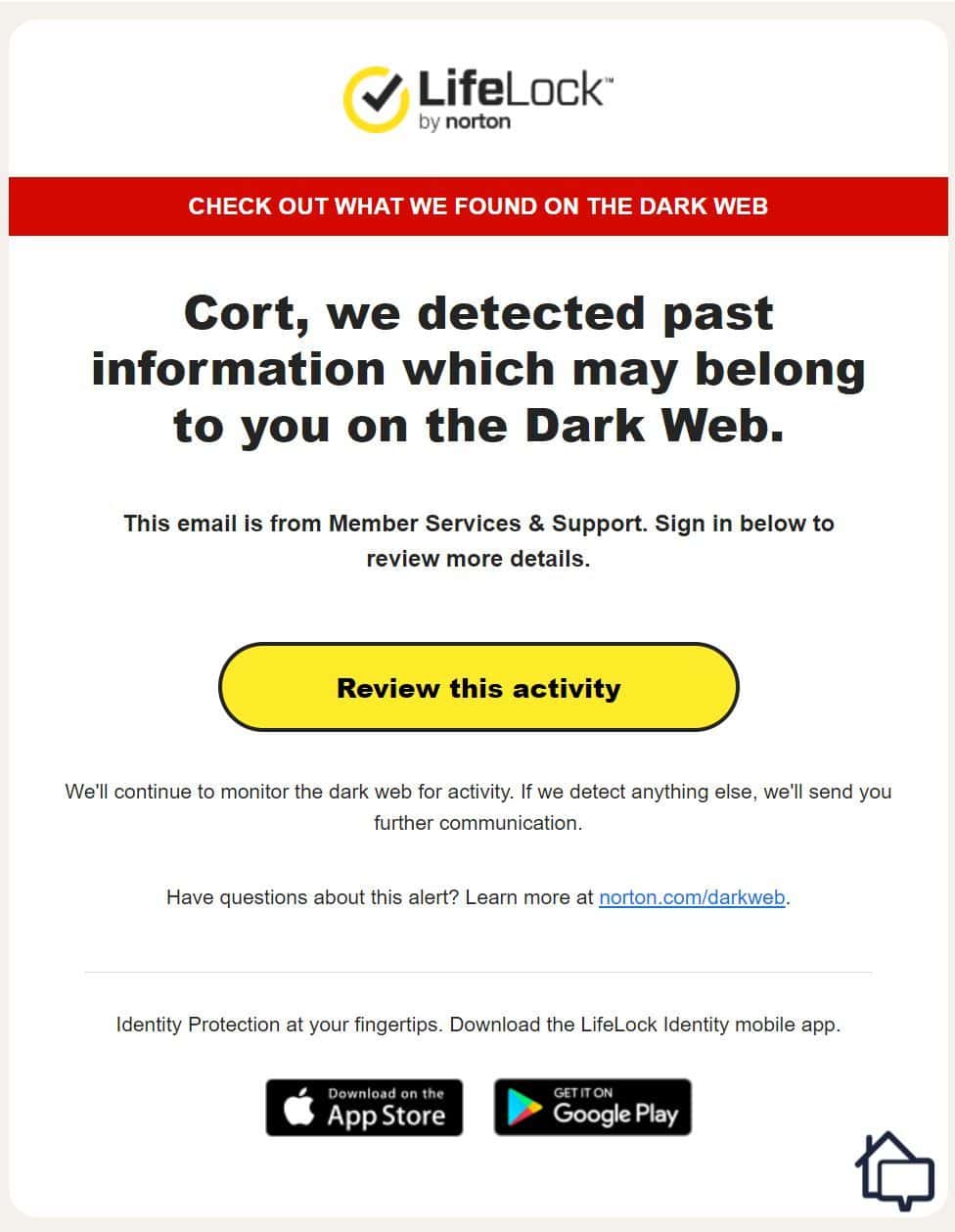
When we tested LifeLock, its dark web monitoring stood out for how it’s woven into the rest of the Norton suite rather than sitting as a separate feature. Alerts arrived through the mobile app with enough detail to act on immediately, and having the VPN and antivirus running alongside the monitoring meant fewer gaps for new leaks to slip through in the first place.
Setup asked for more upfront information than some competitors, since LifeLock wants to monitor bank accounts and investment accounts in addition to the standard dark web scan. That extra setup time paid off once monitoring was active, since the alerts covered more than just credential leaks. We also appreciated that the Norton antivirus and VPN felt like real integrated parts of the account rather than a bolted-on add-on, which isn’t always the case when identity protection services bundle in extra tools.
The tradeoff is cost. LifeLock runs higher than most of the other services on this list, and the cheaper tiers cut back on credit bureau coverage to hit a lower price point. If dark web monitoring is your main priority and you’re comfortable paying for the full Norton bundle alongside it, that cost felt justified in our testing. If you’re on a tighter budget, we’d weigh it against the other options here first.

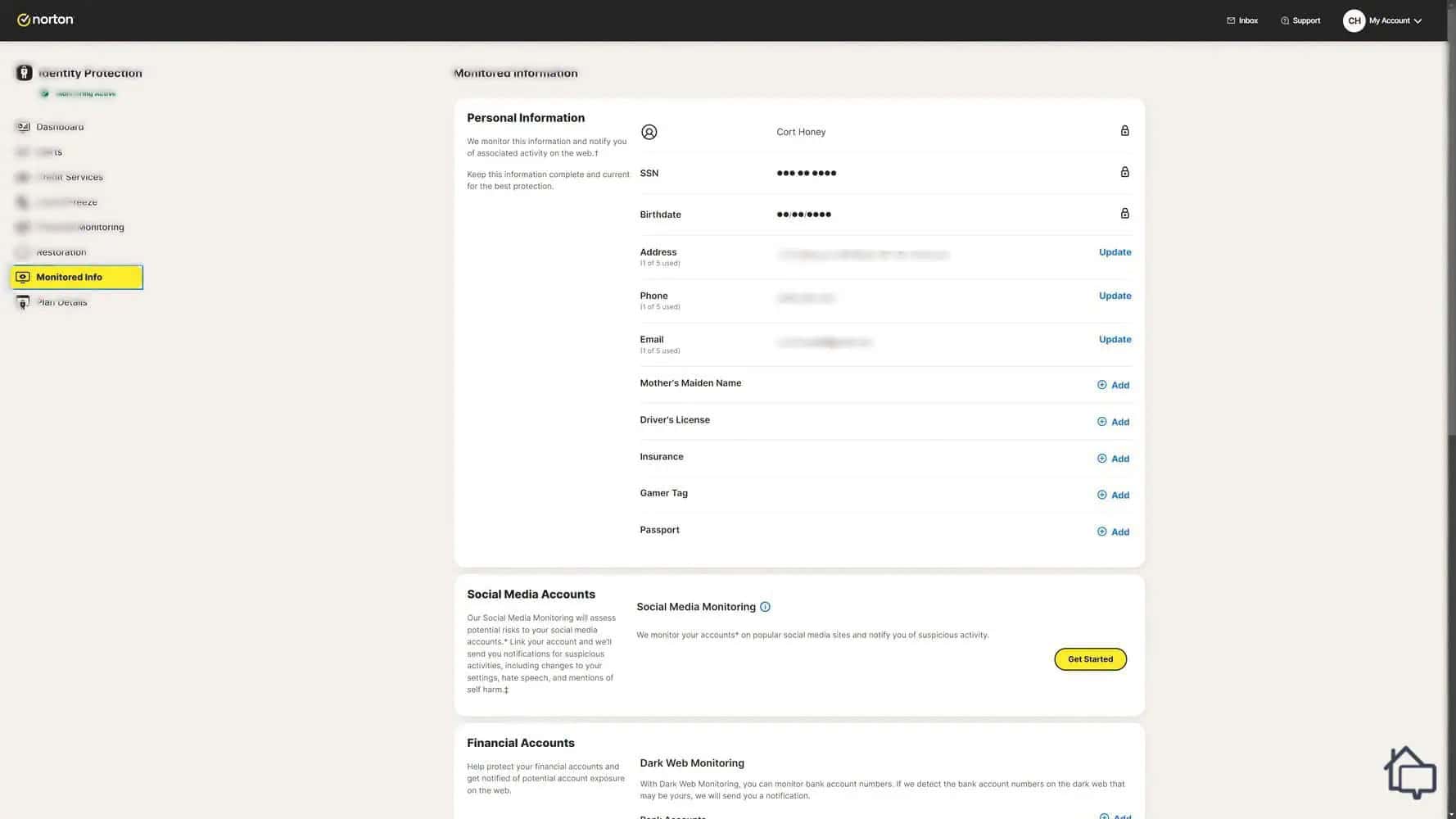
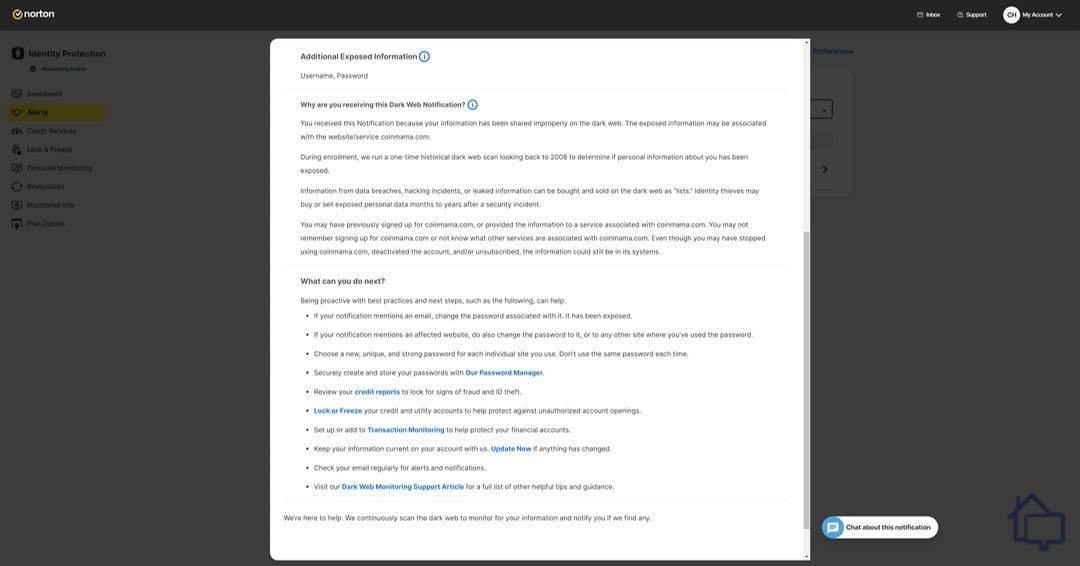
LifeLock provides advice with alerts on how to minimize risks.
Coveron pairs its dark web monitoring with an insurance package that's difficult to match dollar for dollar. Its Identity Theft Protection plan gets you up to $2 million in identity theft coverage for under $7 a month. The monitoring itself scans forums, marketplaces, and leak databases around the clock. Coveron is a newer name in this category, though the service itself has been around under its previous name, NordProtect. If you're weighing Coveron's full pricing and plans beyond just dark web monitoring, we've broken that down separately.

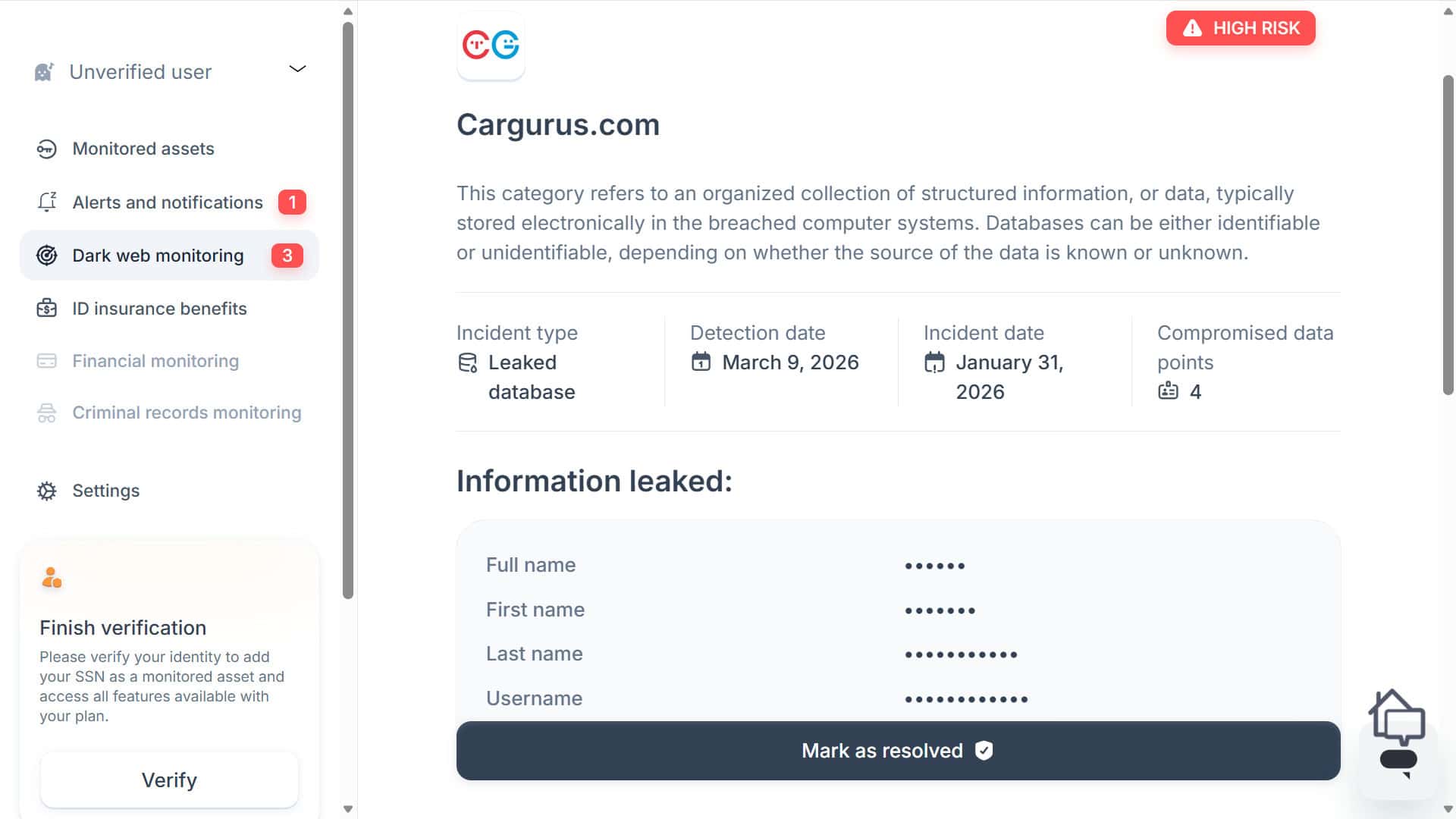
Coveron’s dark web monitoring alerts showing what data was exposed.
During testing, Coveron actually flagged a phone number leaked on the dark web tied to our tester’s account. Coveron also breaks down exactly what was exposed in each alert instead of just flagging that something happened, which made it easier to know what to actually do next.
Activating the account took a bit more back and forth than we expected, particularly around credit monitoring. Coveron struggled to verify our tester’s identity against their credit file on the first attempt. Getting it working took a message to support, plus a few additional pieces of information like previous addresses. Once it was active, though, the monitoring itself ran smoothly in the background without further issues.
We also liked that Coveron’s insurance activates the moment you subscribe, rather than after some waiting period. That’s not something every service on this list does, and it matters if you’re signing up specifically because you’re worried about a recent breach rather than as a general precaution. Combined with the dark web catch, it left us with the impression that Coveron takes the actual threat seriously, even if the account setup itself has a rough edge or two.
| Identity monitoring | Yes |
|---|---|
| Credit monitoring | 1-bureau (Identity Theft Protection) or 3-bureau (Full Protection) |
| Insurance | Up to $2 million, itemized separately from cyber extortion, home title, and online fraud coverage |
| Restoration guarantee | No |
| Free trial | None |
| Money-back guarantee | 30 days |
Aura takes a different approach than the other services here. Instead of gating features behind tiers, every Aura plan, even the cheapest one, includes the full feature set: three-bureau credit monitoring, dark web monitoring, and a full device security bundle. The only thing that changes as you move up plans is how many people are covered.

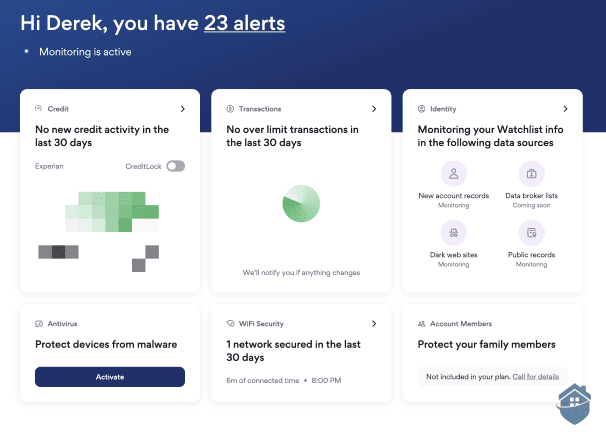
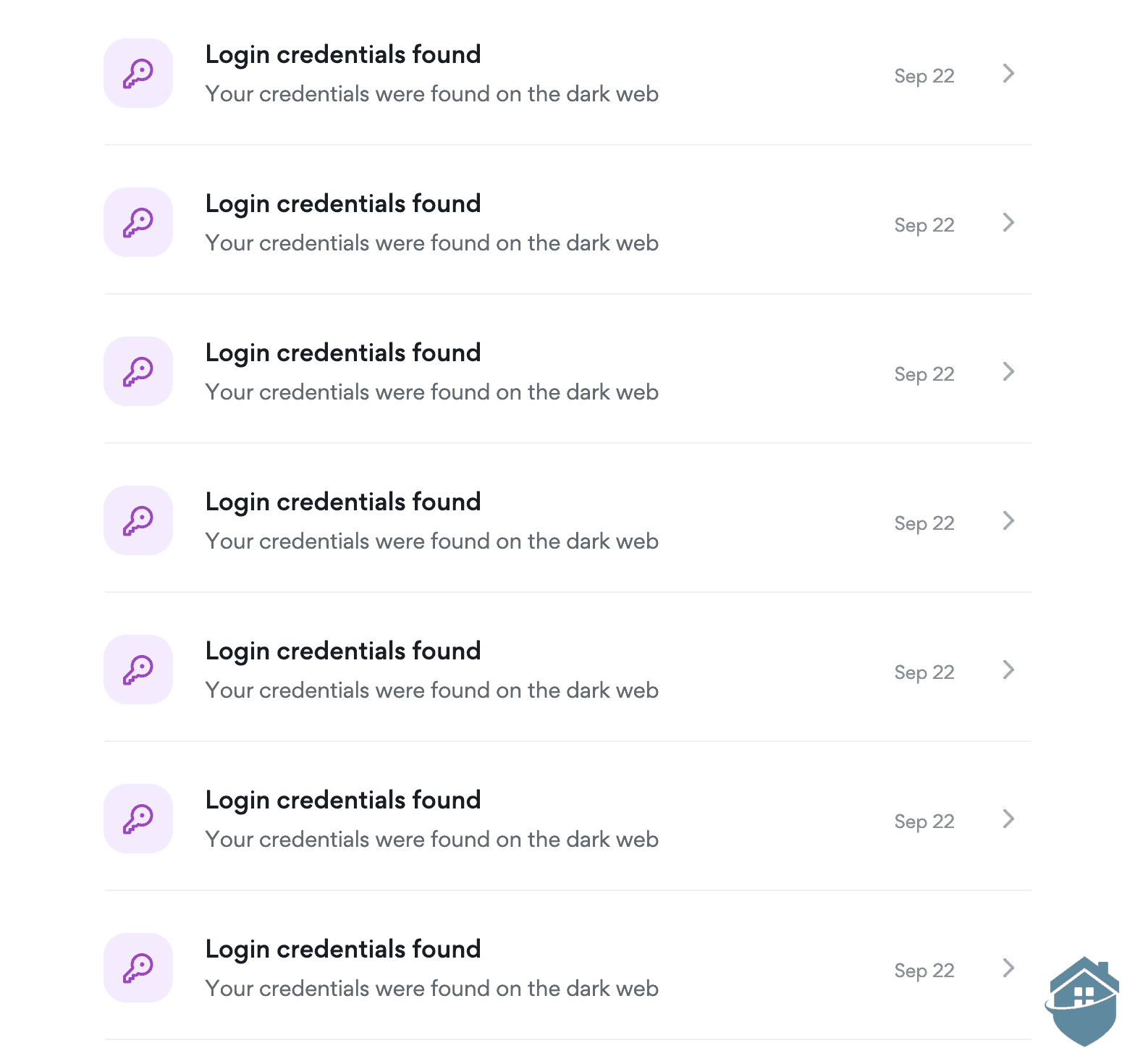
Some of the alerts we received from Aura during our testing that made us take action before needing to use restoration services.
Aura’s dark web monitoring runs alongside its own antivirus and VPN, which cuts off some of the exposure before it happens rather than only alerting after the fact. When we tested Aura, we found the monitoring dashboard easy to navigate, and the alerts came with enough context to act on quickly without needing to dig through a separate app.
Because every Aura plan includes the same feature set, we didn’t have to think about which tier unlocks full dark web coverage, unlike some other services on this list. That simplicity extended to the rest of the account too. Setup walked us through connecting financial accounts and adding the personal information Aura monitors for, and the whole process took less time than we expected given how much the service actually covers.
The one place Aura felt less specialized was the bundled VPN itself. It got the job done, but it didn’t feel as fast or full-featured as a standalone VPN service would. That’s a minor tradeoff against everything else included standard, and it didn’t affect the quality of the dark web monitoring or the alerts themselves.
Identity Guard stands out on this list for keeping its identity theft insurance the same across every plan, including the cheapest one. Most competitors reserve their strongest coverage for the top tier, so with Identity Guard you're not paying more just to get the insurance you'd actually want.

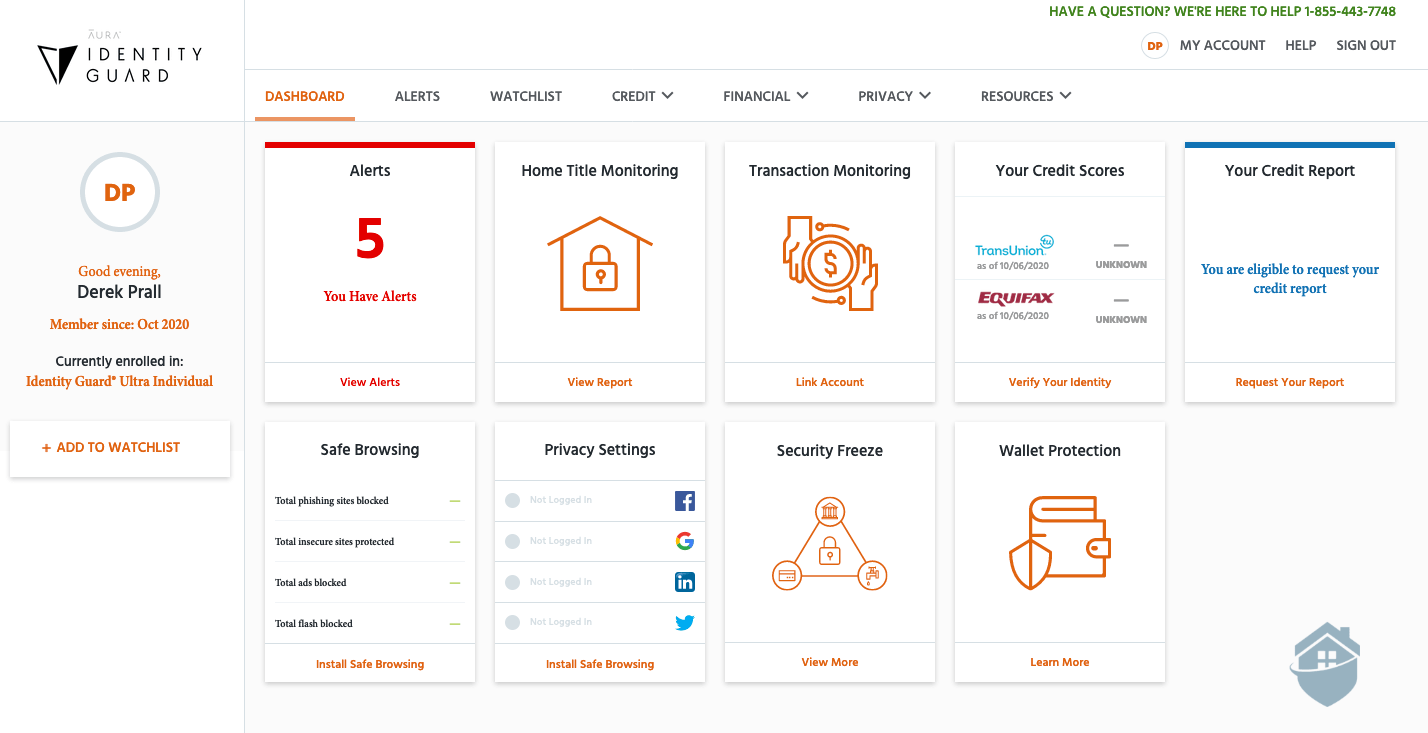
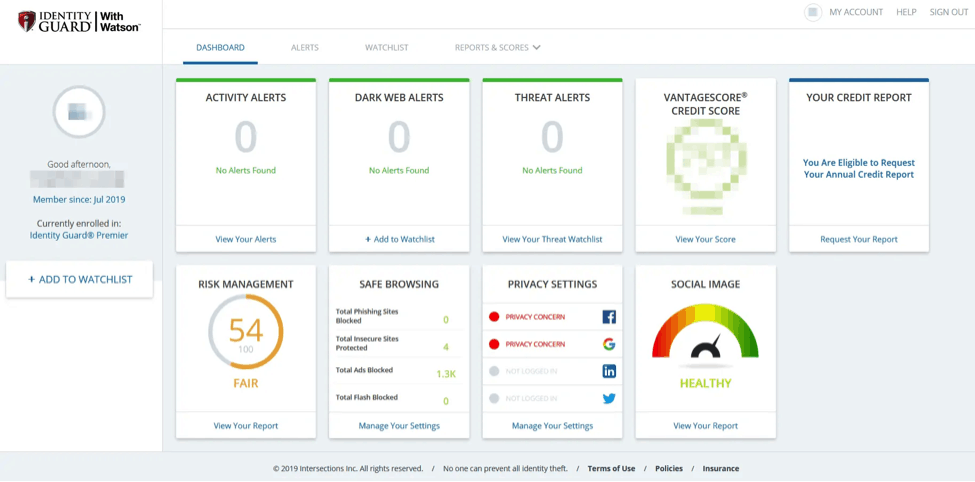
Identity Guard’s dashboard looks dated, but it still provided us with all the information we needed
Identity Guard’s dark web alerts arrived close to real time in our testing, and each one pointed us toward the specific account or service tied to the exposure rather than leaving us to guess. Combined with the flat insurance coverage across every tier, it made the entry-level plan feel like less of a compromise than budget tiers from other services on this list.
We also noticed that upgrading past the entry-level Value plan doesn’t change the insurance amount at all, only the feature set. Good to know going in, since the decision to upgrade should come down to whether you want three-bureau credit monitoring and a dedicated case manager. For a straightforward dark web monitoring need without a lot of extras, the entry plan covered the basics well in our testing.
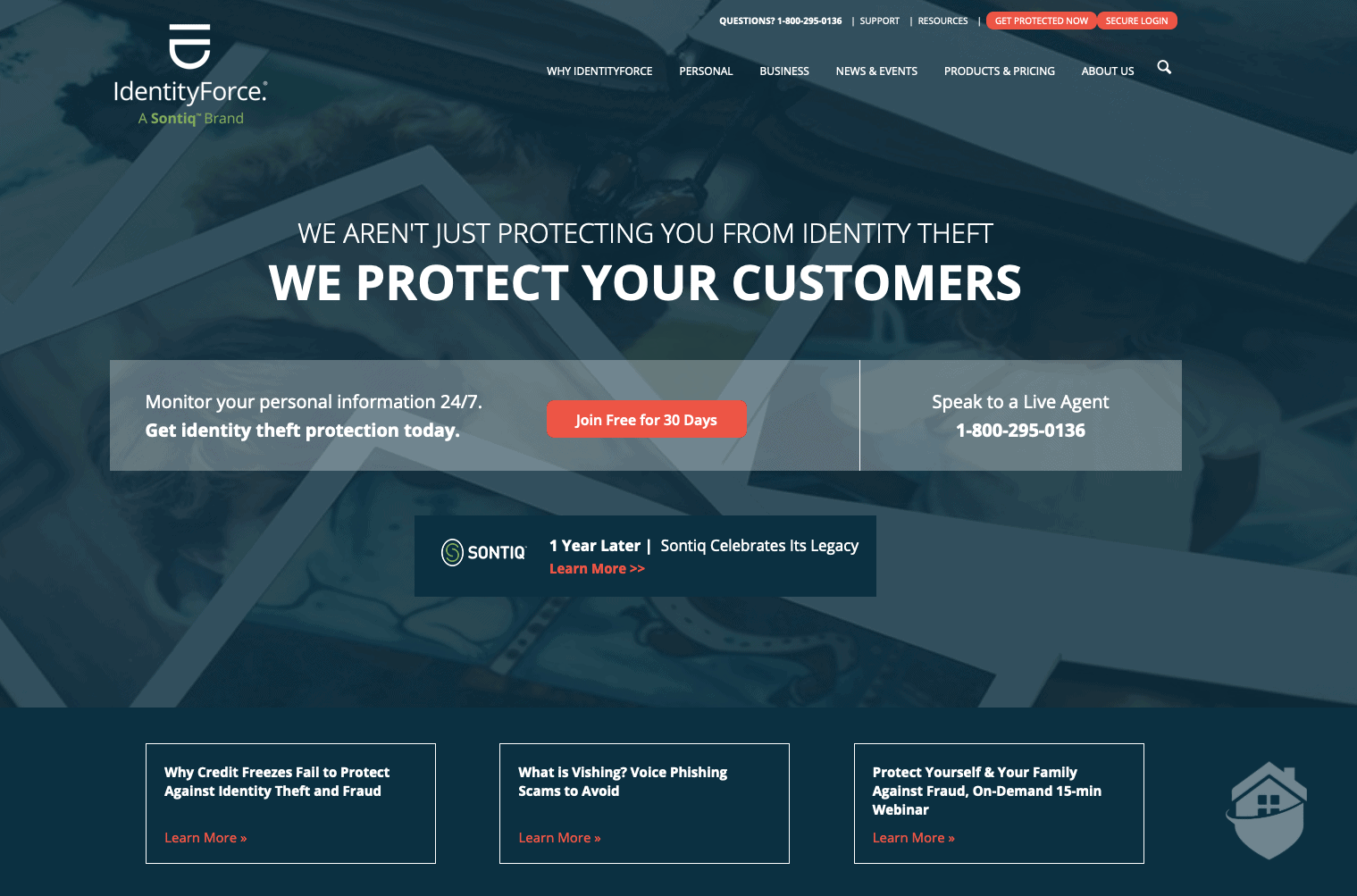
IdentityForce, now a TransUnion brand, includes a credit score simulator on its UltraSecure + Credit plan, letting you preview how a financial decision might move your score before you make it. That sits alongside standard three-bureau monitoring and dark web scans that cover both indexed and unindexed sites. It's one of the more detail-oriented options on this list if you want credit tools paired with your dark web coverage.

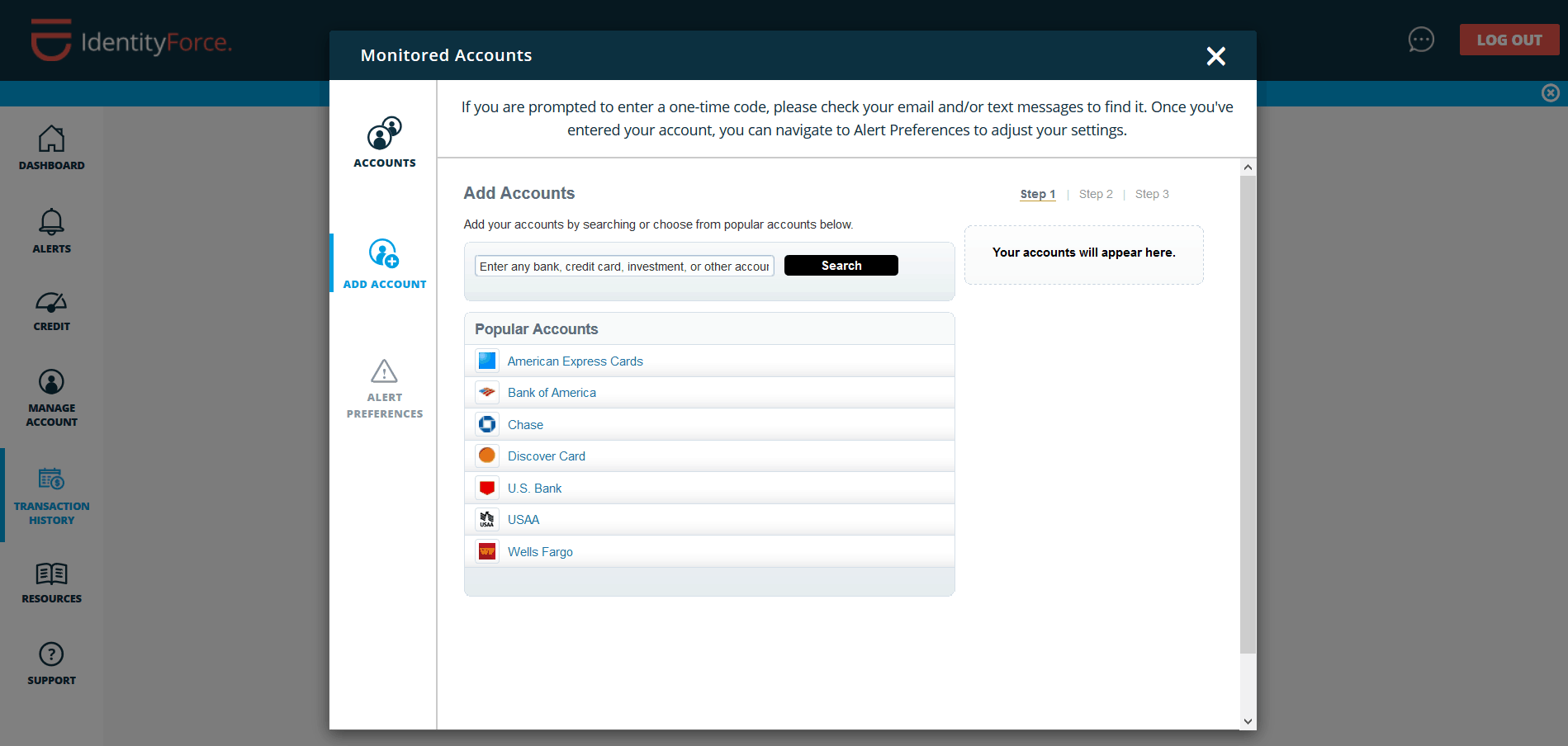
Our monitored accounts inside IdentityForce
IdentityForce’s core monitoring functions solidly, and its scans of unindexed sites caught activity that a purely surface-level scan would have missed during our testing. The credit score simulator was a real standout, since none of the other services on this list offer anything comparable for previewing how a financial decision might move your score.
The two-plan structure kept our decision simple, since there’s no confusing lineup of tiers to sort through. UltraSecure covers the dark web monitoring basics well on its own, and stepping up to UltraSecure + Credit felt worthwhile mainly for the credit tools rather than for any change to the dark web coverage itself. The mobile app was serviceable during testing but noticeably less polished than the desktop experience, so we’d lean on the website for anything beyond checking a quick alert.
| Identity monitoring | Yes |
|---|---|
| Credit monitoring | 3-Bureau |
| Insurance | Up to $2 million |
| Free Trial | 30-Day |
| Money-back guarantee | Yes (prorated) |
Identity theft isn't a rare inconvenience anymore. The FTC's Consumer Sentinel Network logged more than 1.1 million identity theft reports in 2024 alone, part of $12.5 billion in total fraud losses reported that year.1 Much of that starts with a data breach you never hear about directly. The Identity Theft Resource Center tracked a record 3,322 data compromises in 2025, a jump of nearly 80 percent over just five years.2 Dark web monitoring is what catches the gap between a breach happening somewhere else and someone actually using your information against you.
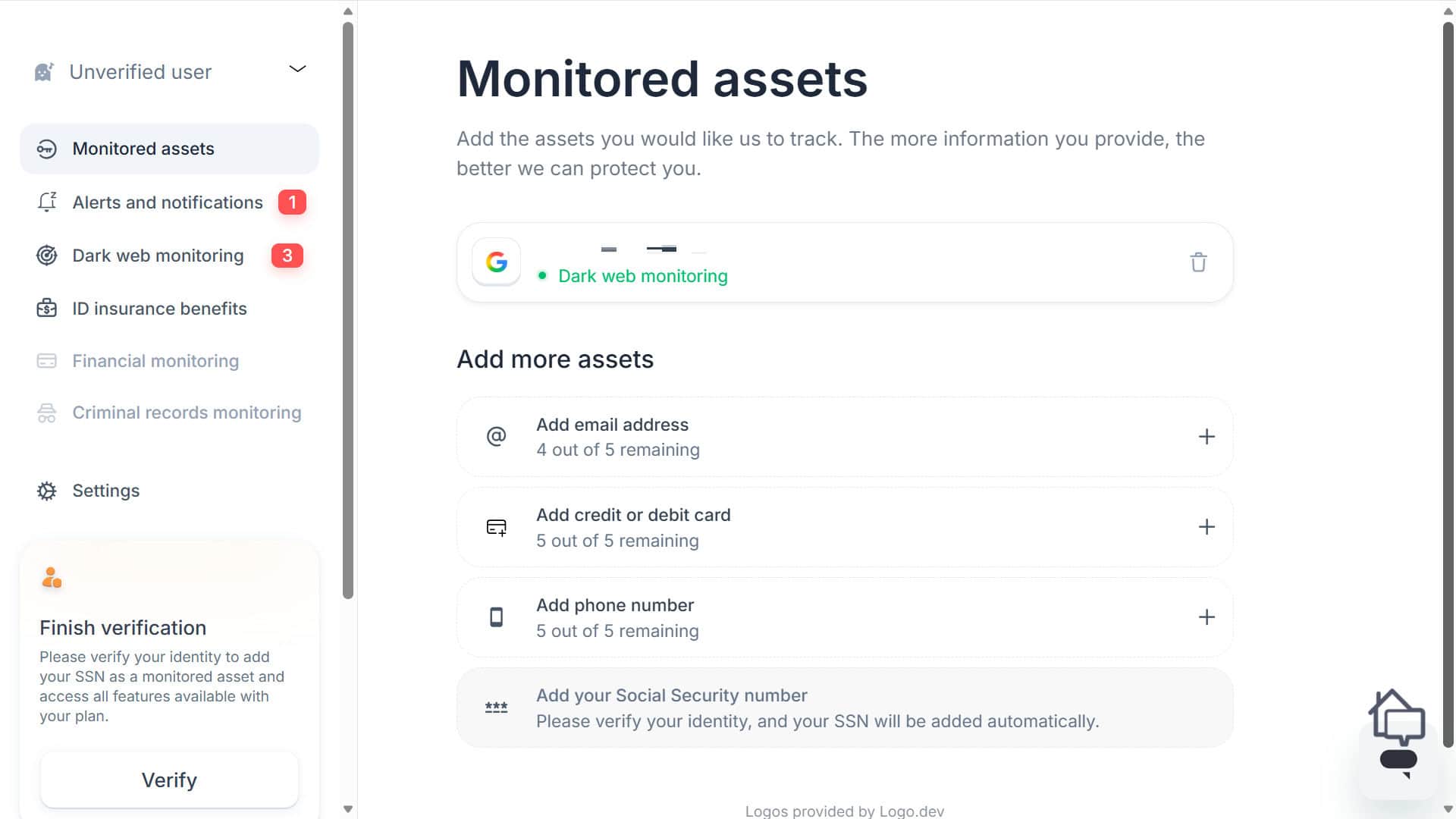
Coveron can monitor email addresses, credit or debit cards, and phone numbers
Not all dark web monitoring works the same way. Here's what we'd recommend prioritizing.
Pro Tip: Our identity theft insurance guide breaks down how these payouts typically work, and if you care about credit protection as much as dark web monitoring, our best credit monitoring services roundup is worth cross-shopping too.
Finding out your information is on the dark web isn't the same as having your identity stolen, but it's a real warning sign that calls for action. Change your passwords immediately, starting with anything tied to the exposed email or account. Turn on two-factor authentication anywhere you haven't already. If a Social Security number or financial account was part of the leak, consider a credit freeze with all three bureaus as an extra layer of protection while you watch for suspicious activity.
This is exactly where a monitoring service earns its price. Instead of hoping you notice a fraudulent charge or a strange new account on your own, you get a heads-up the moment your information shows up somewhere it shouldn't.
Instant Identity Theft Protection With Coveron
Dark web monitoring goes beyond alerts. We recommend choosing an identity theft protection service that also includes these features:
FYI: SSN monitoring is also important for kids. Their Social Security numbers can go unnoticed and unused for years, our child identity theft protection guide covers what to watch for there specifically.
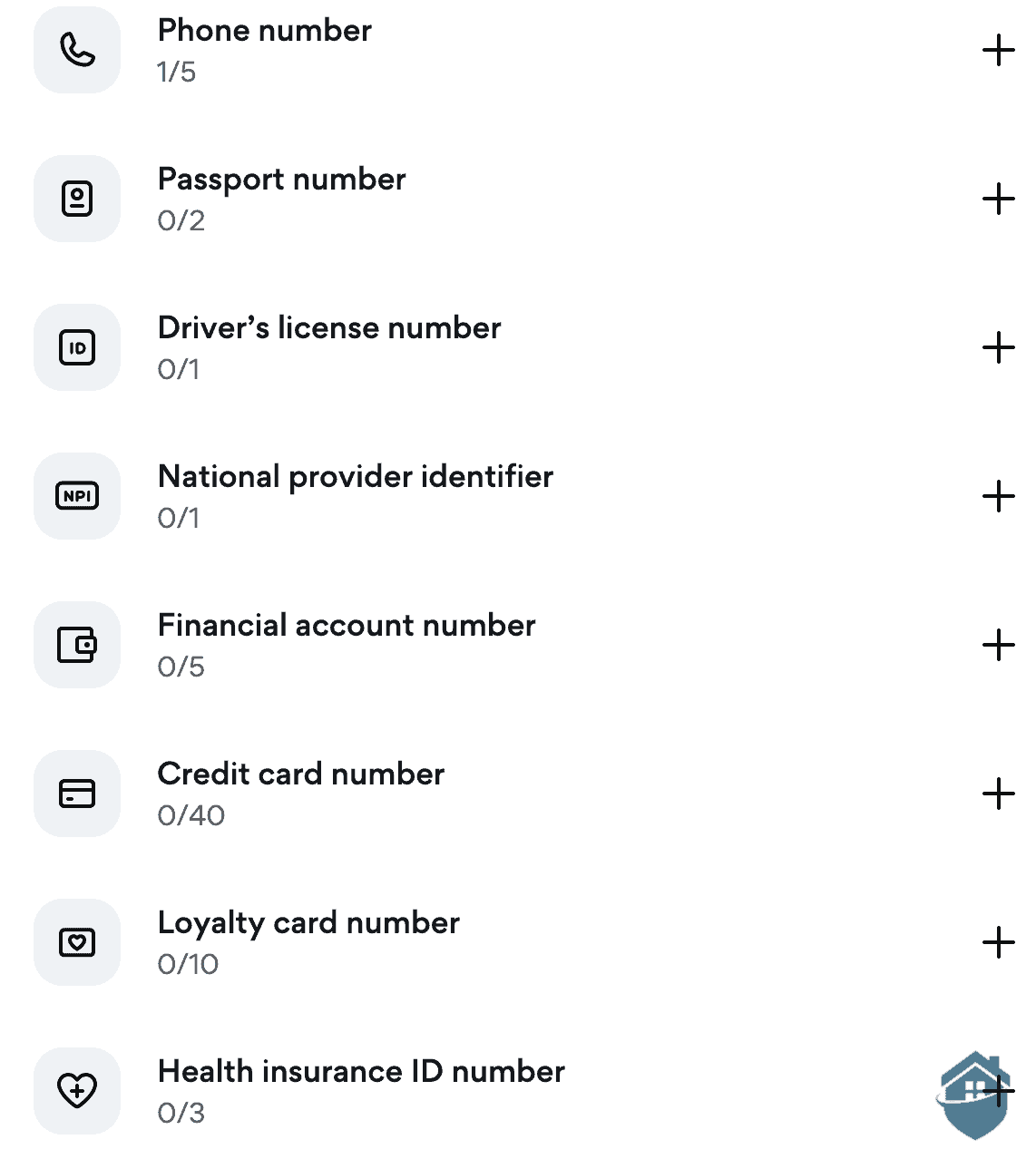
Aura can monitor a lot of your personal information
There’s no one-size-fits all solution to identity theft, especially when it comes to dark web monitoring. As you’ve seen, they all take different approaches.
We recommend LifeLock for anyone who wants the strongest security bundle on the market, dark web monitoring backed by a full Norton 360 suite. If you'd rather prioritize insurance value over brand recognition, Coveron is worth a close look, especially since its Identity Theft Protection plan gets you $2 million in coverage for less than $7 a month. Aura is the strongest pick if you don't want to think about which tier unlocks which feature, since everything's included from day one. Identity Guard and IdentityForce round out this list with real specializations, flat-rate insurance and a credit score simulator, respectively. Either one could be the better fit depending on which of those two angles you'd rather prioritize.
LifeLock tops this list for pairing dark web monitoring with a full Norton 360 security bundle. Coveron is a close second, backed by the strongest insurance-to-price ratio on this list and a track record of catching what other services miss.
No. Dark web monitoring tells you when your information has already been exposed somewhere. It doesn't prevent the exposure itself, which is why insurance and restoration support are just as important as the monitoring.
Free scanners can tell you if your email shows up in a known breach, which is a reasonable first check. They typically don't monitor continuously or cover the broader range of information, like Social Security numbers or card numbers, that the paid services on this list track.
This varies by provider, but the services on this list generally send alerts within hours to a day or two of a match. Coveron and LifeLock both send alerts promptly enough to act before the exposure typically gets used against you.
No. Once your information is posted or sold on the dark web, there's no service that can reliably get it taken down, since the sites hosting it don't respond to removal requests the way a legitimate company would. What monitoring gets you is the alert itself, so you can change passwords, freeze credit, or take other action before the exposure gets used against you.
Federal Trade Commission. (2025). Consumer Sentinel Network Data Book 2024. https://www.ftc.gov/reports/consumer-sentinel-network-data-book-2024
Identity Theft Resource Center. (2026). 2025 Annual Data Breach Report. https://www.idtheftcenter.org/publication/2025-data-breach-report/