SafeHome.org may receive compensation from some providers listed on this page. Learn More
We may receive compensation from some providers listed on this page. Learn More
SafeHome.org may receive compensation from some providers listed on this page. Learn More
We may receive compensation from some providers listed on this page. Learn More
LifeLock topped our 2026 rankings with its extensive identity and credit protection, generous insurance coverage, and digital safety tools built to stop online identity theft before it starts.
 Updated September 29, 2026
copied!
Updated September 29, 2026
copied!

Best Personal Protection
Lifelock comes stacked with real-time threat alerts, robust credit monitoring, and a user-friendly app. It’s not cheap, but Lifelock customers will enjoy a 60-day money-back guarantee and 42% off of their first year of service.
Best Insurance Value

Coveron pairs up to $2 million in itemized identity theft insurance with three-bureau credit monitoring and a bundled VPN and antivirus on its top tier. It’s not as established as LifeLock or Aura, but its coverage structure and lower entry pricing make it a strong value pick.
Best Family Protection

Aura offers comprehensive identity protection and doubles as a VPN to help keep you safe online. It’s not the cheapest option, but you simply can’t beat Aura if you’re looking for robust protection that you can count on.
Best Personal Protection
Best Insurance Value

Best Family Protection
Identity theft remains one of the fastest-growing financial crimes in the U.S. In 2024, the Federal Trade Commission received roughly 1.1 million identity theft reports.1 The good news? Specialized protection services make it easy to catch threats early and minimize the damage. Not sure which provider is right for you? We assessed and ranked 20 leading platforms to help you decide. Here's what we found:
We'll explore these six services in detail below, along with five additional options to consider if you have niche circumstances.
Our team built a fair, objective scoring system to evaluate the services and products we test — but what does that actually look like in practice? It means testing each service firsthand and grading it across four categories: customer service, value, features and services, and ease of use. You'll find our complete methodology at the bottom of this guide.
Here's specifically what we looked for in every identity protection service we tested:
Using those metrics, we arrived at our top five picks — each one carrying a SecureScore™ above 9.0 out of 10. Let's meet them.
| System |
LifeLock
|
Coveron

|
Aura Identity Theft Protection
|
Identity Guard®
|
IdentityIQ
|
McAfee ID Theft Protection
|
|---|---|---|---|---|---|---|
| Ranking | 1st | 2nd | 3rd | 4th | 5th | 6th |
| SecureScore™ | 9.7 | 9.6 | 9.6 | 9.3 | 9.3 | 9.2 |
| Best For | Individuals | Insurance value | Families | Affordable identity monitoring | Credit protection | Cyber protection |
| Entry-level price (per month) | $8.33 | $2.99 | $9 | $7.50 | $7.44 | $2.50 |
| Top-tier price (per month) | $34.99 | $8.99 | $25 (family plan) | $25 | $27 | $16.67 |
| Read our review | LifeLock review | Aura review | Identity Guard Review | IdentityIQ review |
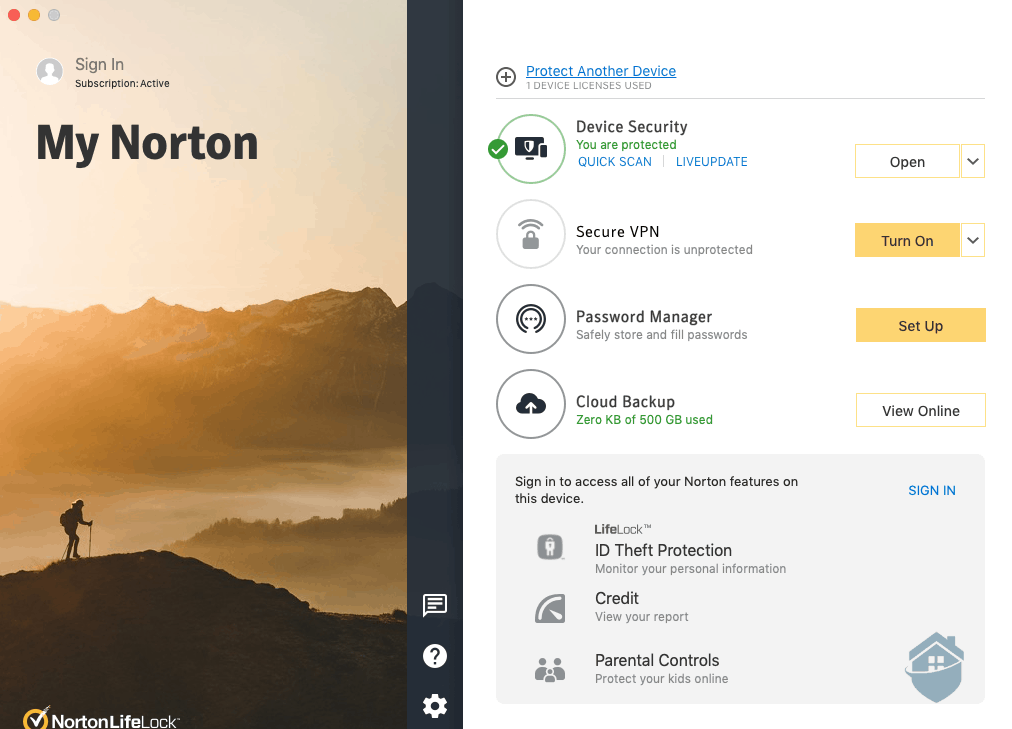
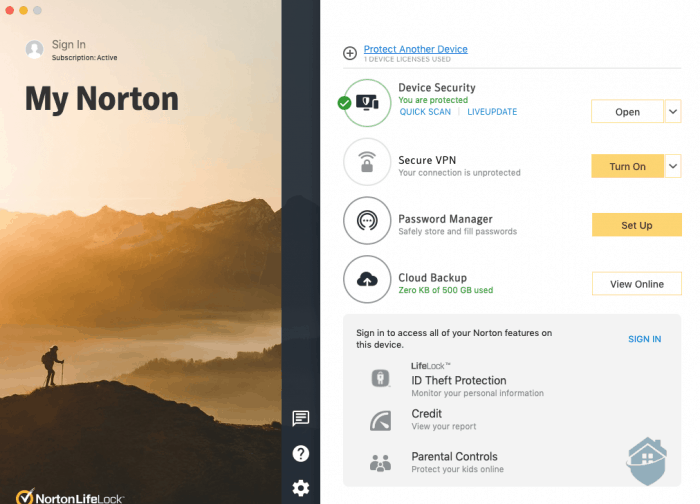
LifeLock’s three tiers are built to scale with how much protection you actually need. Core starts at $12.49 a month, Total tops out at $34.99, and Advanced sits in between at roughly $20. If you’re covering a partner or your household, any plan can be expanded for either two adults, or two adults plus up to 10 children, at a lower combined cost than buying separate individual plans. Norton 360 is available as an add-on for device protection, though we consider it optional rather than necessary.
How much LifeLock actually monitors comes down to which plan you choose. We tested Total, the top tier, which unlocks the platform’s full feature set — so this is LifeLock at its most comprehensive.
Here’s what Total covers on the identity side:
On the financial side, Total also includes:
>> Compare: LifeLock vs. Identity Guard
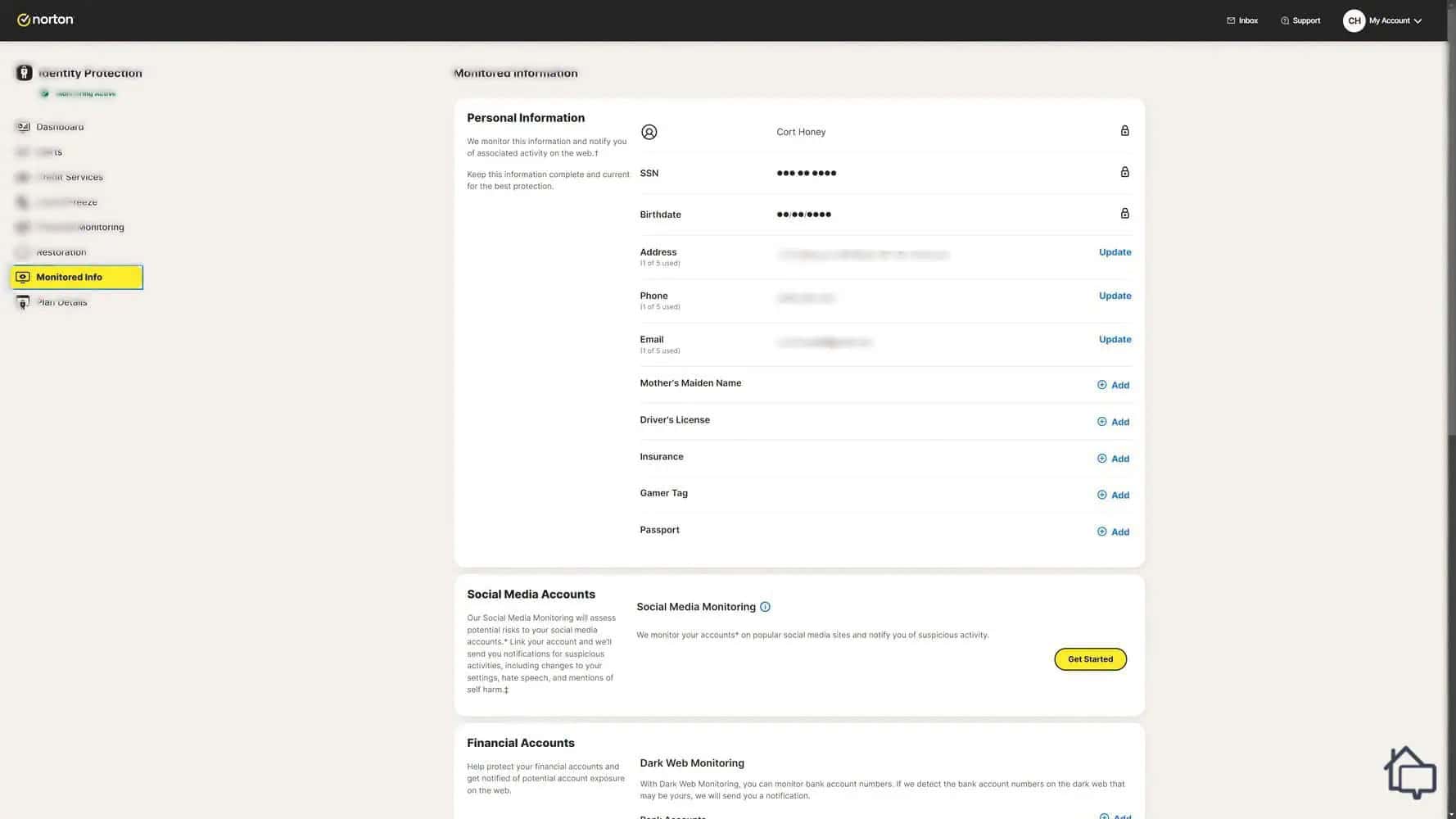
Setup took us about 10 minutes. We entered the basics — name, email, phone number, bank accounts, and driver’s license — and from there, LifeLock offered to go deeper, letting us add more sensitive details like our mother’s maiden name and gaming account usernames. Our advice: fill in as much as you’re comfortable sharing. LifeLock can only monitor what you actually give it access to, so the more complete your profile, the more complete your protection.
What stood out most, though, was how measured the alerts were. Throughout the testing period, we’ve received only two or three that we’d call genuinely important. LifeLock isn’t the type of service that buries you in notifications for the sake of looking active — but when something does warrant attention, it comes through loud and clear, hitting email, text, and app notification all at once.
Here’s how individual pricing breaks down across LifeLock’s three tiers.
| LifeLock Plan | Individual |
|---|---|
| Core | $12.49/mo ($124.99 first year) |
| Advanced | $19.99/mo ($199.99 first year) |
| Total | $34.99/mo ($349.99 first year) |
One thing worth knowing before you commit. These prices reflect your first term only. LifeLock doesn’t publish its exact renewal rates, so we’d recommend confirming your specific renewal price directly with the company rather than assuming it’ll stay the same.
You do get some room to test things first. LifeLock offers a 30-day free trial across all three tiers, plus a 60-day money-back guarantee on annual plans if it ends up not being the right fit.
| Identity monitoring | Yes |
|---|---|
| Credit monitoring | 2-bureau (Core) or 3-bureau (Advanced/Total) |
| Insurance | Up to $3 million per adult |
| Restoration guarantee | Yes, or your subscription is refunded |
| Free trial | 30 days |
| Money-back guarantee | 60 days (annual plans) |
Coveron stands out with the strength of its insurance package: up to $2 million in identity theft recovery. It also includes separately itemized coverage for cyber extortion ($50,000), home title fraud ($25,000), cyberattacks ($10,000), and online fraud ($10,000) that doesn't draw down the main recovery amount. Built by Nord Security — the company behind NordVPN — Coveron scales from a lightweight Scam Protection tier up to Full Protection. At the top tier, it includes three-bureau credit monitoring and a bundled security suite, all at a lower starting price than LifeLock or Aura.
>> Check Out: NordVPN Pricing in 2026
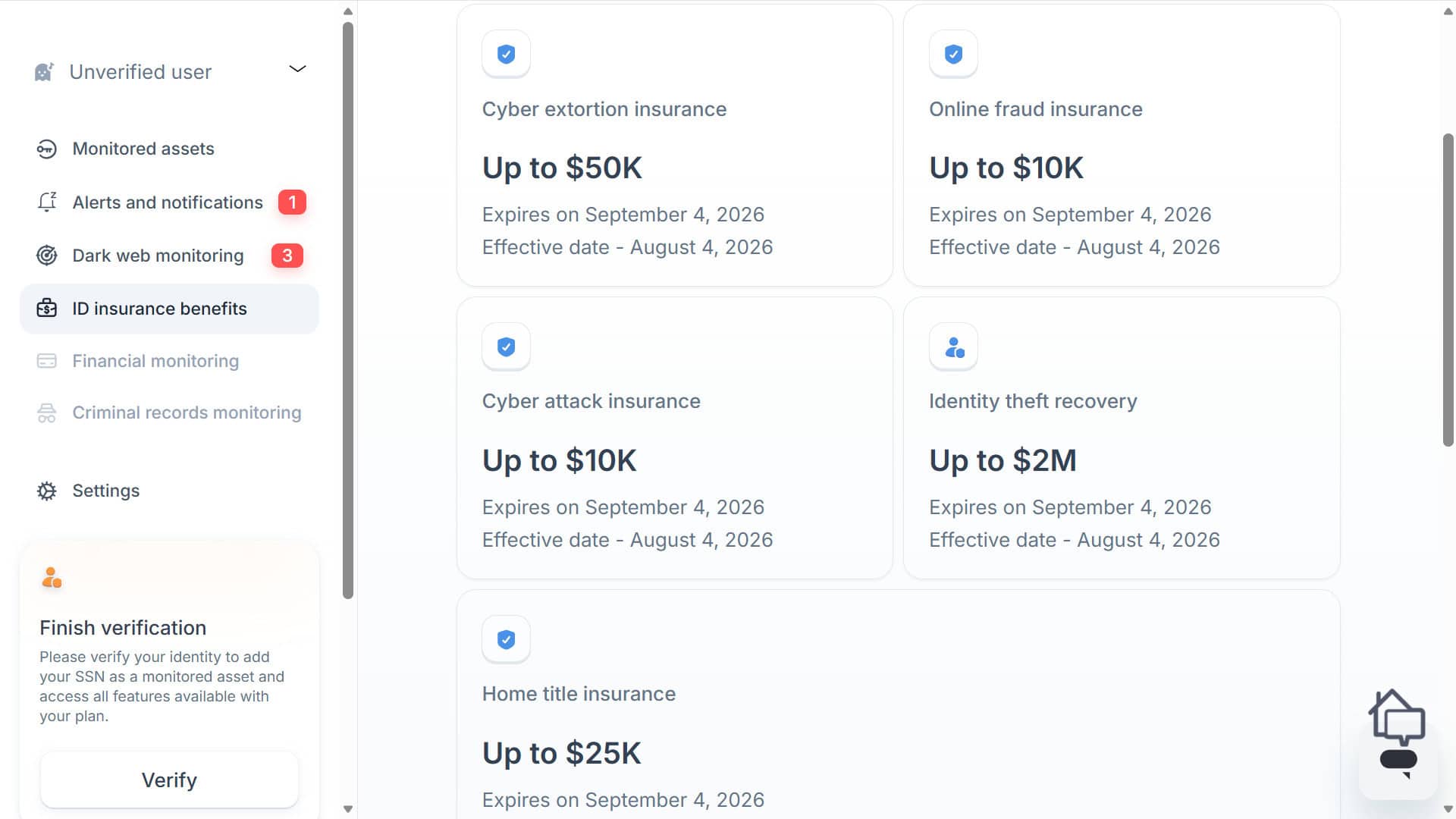
We appreciate the clear breakdown of Coveron’s insurance limits right in the dashboard
Coveron’s appeal comes down to how its insurance is structured. Rather than one blended coverage figure, Coveron separates its $2 million identity theft coverage from its cyber extortion, home title fraud, and online fraud coverage. Each category has its own limit that doesn’t impact the payout pool of the others. That structure, combined with a lower entry price than LifeLock or Aura, is what sets Coveron apart.
Coveron’s Full Protection tier — its top plan — includes:
Unlike LifeLock or Aura, Coveron only provides an annual update to your credit score instead of monthly updates. The mid-tier plan includes monthly updates, but only for one bureau, so it’s a tradeoff worth considering. We still prefer the top-tier plan as it includes real-time monitoring and alerts for all three bureaus.
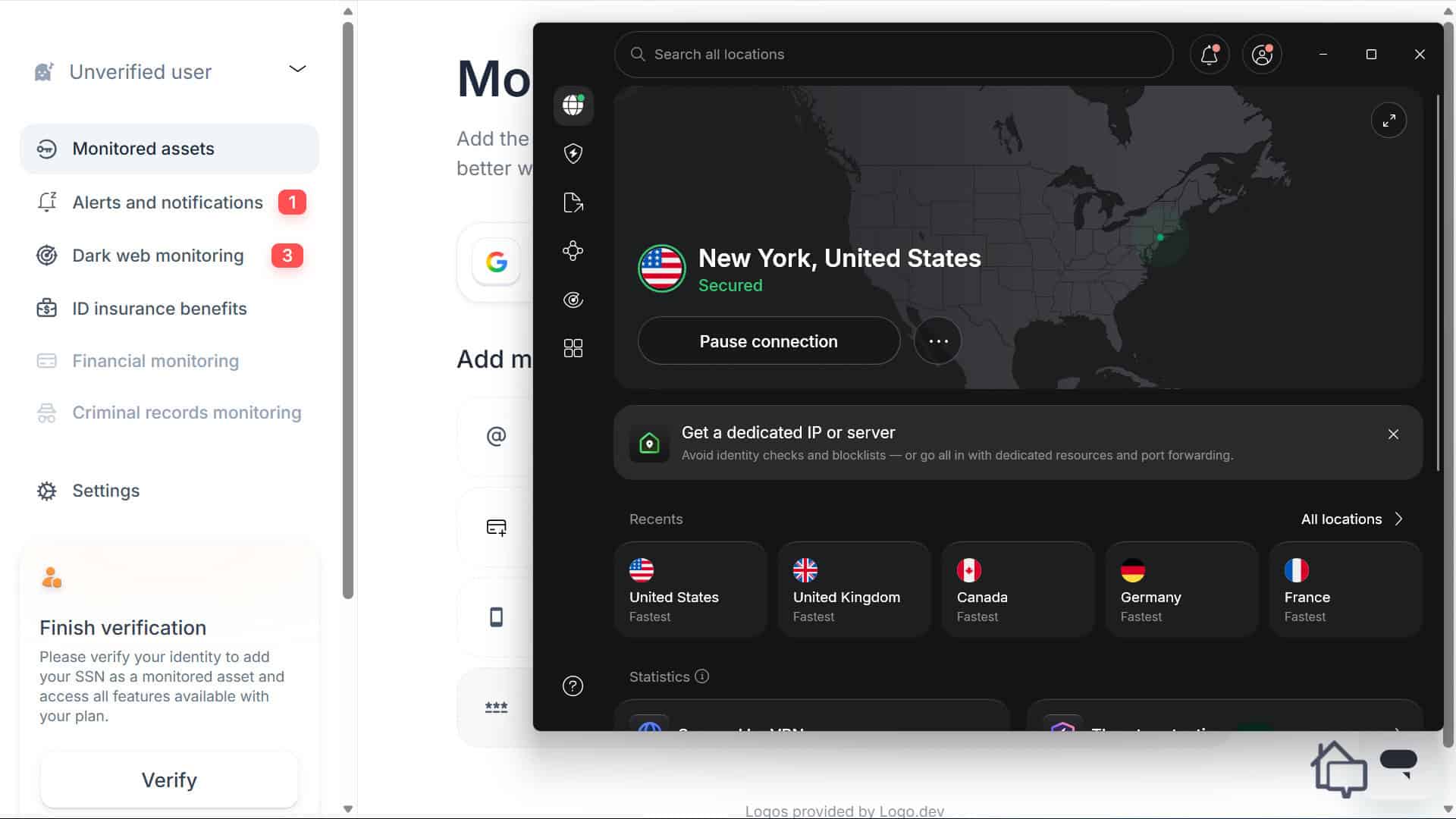
We subscribed to Coveron’s Full Protection plan to get NordVPN and enhance our overall online protection
| Coveron Plan | 2-Year (avg/mo) | 1-Year (avg/mo) | Monthly |
| Scam Protection | $2.99 | $3.99 | $11.99 |
| Identity Theft Protection | $4.99 | $5.99 | $17.99 |
| Full Protection | $8.99 | $9.99 | $29.99 |
Identity Theft Protection is the entry point for insurance coverage ($2 million), while Full Protection adds three-bureau credit monitoring and the bundled Nord Security suite. We discuss the value of that suite in our NordVPN review. Coveron backs every one-year and two-year plan with a 30-day money-back guarantee, so you can test it risk-free.
| Identity monitoring | Yes |
|---|---|
| Credit monitoring | 1-bureau (Identity Theft Protection) or 3-bureau (Full Protection) |
| Insurance | Up to $2 million, itemized separately from cyber extortion, home title, and online fraud coverage |
| Restoration guarantee | No |
| Free trial | None |
| Money-back guarantee | 30 days |
Aura delivers solid, comprehensive identity protection that’s especially well-suited for families. The Family plan runs $30 per month, or about $25 per month on an annual subscription. That’s a good deal when you consider that flat rate covers up to five adults plus unlimited children in the same household. For comparison, LifeLock’s family plan only covers two adults.
All Aura subscriptions include the same core identity and credit protections, so even though we tested the Individual plan, we got a glimpse of how the Family plan works.
Aura monitors a lot. In the identity department, it kept watch of our:
On the credit side of things, Aura gave us:
We also enjoyed active protection from digital identity theft through the Aura antivirus software and VPN, which kept us safe from privacy intruders and data-stealing malware. There’s also a password manager that secures your logins. If you go with a Family plan, you get additional tools packaged in parental control software to help you protect your children’s digital identity.
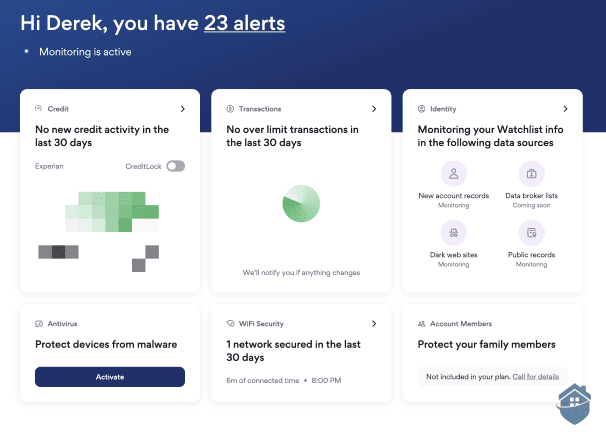
As we added information to our Aura profile, our coverage expanded significantly. During the initial setup process, we accumulated 23 unread alerts as the system began monitoring our personal data.
Our Aura dashboard with 23 alerts
We received those alerts during the setup process, as we were adding information for Aura to monitor. Once we cleared them, we only received relevant notifications — like when we made a large online purchase with our credit card or applied for a car loan. The alert system struck an excellent balance between comprehensive monitoring and avoiding notification fatigue.
| Aura Subscriptions | Individual | Family | Couple | Kids (Add-On) |
|---|---|---|---|---|
| Coverage | 1 adult | 5 adults, unlimited children | 2 adults | Unlimited children |
| Price Per Month | $12 | $20 | $30 | $13 |
| Price Per Year | $108 | $204 | $300 | $120 |
| Annual Plan Avg. Monthly Cost | $9 | $17 | $25 | $10 |
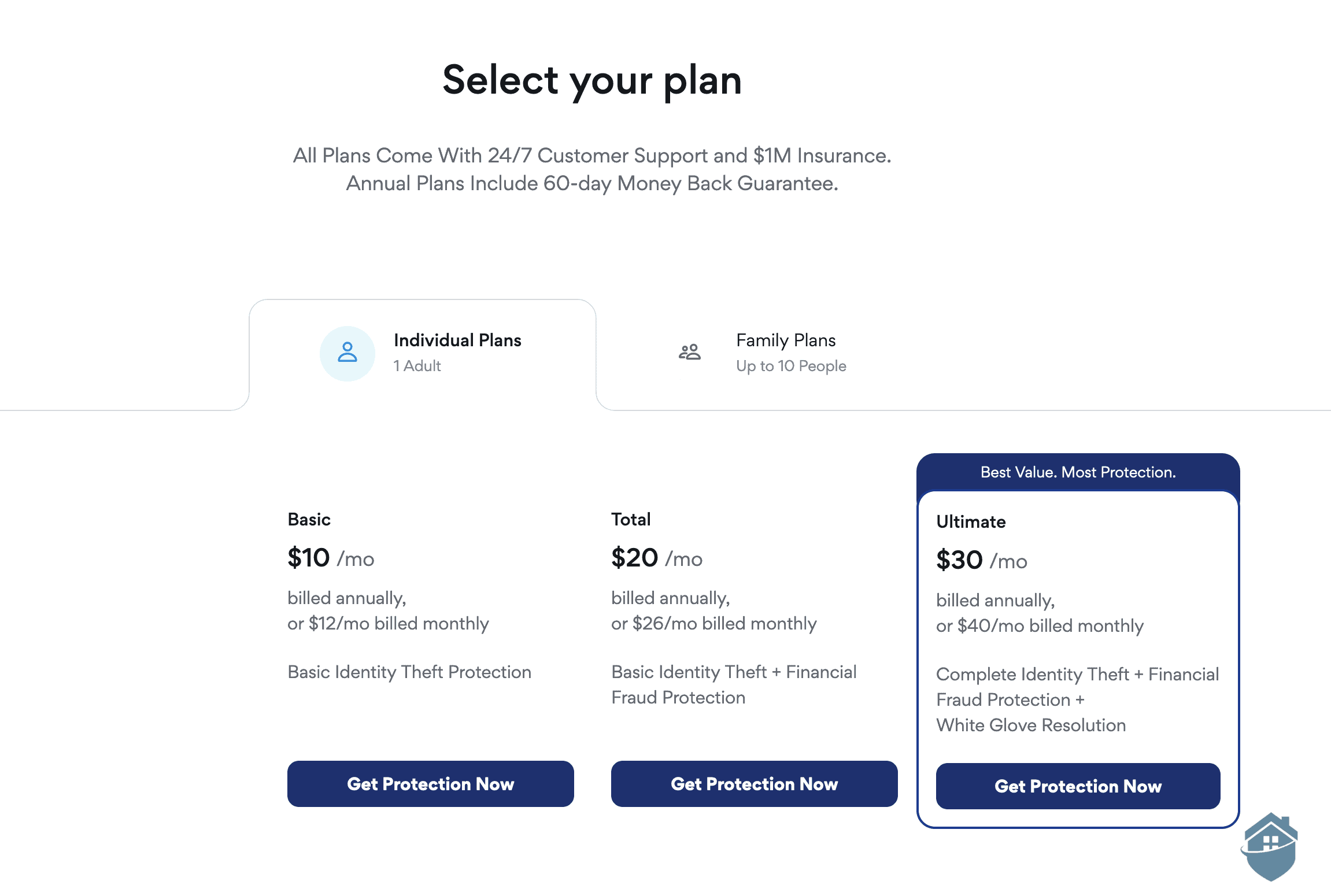
Aura keeps its pricing structure straightforward. You choose an Individual, Couple, or Family plan and decide between monthly or yearly billing. Aura typically costs more than some competitors because all plans include full protection. There are no stripped-down budget tiers with limited features. Fortunately, Aura offers a 14-day free trial and a 60-day money-back guarantee on annual plans if the service doesn’t meet your needs.
Pro Tip: If your household includes you, your spouse, and children, you’ll save money by purchasing a Couple plan and adding the Kids add-on if you plan to pay monthly. The Kids add-on provides the same additional features as the Family plan, including access to parental control software.
| Identity monitoring | Yes |
|---|---|
| Credit monitoring | Three bureaus |
| Insurance | Up to $1 million per adult ($5 million family total) |
| Free trial | 14 days |
| Money-back guarantee | 60 days (annual plans) |

Identity Guard is our go-to pick for budget-conscious shoppers who want solid identity protection without paying premium prices. If you’re comfortable handling your own credit monitoring, you can get meaningful identity coverage starting at just $7.50 per month billed annually. This entry price isn’t bare bones. You still get insurance, access to the U.S.-based customer care team, and a password manager to help lock down your online accounts.
Since Identity Guard earned our budget pick, it makes sense to focus on its entry-level Value plan. For $7.50 per month billed annually, you get:
The Value plan is notably missing credit protection. But remember that the $1 million identity theft insurance covers any instance of identity theft, not just the monitored areas. So, if you fall victim to credit fraud, the Value plan gives you just as much insurance coverage as the Ultra (top-tier) plan even though it doesn’t provide credit protection.
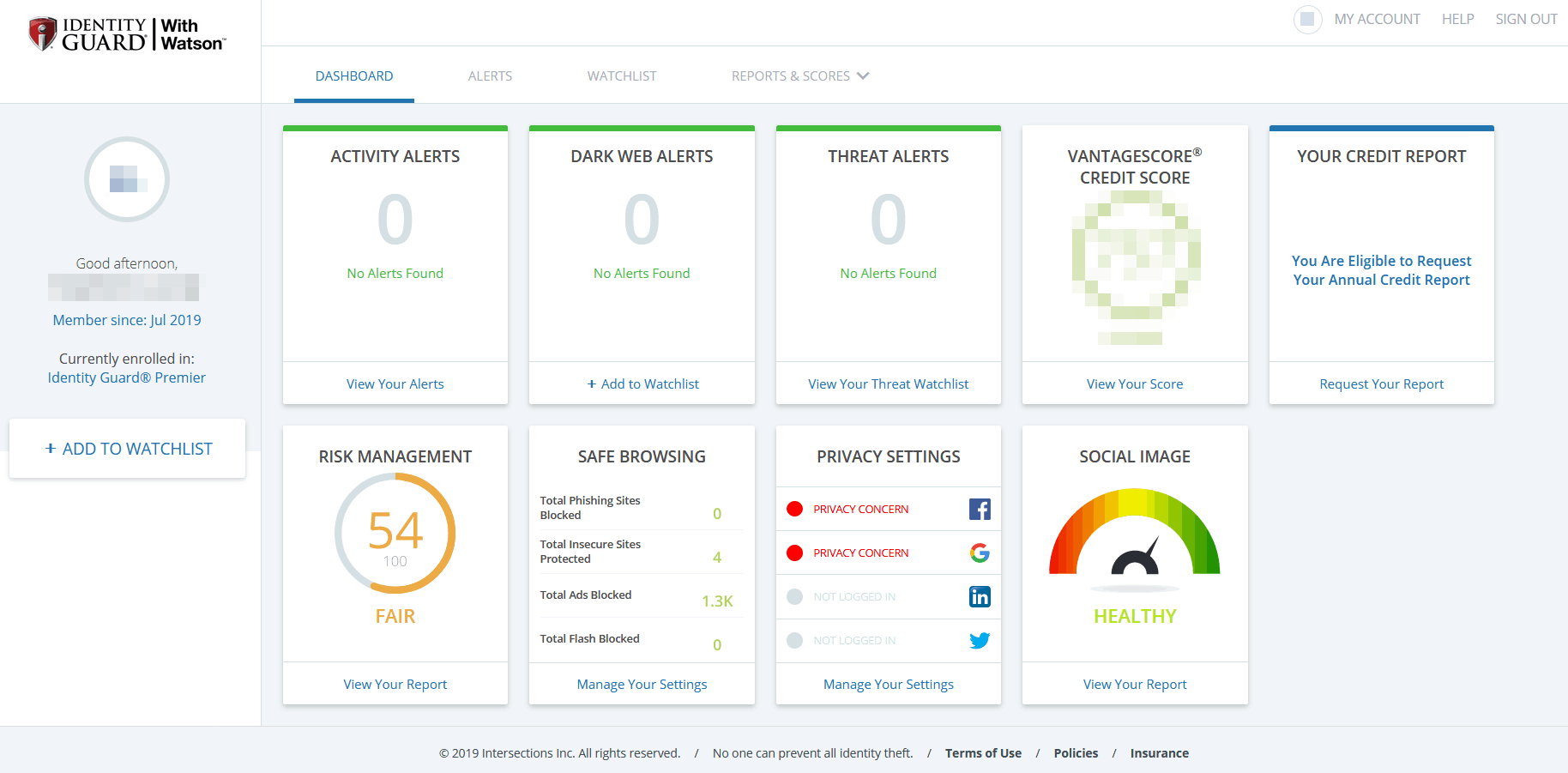
We received more notifications from our Identity Guard app than we did from both Aura and LifeLock, but that’s because we were moving some money around during our testing. Two things stood out about Identity Guard’s alerting and monitoring.
First was the speed at which it sent notifications, which was almost real-time. It was so fast that we received a withdrawal alert before we left the bank.
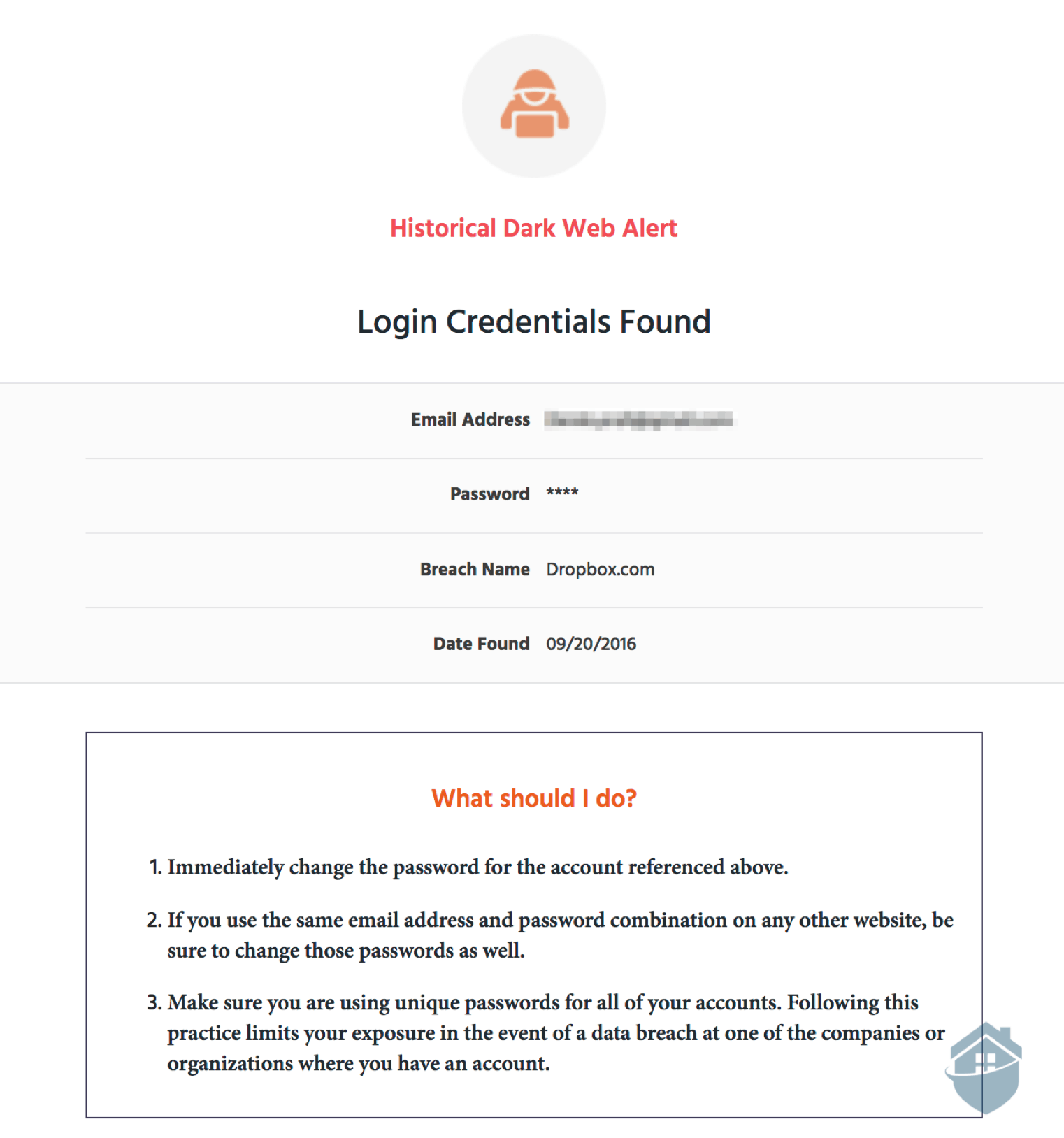
Identity Guard ‘What should I do?” section
Second was the “What should I do?” section that comes with each alert. It provides practical and actionable steps to take. We think it’s a neat feature, since it allows you to react quickly and prevent further damage. You stand a good chance of doing that if you know what to do next.
Identity Guard is our budget pick, but it offers good value plans across the board. However, the Ultra plan carries a premium price tag, costing more than an Aura individual subscription while delivering fewer features. It’s still a good pick, but not as good as the Value or Total plan. We also like how all long-term plans come with a 60-day refund. Here are your options from Identity Guard.
| Identity Guard subscription | Value | Total | Ultra |
|---|---|---|---|
| Individual (monthly) | $8.99 | $19.99 | $29.99 |
| Individual (yearly avg/mo) | $7.50 | $16.67 | $25.00 |
| Family (monthly) | $14.99 | $29.99 | $39.99 |
| Family (yearly avg/mo) | $12.50 | $25.00 | $33.33 |
| Identity monitoring | Yes |
|---|---|
| Credit monitoring | Up to 3-bureau (except Value plan) |
| Insurance | Up to $1 million (all plans) |
| Free trial | 7 days |
| Money-back guarantee | 60 days (long-term plans) |

IdentityIQ delivers one of the strongest credit protection services we’ve tested. Even the entry-level plan offers one-bureau credit monitoring at a similar price to Identity Guard’s entry plan. The two upper-tier plans step it up to full three-bureau monitoring. We’re especially fans of the Secure Pro and Secure Max plans, which come loaded with advanced credit tools. The two standouts being real-time credit score change alerts and a credit score simulator that lets you see how financial decisions might affect your score before you make them.
With credit monitoring being its main feature, our Secure Max subscription gave us one of the broadest credit and financial protection feature sets we’ve seen. The list includes:
Expanding on those features, we received identity protection in the form of:
We would have liked to see additional features such as home and auto title monitoring like we found with Aura, but we’re confident that IdentityIQ delivers solid protection across the board.
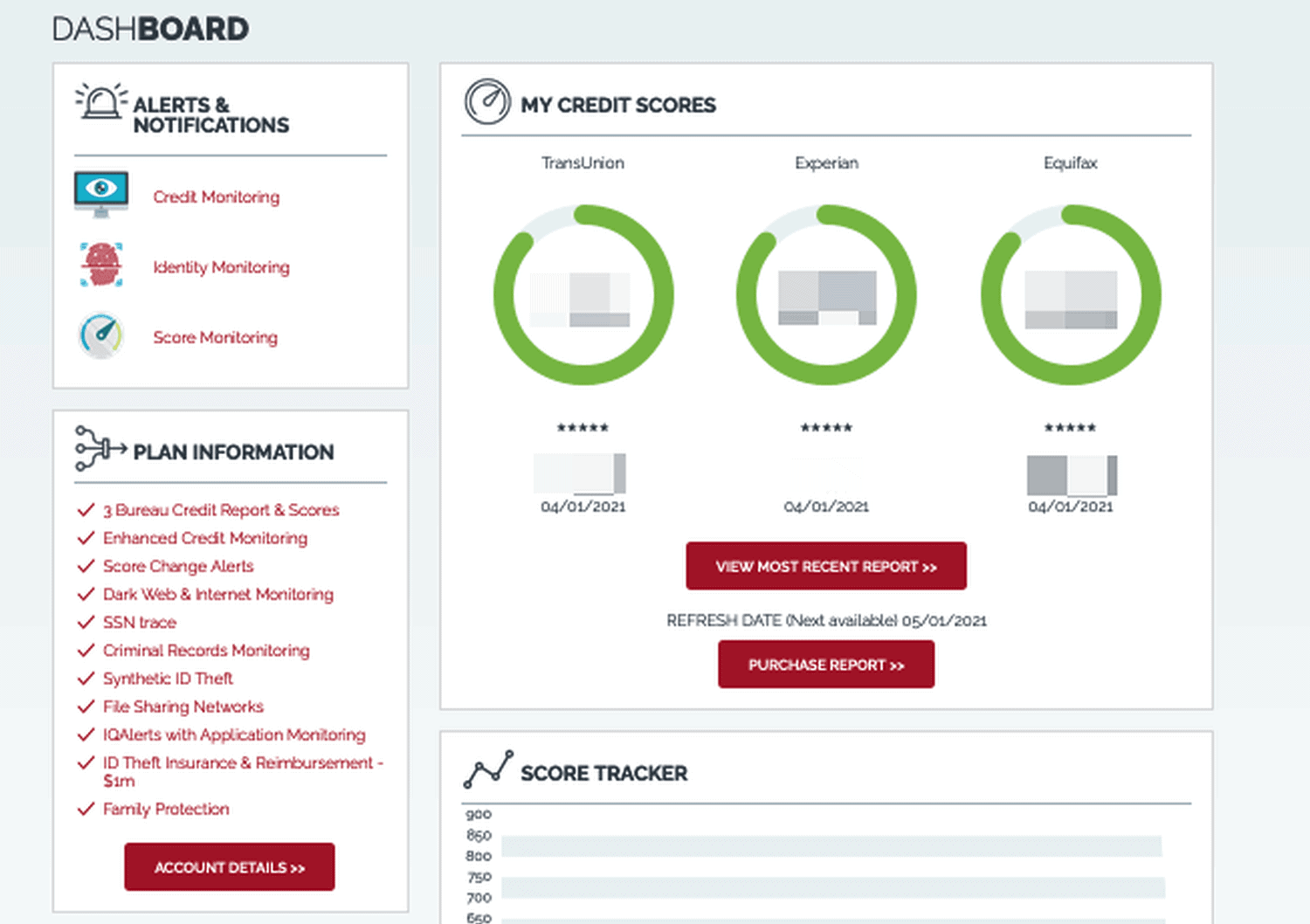
IdentityIQ’s mobile app has matured significantly over the years, and it’s now the go-to way to manage your account on the fly. We still logged time on the online dashboard too. It’s functional, just not the most intuitive to navigate.
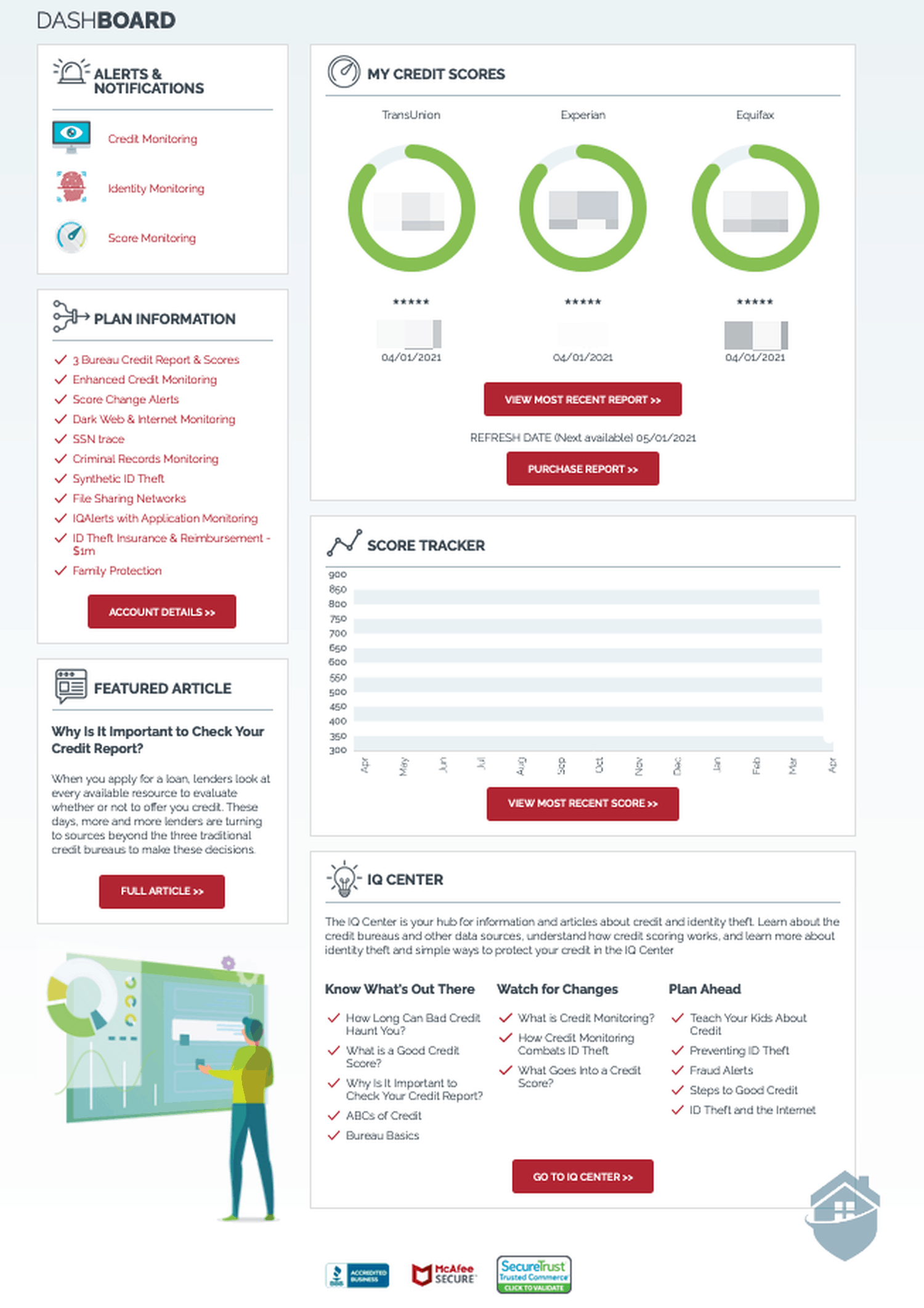
IdentityIQ web dashboard
Thankfully, we didn’t need the dashboard to stay on top of alerts. Real-time notifications came through via email and text, keeping us up-to-date on our security. Each alert included enough context to quickly gauge urgency, which made it easy to act fast when something flagged.
IdentityIQ offers four tier-based subscriptions and lets you add antivirus and VPN protection as a paid add-on for just $2 per month. The prices are affordable, but we don’t like how there are no family plans, and how IdentityIQ also lacks a free trial or a refund policy.
Here’s a quick look at all of the provider’s plans:
| IdentityIQ plan | Secure | Secure Plus | Secure Pro | Secure Max |
|---|---|---|---|---|
| Cost per Month | $8.49 | $11.49 | $21.49 | $31.49 |
| Cost per Year (avg/mo) | $7.44 | $10 | $18.49 | $27 |
FYI: Bitdefender antivirus and VPN typically cost around $6 per month via standalone subscriptions. That’s the service included with IdentityIQ if you add antivirus and VPN protection for an extra $2 per month. Now that’s a good deal.
| Identity monitoring | Yes |
|---|---|
| Credit monitoring | 1-bureau or 3-bureau |
| Insurance | Up to $1 million + $25,000 for family members |
| Free trial | No |
| Money-back guarantee | No |

Our other top picks come with some form of cyber protection, but none of them included a full-featured cybersecurity suite like McAfee did. McAfee included its antivirus software, VPN, password manager, and other cybersecurity tools in its identity protection subscriptions. LifeLock and IdentityIQ only offer cybersecurity tools as add-ons. Compared to Aura and Identity Guard’s complementary antivirus software and VPN, McAfee’s cyber protection is more well-rounded.
McAfee goes all out in the cyber protection department, but it doesn’t offer as many identity and credit protection features as our other top picks. It covers the basics like monitoring the dark web, public records, online accounts, and Social Security number verifications. However, it lacks advanced protections like auto title monitoring, synthetic ID theft detection, and phone takeover monitoring, which Aura and LifeLock offer.
On the bright side, McAfee covers a broad spectrum of credit and financial fraud with credit protection features like:
Most of those features are available only with the top-tier McAfee+ Ultimate subscription, which is what we tested.
The McAfee app impressed us with its user-friendly design, though the sheer number of features packed into one interface can feel overwhelming at first. All the protections — credit monitoring, privacy tools, malware defense, and more — live within a single app. That occasionally made navigation challenging despite the intuitive interface.
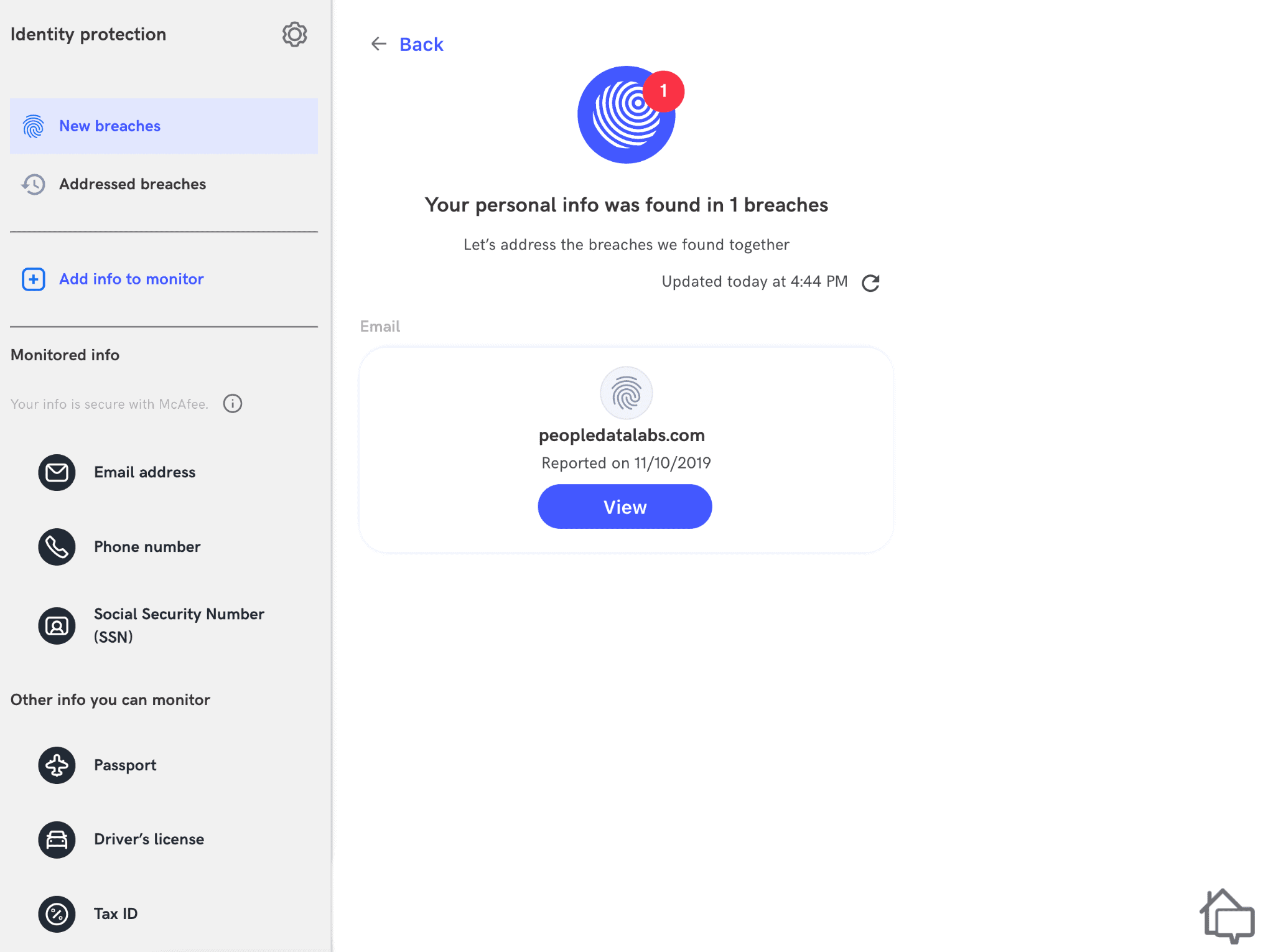
Data breach alert from McAfee
Once we got used to McAfee’s app — which took a couple of days — we realized that the features were organized based on the subject they are most relevant to. The VPN was under Privacy, the antivirus software was under Device Protection, and identity and credit monitoring were both in the Identity Column. Overall, McAfee did a great job organizing its app and streamlining the alerting process.
It struck us as odd that McAfee didn’t have monthly plans. Instead, we had to pay upfront for one year of service. Unlike Aura, which offers a 14-day trial and a 60-day money-back option, McAfee provides only a 30-day refund period. Here’s a look at current McAfee’s current pricing for identity theft protection:
| McAfee+ subscription | Basic | Premium | Advanced | Ultimate |
|---|---|---|---|---|
| For individuals (first year only) | $29.99/year | $49.99/year | $89.99/year | $199.99/year |
| For families (first year only) | $39.99/year | $69.99/year | $119.99/year | $249.99/year |
FYI: At roughly $4.17 per month for the first year, the McAfee+ Premium individual plan offers a lot for the price. On top of identity theft protection, it also includes an antivirus, VPN, and password manager. Keep in mind you have to pay the full annual upfront, and renewal pricing rises significantly after the first year.
| Identity monitoring | Yes |
|---|---|
| Credit monitoring | 1-bureau or 3-bureau |
| Insurance | Up to $2 million |
| Free trial | No |
| Money-back guarantee | 30 days |
Looking for alternatives? Here are five additional identity theft protection services worth considering. Each earned a SecureScore™ above 8.0, placing them in elite territory — just slightly below our top picks. They all deliver robust identity and credit protection with distinctive features that may suit your specific needs.
IDShield stands out for its competitive pricing, with family plans beginning at $29.95 and individual coverage as low as $14.95 per month. The service provides exceptional financial protection with coverage up to $3 million for stolen funds, legal fees, and personal expense reimbursements.
ID Watchdog serves as a solid alternative to IdentityIQ, delivering comprehensive credit and financial safeguards, particularly with the Premium tier. The service monitors subprime loans opened in your name, flags high-risk financial transactions, and can establish an initial fraud alert on your credit file to prompt lenders to verify your identity before approving new credit applications.
Allstate Identity Protection stands out for its robust monitoring of both identities and credit accounts. One of its most impressive perks is home title fraud reimbursement coverage of up to $1 million — a feature you don't see everywhere.
Zander is a budget-friendly alternative to Identity Guard. Personal plans with identity-only protection start at just $6.75 per month with annual billing.
IdentityForce delivers comprehensive identity and credit protection alongside strong safety net features. We particularly recommend it for families, as it includes dark web social media monitoring and identity restoration services covering up to 10 children. IdentityForce's pricing runs higher than average, but its feature set rivals premium services like Aura and LifeLock.
Identity theft is an umbrella term for different kinds of fraud with one thing in common — the criminal poses as someone else. That could be as sophisticated as using RFID sniffers to lift bank card information from your wallet, or as simple as someone looking over your shoulder at the ATM to get your PIN.
There are various types of identity theft. You're probably familiar with Social Security identity theft, where a thief obtains your Social Security number to open new accounts in your name. Another common one is financial identity theft, where a fraudster fakes your credentials to take over your accounts. But there are other, more troubling types of identity theft that you might not know about.
Identity theft is as broad as it is complex. Here are a few scenarios you should be concerned about:
Identity theft is frightening because most of the time, a victim only finds out their identity was stolen when they experience the repercussions. That could include a fraudulent account in collections, a surprise tax bill, or a denied loan application. The insidiousness of identity theft is why it’s so important to be proactive about your protection.
Did You Know? Anyone can fall victim to identity theft. It affects roughly one in 15 Americans, which means most people know someone who’s identity was stolen. That’s why we heavily weight the identity theft recovery features of each provider when ranking identity theft protection services.
First, watch for warning signs. Anything unusual, like unexpected bills, account changes, or suspicious emails, shouldn’t be ignored, as it may indicate your identity has been compromised.
Second, practice safe habits online and offline. Shred documents with personal information, be cautious when shopping or browsing online, avoid sharing sensitive data on social media, and use strong, unique passwords for every account.
Finally, consider a reputable identity theft protection service, like the 10 we reviewed. Beyond monitoring, these services provide peace of mind, plus reimbursement and remediation support to help you recover quickly if your identity is ever stolen.
Identity theft protection refers to a whole suite of services that work to prevent, detect, and resolve identity theft. Features offered by these services often fall under one of these five categories:
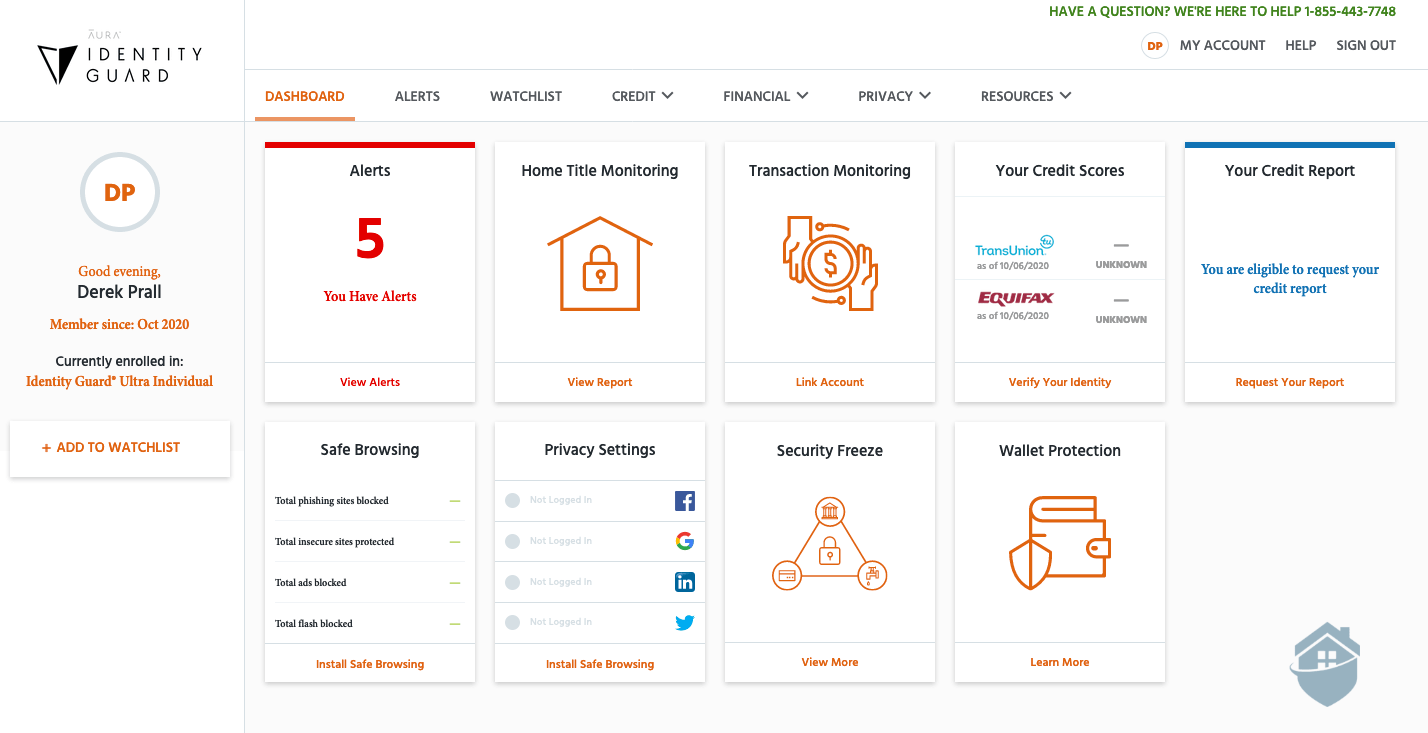
The dashboard of our top-rated Identity Theft Protection Service, Identity Guard.
Many people tune out when they hear the term “identity theft protection.” It sounds complicated and unnecessary, but that couldn’t be further from the truth. The fact of the matter is that identity theft protection is simple to understand. And it’s quite necessary if you want to keep your good name, credit, finances, and other important matters safe and secure.

Identity theft is far more common than most people realize. According to the Federal Trade Commission, consumers reported over 1 million cases of identity theft in 2024 alone — and that's just what gets reported. Many victims never contact authorities, so the true number is almost certainly much higher.
According to the findings of the National Criminal Justice Reference Service, the most common type of identity theft is credit card fraud.2 It accounts for roughly 40 percent of all reported identity theft cases.
Sure enough, if your identity is stolen, you’ll find out sooner or later. Hopefully it’s sooner, as this gives you time to cancel credit cards, alert credit bureaus, and take other necessary steps to mitigate damage. Here are a few ways you might find out your identity is stolen:
Although there’s no substitute for identity theft protection services, there are many precautions you can take to protect your identity. Here are a handful of ideas to help you on your way:

Use discretion. Only submit your information on trusted sites that you feel comfortable sharing. Never over-share, and always stop to consider why the website needs the information it’s requesting.

Check URLs. Although you think you’re on Visa’s official homepage, it could be a counterfeit site operated by cybercriminals. Check to make sure the URL in the search bar is official and legitimate.

Only use a secure WiFi connection. This one cannot be stressed enough. When out in public, at cafes and other places, only connect to a secure WiFi signal. This will stop criminals from hacking into your system and stealing your sensitive information as you browse websites, shop online, and interact on social media.
Ensure your computer and other devices are equipped with anti-virus and malware software that monitor threats to keep you safe online.

Shred, don’t toss! Shred any and all documents containing your personal information. Tossing them in the trash isn’t good enough. Criminals will stop at nothing to get their grubby hands on the personal information of others, and that includes digging through the dump.

Monitor your accounts daily. Monitor your bank account, credit card accounts, and credit reports every day looking for suspicious activity. Even a suspicious charge for a few cents is worth investigating. Fraudsters often start small to test the waters before draining an account.

Be wary of giving out sensitive information over the phone, especially in public spaces.
Use ATMs with caution. Criminals use a tactic called ‘skimming’ to steal credit card information. If the ATM or card reader looks fly-by-night, keep your card in your wallet or purse. Also, if your card doesn’t easily slide in and out of the machine, do not proceed.
You can take steps to protect your own identity, but only up to a point. If you catch a fraudulent charge on your bank statement, sure, you can call in and get it reversed. Identity theft protection services go well beyond that. They scan billions of data points in real time to find the early signs of identity theft like your personal information on the dark web. This allows them to catch threats you’d likely never spot on your own.
Banks typically reverse fraudulent charges quickly once you report them, thanks to federal protections like the Fair Credit Billing Act and Electronic Fund Transfer Act. However, banks only protect you from unauthorized transactions on your specific accounts — they won't monitor or address the many other forms of identity theft that can damage your life. Bottom line: do not rely on the bank to bail you out of identity theft unless it’s a simple fraudulent charge to your account.
Now, these are the most important steps to take immediately after you become a victim of identity theft. But there are other things to consider, like blocking companies from reporting fraudulent activity on your credit report, reporting the identity theft to local law enforcement as well as the FTC, and contacting your medical care provider to ensure the fraudster isn’t receiving healthcare in your name.
Great question. People often get these three completely different features confused with one another. So this should clear up any confusion.
This form of identity theft happens when a criminal gets a hold of your insurance information. Instead of draining your bank account, they will try to get healthcare, operations, prescription drugs, and other medical-related benefits that belong to you. Of course, nothing in life is free, so when the dust finally settles, the deductibles and claims fall on the shoulders of the victim. The top identity theft services offer medical identity theft protection, which is especially helpful for seniors who use their insurance cards more than the average person.
A data breach is the unintentional (or intentional) exposure of sensitive information to an unsecured environment. In the context of identity theft, it refers to when a cybercriminal infiltrates or hacks into a database and steals information to use fraudulently or sell on the dark web.
Synthetic identity theft is a growing form of identity theft, and considered the perfect, victimless crime by many cybercriminals. Synthetic identity theft occurs when a fraudster creates a fictitious identity from scratch. Fake names, addresses, credit card information, you name it. Sometimes they will create a synthetic identity around one source of legitimate identification, such as a social security number. This type of fraud is especially difficult to track, which is yet another reason why it’s best to leave it to the professionals.
Many of the higher rated identity theft plans include credit monitoring, while others offer it as an add-on for an additional monthly fee. Credit monitoring can absolutely be worth the extra cost, especially if you are looking to buy a home in the near future. Sure, there are ways to check your credit report often, but those will cost you nearly as much as a full-on identity theft protection plan with this feature included. Also, it’s nice to not have to manually monitor the reports yourself. You could miss inquiries, or simply become complacent and forget to check it often. A protection plan that offers credit monitoring will keep a hawk-eye on your credit report, day and night, and send real-time alerts if suspicious activity is detected. So it’s ultimately up to you, but we recommend considering this feature when shopping for fraud protection.
In a word, yes. Identity theft can hurt your credit, especially if it goes undetected. When a fraudster attempts to open lines of credit or purchase big-ticket items using your social security number, it counts as an inquiry on your credit report. With each and every inquiry, your credit score is dinged. It turns from bad to worse if the criminal is approved and they don’t pay the bill (and they won’t pay the bill, promise). If undetected, the account will eventually go to collections, resulting in a massive hit to your credit score, up to 100 points or more. However, if you detect the fraudulent activity in time, you can reach out to the credit agencies to have the activity blocked and the inquiries removed. The best identity theft protection services monitor your credit and streamline the process of getting fraudulent activity cleaned up.
A credit freeze or security freeze is when you ask the credit agencies to completely freeze or block your credit file. When frozen, businesses cannot even check your credit score or report, which means no new accounts can be opened. So when Mr. fraudster is at the Mercedes dealership salivating over that new SLS AMG model, they’ll be met with a hard “NO” when it comes time to get the keys. Many businesses will even alert the authorities when they sense suspicious activity like this. While credit freezes can be helpful at times, they should only be used when necessary, as your credit file is closed to the bad guys and the good guys.
We’ve carefully built a team of experts across multiple disciplines to produce highly informed, expertly reviewed content.
For identity theft protection, our specialists start with in-depth research — analyzing industry trends, emerging products, the latest features, and shifts in consumer behavior. From there, our panel tests each service for at least a month, putting it through a rigorous vetting process to evaluate real-world performance.
This detailed approach feeds into our proprietary SecureScore™, which breaks evaluations into key categories:
Each category matters when choosing an identity theft protection service.
Our commitment is to research, test, and publish reviews of the highest quality. Trust is paramount—it’s why we approach every review with you, the reader, in mind. Our foundational values are:
Our mission is to educate consumers so you can make confident, informed decisions—finding products that fit your lifestyle and budget. This focus drives us to be the #1 resource for home and personal security—and we’re thrilled to have you along for the journey.
Federal Trade Commission. (2023, Oct 13). You now have permanent access to free weekly credit reports.
https://consumer.ftc.gov/consumer-alerts/2023/10/you-now-have-permanent-access-free-weekly-credit-reports