Best Identity Theft Protection Services for Military

These services proactively stay up-to-date on data points to protect personnel no matter how long they're serving on tours.

Page Hero Image

Best Overall for Military Families

LifeLock
SecureScore™: 9.7/10

LifeLock is our top pick for military personnel because it delivers hands-off monitoring, up to $3 million in identity theft coverage on Total, and a family plan built for military households, covering two adults and up to 10 kids under one subscription. That combination matters most when you’re training, traveling, or deployed and can’t check your accounts every day.

View Plans Links to LifeLock

Best for Deployed Service Members and Frequent Travelers

Aura
SecureScore™: 9.6/10

Aura earns its spot as our runner-up because it bundles identity monitoring with a built-in VPN and antivirus software, both useful if you’re logging into personal accounts from base Wi-Fi, a USO lounge, or a hotel network overseas. It’s also a strong fit for larger or blended military families, since its Family plan covers unlimited kids for about $30 per month, compared to LifeLock’s cap of 10.

View Plans Links to Aura

Best Budget-Friendly Option

Identity Guard®
SecureScore™: 9.3/10

Identity Guard is our pick for junior enlisted service members and families watching every dollar of the budget, with a Value plan starting at $7.50 per month billed annually that still includes identity theft insurance, U.S.-based support, and AI-driven monitoring. Its family plans also cover up to five adults and an unlimited number of minor children under a single subscription, a strong value for larger military households.

View Plans Links to Identity Guard

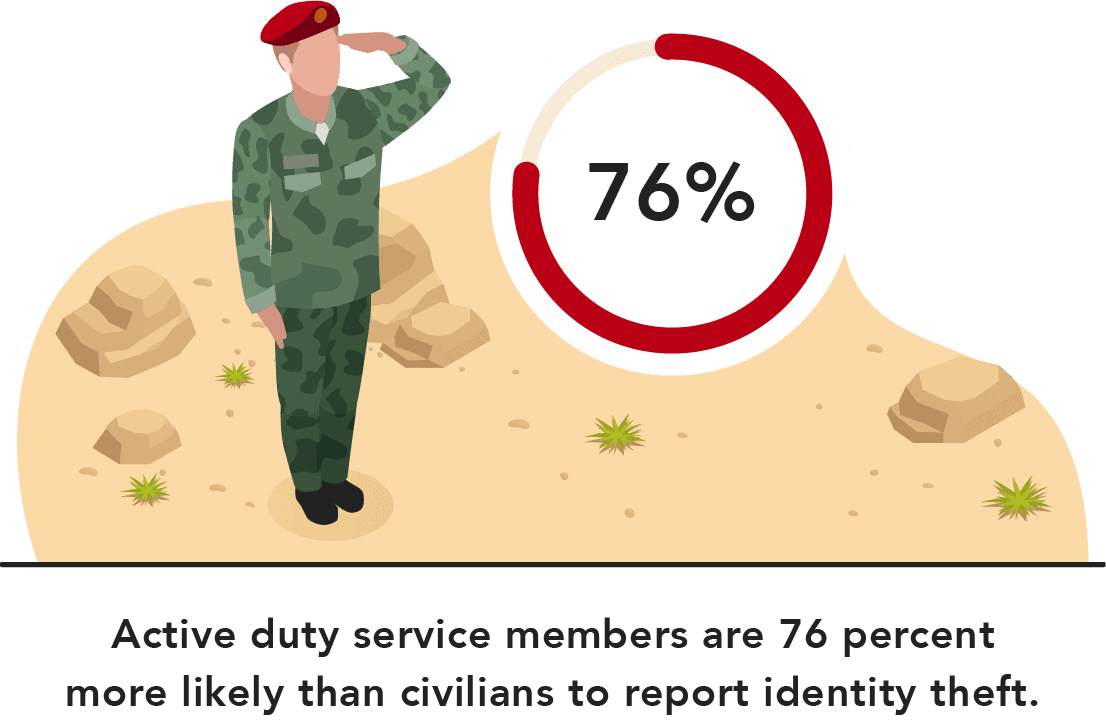
If you're active duty, a reservist, a veteran, or a military spouse, you already know your personal information moves around more than most people's. Every PCS brings new addresses, new accounts, and new paperwork, and every deployment means less time to sit down and check whether someone's opened a credit card in your name. Identity thieves know this too. Military service members reported roughly 43,000 identity theft cases to the FTC in a recent year, and credit card fraud alone accounted for more than 14,000 reports among service members in 2024. 1

The short answer: LifeLock is our top pick for military personnel and their families, thanks to its strong insurance coverage, hands-off monitoring, and family plan built for households managing frequent moves. Aura and Identity Guard are strong alternatives depending on your budget and family size.

This guide breaks down our top three picks from among the best identity theft protection services on the market and how we tested them. It also covers which one makes the most sense depending on your rank, family situation, and how often you're away from home, where a service like USAA's cyber insurance fits in, and what free protections you're already entitled to as a service member.

Top Identity Theft Protection Services for Members of the Military in 2026

  • LifeLock - Best Overall for Military Families
  • Aura - Best for Deployed Service Members and Frequent Travelers
  • Identity Guard® - Best Budget-Friendly Option

Our Methodology: How We Selected Our Top Picks

We've spent hundreds of hours testing identity theft protection services, and choosing picks for military personnel meant weighing a few criteria specific to service member life on top of our standard testing process. Here's what we prioritized.

  • Hands-off monitoring. Deployments and long training cycles mean you can't check your accounts every day, so we favored services with proactive alerts over ones that require regular logins to be useful.
  • Family and dependent coverage. Military households often include a spouse managing finances solo for months at a time, plus kids who move schools and states more often than average, so we looked closely at family plan pricing and how many dependents each plan covers.
  • Insurance and restoration support. If fraud does happen while you're away from home, strong insurance coverage and a U.S.-based restoration team make a real difference in how fast things get resolved.

We also looked at each provider's track record with military and veteran customers, including whether they offer military-specific discounts, before narrowing our list down to the three services above.

Our Best Identity Theft Protection Services for Military Personnel

  • 1. LifeLock - Best Overall for Military Families

    SecureScore™ 9.7
    Customer Service
    9.6
    Value
    9.5
    Features & Services
    9.8
    Ease Of Use
    9.7
    SecureScore™
    9.7

    LifeLock earns the top spot on this list because it delivers strong monitoring and the highest insurance ceiling of any provider we tested. That combination matters most when you don't have time to babysit your accounts between training exercises, watch rotations, or a deployment.

    • Restoration backed by a 100% guarantee, if LifeLock can’t fix it, you’re refunded
    • Up to $3 million in identity theft coverage per adult
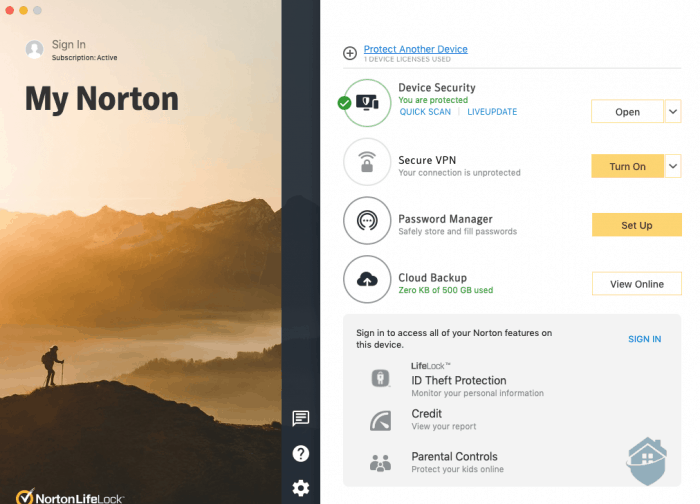
    • Can be bundled with Norton 360 for antivirus and device protection
    • Alerts for bank account takeovers, plus 401(k) and investment account monitoring
    • All plans include at least $1 million in identity theft coverage
    • Expensive even with an annual plan discount
    • Only higher-tier plans include three-bureau credit monitoring (Core is limited to two-bureau monitoring)
    • Discounted first-year rates typically renew at a higher price
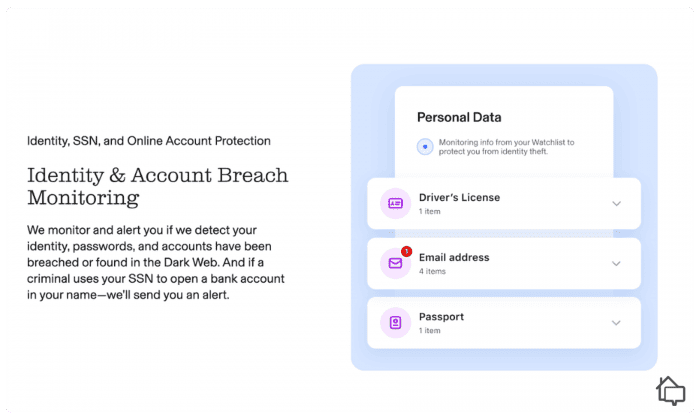
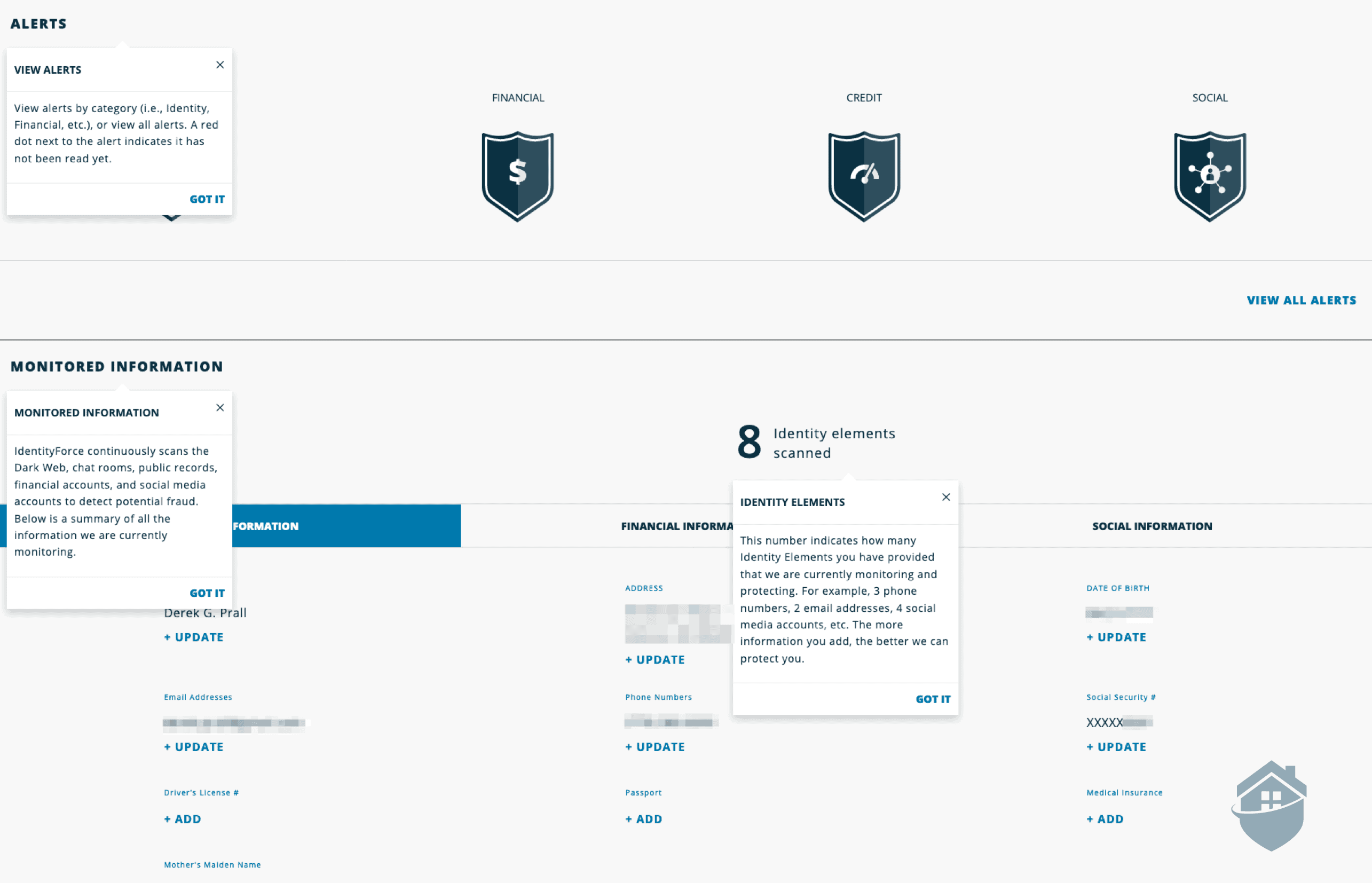
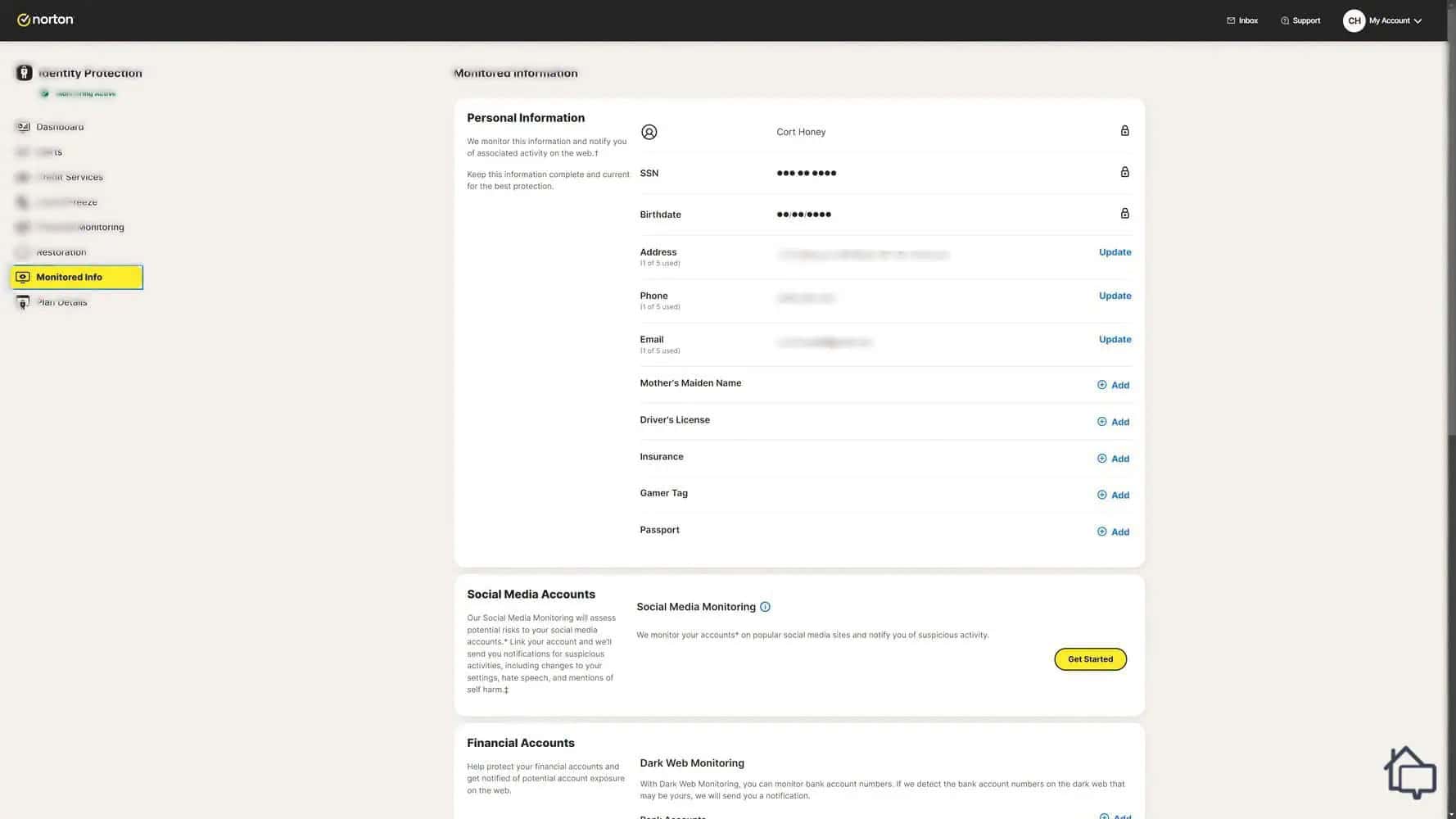
    LifeLock showed us all the information they were monitoring for us and made it easy for us to add more.

    Some of the information LifeLock monitored for us.

    We tested LifeLock’s Total plan and came away impressed by how little day-to-day attention it required to stay useful. Once we linked our bank accounts and added our Social Security number, LifeLock handled the rest in the background. Within about two hours, it sent an alert flagging an old email address that had shown up on the dark web. For a service member managing this from a ship or a forward operating base, that kind of low-maintenance setup is worth a lot.

    For military families specifically, LifeLock’s family plan covers two adults and up to 10 kids. That fits a typical household without forcing you to pay per dependent the way some competitors do. The Credit Lock feature also came in handy during our testing whenever we needed to open a new account. It let us toggle our TransUnion file on and off instantly instead of waiting out a traditional freeze. That’s a practical feature for a family that might sign a new lease, open a local bank account, or set up utilities every couple of years with a PCS move.

    On top of those features, LifeLock backs its case for military households with a discounted pricing program for verified military members, veterans, and their families, on top of the standard free trial most subscribers get. The exact discount and trial terms change from time to time, so it’s worth verifying current military pricing directly. Between the discount program, the higher insurance ceiling on Total, and a family plan that fits most military households without extra fees per child, LifeLock is our top recommendation for service members weighing their options.

    >> Read More: Is LifeLock Worth It?

    Identity monitoring Yes
    Credit monitoring 2-bureau (Core) or 3-bureau (Advanced/Total)
    Insurance Up to $3 million per adult
    Restoration guarantee Yes, or your subscription is refunded
    Free trial 30 days
    Money-back guarantee 60 days (annual plans)
  • 2. Aura - Best for Deployed Service Members and Frequent Travelers

    SecureScore™ 9.6
    Customer Service
    9.6
    Value
    9.6
    Features & Services
    9.6
    Ease Of Use
    9.6
    SecureScore™
    9.6

    Aura stood out in our testing for bundling identity monitoring with a capable VPN and antivirus suite. That combination makes it a strong fit for anyone regularly connecting from networks they don't control, whether that's a barracks Wi-Fi network or an internet cafe overseas.

    • Comprehensive digital security suite with VPN, antivirus, and password manager included
    • Monitors data sources many competitors miss, including home titles and court records
    • Provides up to $1 million in identity theft insurance per adult ($5 million total on family plans)
    • 24/7 customer support paired with white-glove fraud resolution specialists
    • Pricier than average compared to other services in this roundup
    • Business pricing requires contacting sales or starting a trial
    • VPN lacks advanced features compared to standalone services
    Aura's antivirus and VPN functions

    Aura’s antivirus and VPN features.

    During our testing, Aura’s VPN worked reliably without any noticeable drag on our connection, but the bigger question for military life is what it protects against. A compromised Wi-Fi connection, the kind you might connect to at a barracks, an overseas internet cafe, or during travel between duty stations, can expose the same personal data Aura’s identity monitoring is otherwise working to protect. Having that encryption built into the same subscription means one less account to manage and one less gap in your coverage while you’re away from a trusted network.

    Aura’s approach to family coverage is also worth calling out for military households. Instead of capping the number of kids covered, Aura’s Family plan protects unlimited dependents for around $30 per month. That can work out cheaper than the alternatives if you have more than a couple of kids or you’re covering extended family during a deployment. The Family plan also includes parental controls and cyberbullying alerts, which is useful for a family navigating a new school district after every move.

    Where Aura falls a bit short of LifeLock is on the insurance side. Aura caps coverage at $1 million per adult, compared to LifeLock’s $3 million on the Total plan. If maximum financial protection is your priority over device security extras, LifeLock still has the edge. But for a service member who wants strong monitoring and a reliable VPN in one subscription, Aura is one of the better options we’ve tested.

    >> Read More: Aura vs. Identity Guard Comparison

    Identity monitoring Yes
    Credit monitoring Three bureaus
    Insurance Up to $1 million per adult ($5 million family total)
    Free trial 14 days
    Money-back guarantee 60 days (annual plans)
  • 3. Identity Guard® - Best Budget-Friendly Option

    SecureScore™ 9.3
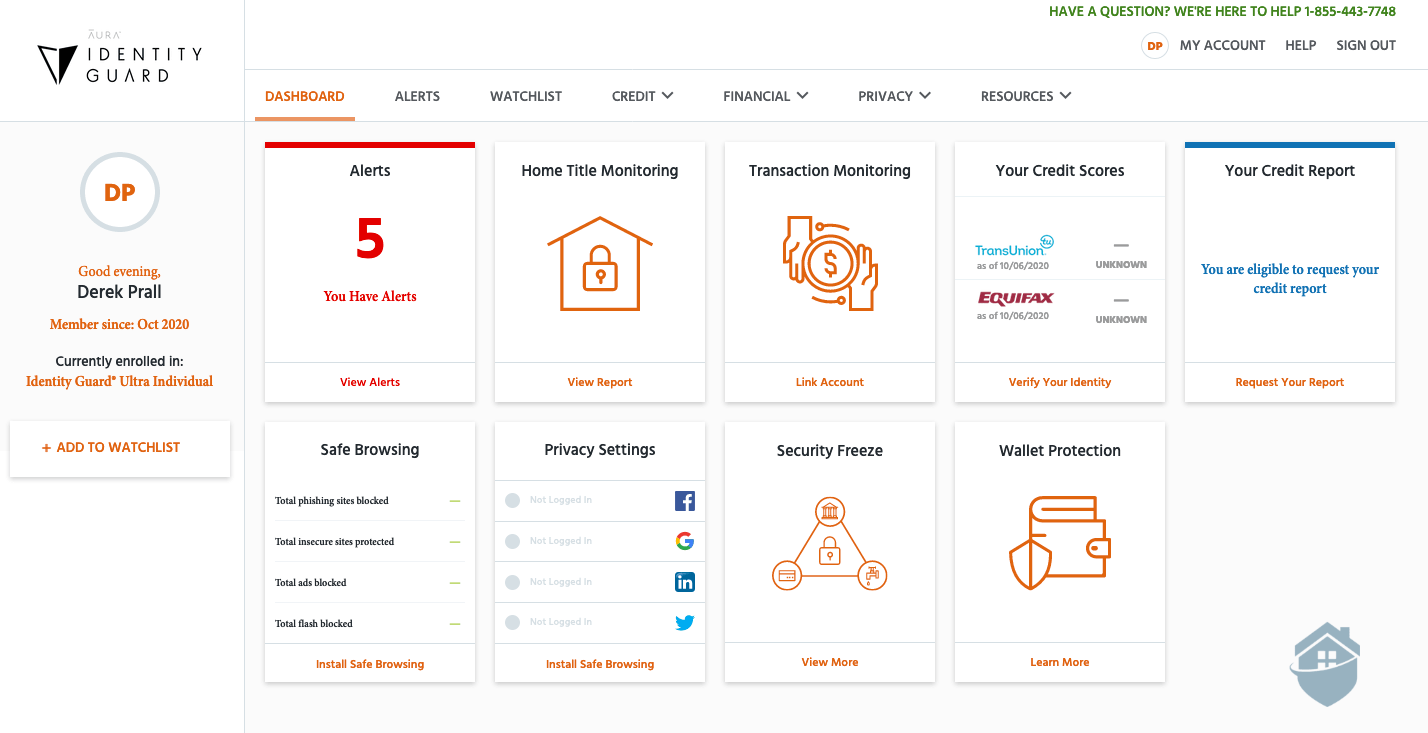
    Identity Guard Dashboard View Plans Links to Identity Guard
    Customer Service
    9.2
    Value
    9.3
    Features & Services
    9.3
    Ease Of Use
    9.4
    SecureScore™
    9.3

    Identity Guard made our list because it delivers real identity theft insurance and U.S.-based support even on its cheapest plan. That makes it a solid entry point for junior enlisted service members or anyone easing into paid identity protection for the first time.

    • $1 million in identity theft insurance included on every plan, even the cheapest tier
    • Family plans cover up to five adults, which can work for small businesses too
    • U.S.-based customer service and expert fraud resolution on top-tier plans
    • Near real-time alerts powered by AI monitoring
    • No dedicated case manager or White Glove-style service on the entry-level Value plan
    • Total and Ultra Family plans run $29.99 and $39.99 per month, respectively, closing the value gap with pricier competitors
    • Insurance coverage amount is the same regardless of plan, so upgrading buys features, not more coverage
    • No specific plan built for couples
    Identity Guard Dashboard

    Identity Guard offers a lot of features at an affordable price.

    We found Identity Guard’s Value plan, at $7.50 per month billed annually, to be one of the strongest budget picks we’ve tested. Even at that price, you get identity theft insurance and U.S.-based customer support, which is more than several competitors bundle into their entry-level tiers. The tradeoff is limited credit monitoring on Value. Catching new credit accounts opened in your name matters most for military families managing a PCS, so stepping up to the Total plan for three-bureau credit monitoring and bank account alerts is worth the modest jump in price.

    Identity Guard’s family pricing also works well for larger or multi-generational military households. Family plans cover up to five adults and an unlimited number of minor dependents under one subscription, matching Aura’s family coverage. The price difference between an individual and family plan is often just a few dollars a month. That’s a real advantage if you’re sharing a household with a spouse, adult children, or an aging parent while stationed somewhere new.

    We’d point most military families toward the Total plan rather than Value, since the jump in credit monitoring and bank alerts is worth the extra cost. But for anyone who just needs a foot in the door with real insurance backing, Identity Guard’s cheapest tier is hard to beat on price.

    >> Read More: LifeLock vs. Identity Guard Comparison

    Identity monitoring Yes
    Credit monitoring Up to 3-bureau (except Value plan)
    Insurance Up to $1 million (all plans)
    Free trial 7 days
    Money-back guarantee 60 days (long-term plans)

Why Are Military Members Often the Targets of Identity Theft?


Military life creates a specific set of vulnerabilities that civilian households don't deal with in the same way. Frequent relocations mean mail, official paperwork, and even government-issued documents pass through more hands and more mailboxes than average. Deployments mean accounts can go unchecked for weeks or months at a time. Add in the amount of personal data tied up in military benefits and healthcare systems, and it's easy to see why identity thieves see service members as an appealing target.

This is part of why hands-off, continuous monitoring matters more for military households than it might for the average civilian family. If you want a deeper look at how these protections work, our guide to identity theft protection covers the basics from the ground up.

Did You Know? Military identity theft cases reported to the FTC reached roughly 184,000 in 2024, resulting in up to $90 million in losses. Identity theft and imposter scams were some of the most common incidents reported.2

Does USAA's Cyber Insurance Cover Enough on Its Own?

If you're a USAA member, you may already have access to personal cyber insurance through USAA's partnership with Blink by Chubb. It's a legitimate benefit, and it's worth knowing what it does and doesn't cover before deciding whether you need a dedicated service on top of it.

USAA's coverage is reactive by design. It pays out after an incident like financial fraud, ransomware, or identity theft has already happened, with coverage tiers of $10,000, $25,000, or $50,000 depending on what you choose. What it doesn't include is the proactive side of identity protection, things like dark web monitoring, Social Security number monitoring, or three-bureau credit monitoring. All of those help you catch a problem before it turns into a financial mess. For a full breakdown of what's covered and what's missing, see our USAA identity theft protection review.

Our take is that USAA's cyber insurance works best as a supplement, not a substitute. Pairing it with a dedicated monitoring service like LifeLock, Aura, or Identity Guard gives you both the early-warning system and the financial backstop, rather than relying on insurance alone to catch problems after the fact.

LifeLock by norton logo

Protection for you and the family, whether you’re home or abroad


View Plans

Links to LifeLock

1-800-943-2151

Protecting Your Family's Identity During PCS Moves and Deployments

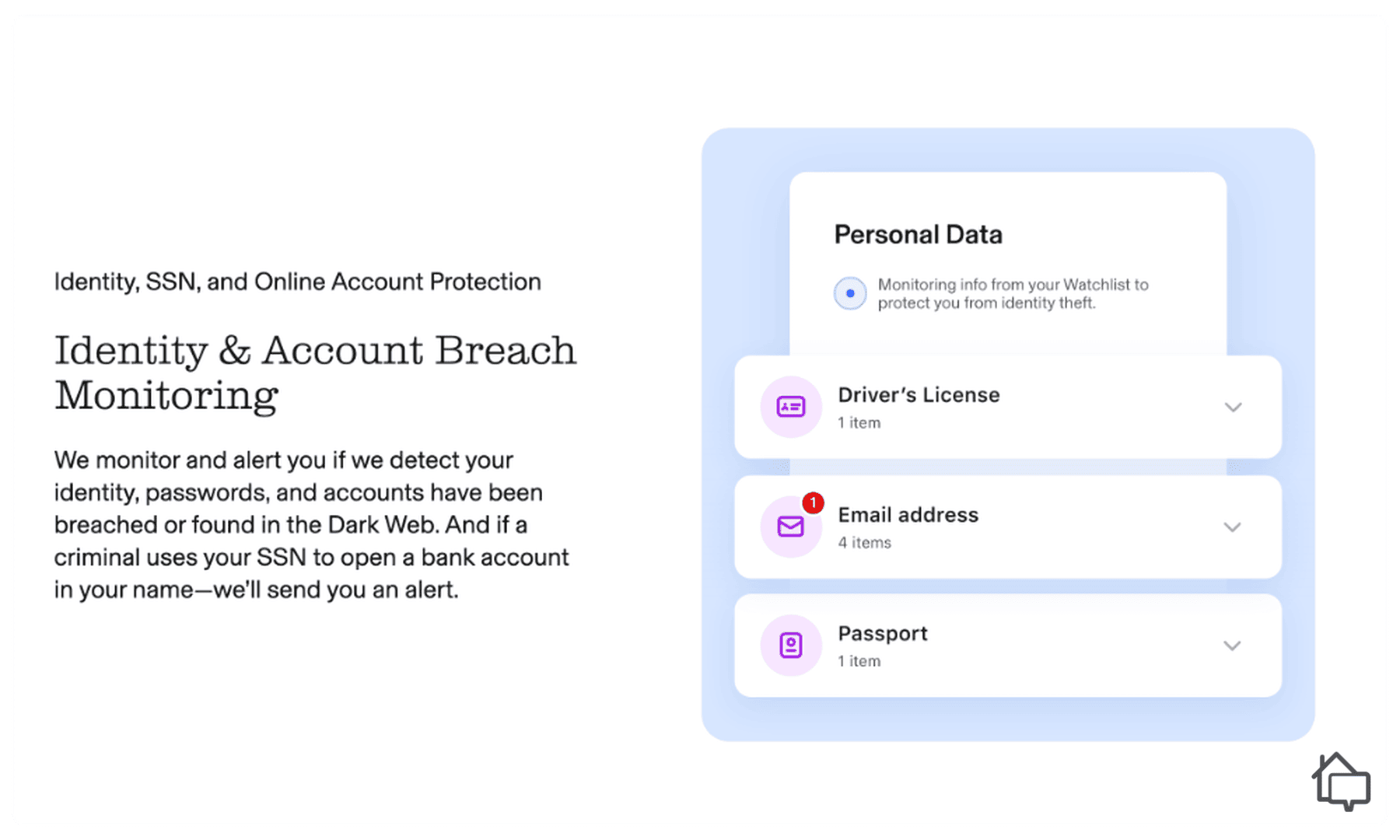
Additional information Aura can monitor

Some of the extra information Aura can monitor

A PCS move is exactly the kind of transition identity thieves count on. Between forwarding mail, closing and opening utility accounts, and often storing important paperwork in temporary housing or a moving truck, there are more opportunities than usual for sensitive documents and information to go missing. Deployments add another layer of risk, since a spouse may be managing the household's finances solo, and there's often less time to check every statement line by line.

A few habits go a long way here. Keep physical copies of Social Security cards, birth certificates, and military ID documentation somewhere secure rather than packed loosely in a moving box. Consider digitizing backups you can access remotely too, in case paperwork gets lost in transit. Our guide to storing important documents walks through practical ways to organize and protect this kind of paperwork before your next move.

Pro Tip: If your household includes kids, it's worth checking their identity status periodically too. Child identity theft often goes undetected for years, sometimes until a teenager applies for their first credit card or student loan. Our guide to child identity theft protection covers warning signs and how to check.

Free and Low-Cost Protections Every Service Member Should Know About

Before you pay for anything, it's worth knowing that federal law already gives active duty service members a few protections at no cost. Under the Fair Credit Reporting Act, active duty military members can place a free active duty alert on their credit file. That alert requires lenders to verify your identity before approving new credit in your name. The alert typically lasts one year and can be renewed for as long as you remain deployed. You're also entitled to free credit freezes with all three major bureaus at any time, deployed or not, which block new credit from being opened without your say-so.

These protections are a good baseline, but they're not a full substitute for ongoing monitoring, since they require you to take action rather than alerting you automatically when something changes. Think of them as a free first layer, with a paid service like the ones on this list providing the active monitoring and insurance backing on top.

Recap

LifeLock’s Credit Services gave us tips to improve our credit score.

LifeLock makes it easy to monitor your credit score and freeze your credit if something looks off.

LifeLock is our top pick for military personnel and their families, thanks to hands-off monitoring, a family plan that fits most households without per-child fees, and the highest insurance ceiling of the three services we compared. Aura is the better choice if you're deployed or traveling often and want a built-in VPN alongside identity monitoring. Identity Guard is the strongest budget option for junior enlisted service members or anyone getting started with paid protection for the first time. Whichever you choose, pairing it with the free protections you're already entitled to as a service member, like an active duty alert or a credit freeze, gives you the most complete coverage.

FAQs

  • What is the best identity theft protection service for military families?

    LifeLock is our top overall pick for military families, thanks to its strong insurance coverage of up to $3 million per adult and a family plan that covers two adults and up to 10 kids without extra per-child fees. Aura and Identity Guard are also strong options depending on your budget and whether you need a built-in VPN.

  • Does LifeLock offer a military discount?

    Yes. LifeLock offers discounted pricing for verified active duty service members, veterans, and their families, along with the standard free trial offered to new subscribers. Since promotional terms change, check LifeLock's website directly for current military pricing before signing up.

  • Is USAA's identity theft coverage enough for service members?

    USAA's cyber insurance, provided through Blink by Chubb, offers solid financial protection after an incident occurs, but it doesn't include proactive monitoring like dark web scans or three-bureau credit monitoring. Most service members are better protected pairing it with a dedicated monitoring service rather than relying on it alone.

  • Can identity theft protection help during deployment?

    Yes. Services like LifeLock and Aura monitor your credit, accounts, and personal information continuously in the background, which means you don't need to check in daily for the service to catch suspicious activity. That makes them especially useful during deployment when checking accounts personally isn't always possible.

  • What free identity theft protections are available to military members?

    Active duty service members can place a free active duty alert on their credit file, which requires lenders to verify identity before approving new credit. Everyone is also entitled to free credit freezes with all three major credit bureaus at any time. These are a helpful first layer, though they don't replace the ongoing monitoring a paid service provides.

Citations
  1. Federal Trade Commission. (2025). Help Your Military Patrons Avoid Scams.

    https://www.ftc.gov/news-events/events/2025/07/help-your-military-patrons-avoid-scams

  2. U.S. Army. (2026). Identity Theft and Fraud: What Every Service Member and Veteran Should Know.

    https://home.army.mil/bliss/about/news/identity-theft-and-fraud-what-every-service-member-and-veteran-should-know

Written By
Max Sheridan
Identity Theft Protection Expert

Max Sheridan brings over two decades of writing experience to our team. He has spent 1,000-plus hours researching VPNs, identity theft protection, and various topics in cyber technology. Previously, Max was an investigative journalist, and he is also a published novelist. He earned a B.A. in Classics from the University of Virginia and an M.A. in Classics from the University of Illinois. He currently lives in Nicosia, Cyprus.