SafeHome.org may receive compensation from some providers listed on this page. Learn More
We may receive compensation from some providers listed on this page. Learn More
SafeHome.org may receive compensation from some providers listed on this page. Learn More
We may receive compensation from some providers listed on this page. Learn More
In-home and mobile alert plans from a nationwide brand
 Updated August 20, 2026
copied!
Updated August 20, 2026
copied!
Medical Alert offers medical alert systems starting at $29.95 per month for a cellular system, which is notably lower than the $35-plus monthly cost we see with many competitors. The natural question is whether that lower price means cutting corners on protection—or if Medical Alert still delivers dependable coverage.
To answer that, we purchased and tested a Medical Alert system ourselves. Based on our hands-on evaluation, it’s a budget-friendly option but it fails to make it into our list of the best medical alert systems. Below, we break down where it does well and where it falls short so you can decide if it’s the right fit for your needs.
More Options:: The average Social Security retirement benefit in early 2026 was just over $2,000.1 That doesn’t leave much wiggle room when you’re trying to budget for safety essentials. If you need one, though, check out the most affordable medical alert systems we’ve tested.
The best features of this system
With plans starting at $19.95 per month, Medical Alert offers one of the most affordable systems in the industry.
Most medical alert systems, such as Bay Alarm Medical’s at-home system, start at $35 per month for cellular systems. Medical Alert offers some of the most affordable pricing on the market with their at-home cellular system that costs just $29.95 per month. That includes equipment, too, although there is a one-time $99.95 setup fee.
Medical Alert goes well beyond a basic at-home landline unit. Pricing scales up to $47.95 per month for their Mini Mobile System when billed monthly. Here’s a full look at what each plan costs.
>> Learn About: Bay Alarm Medical Review 2026
| Medical Alert Systems | Equipment Fee | Monthly Plan Cost | Semi-Annual Plan Cost | Annual Plan Cost |
|---|---|---|---|---|
| Home Cellular | $99.95 | $37.95 | $34.95 per month | $29.95 per month |
| Mobile | $99.95 | $42.95 | $39.95 per month | $34.95 per month |
| Mini Mobile | $99.95 | $47.95 | $43.95 per month | $39.95 per month |
| Smartwatch | $159 | $39.95 | $37.95 per month | $34.95 per month |
FYI: Every Medical Alert system also has a $24.95 shipping fee, but you can get around that shipping fee by signing up for a semi-annual or annual plan with any system.
Just like with any medical alert system, you can expand your system’s capabilities with optional add-ons. The price of extras is not impacted by the system you choose or the length of service you sign up for.
Here are the optional add-ons that Medical Alert offers with all of their systems:
| Add-Ons | Device Type | Price |
|---|---|---|
| Fall Detection | Service | $10 per month |
| Protection Plan | Warranty | $1 per month |
| Medical Alert Connect | Mobile App | Free |
| Key Lockbox | Lockbox | $2.99 per month (free with annual payment plans) |
At $10 per month, we recommend fall detection for all of Medical Alert’s systems—that’s the industry standard rate across our favorite fall detection medical alert systems. The protection plan is also worth considering at just a dollar per month, especially since it can save you significantly if your system is damaged, lost, or stolen.
Pro Tip: Instead of buying a lockbox from Medical Alert, you can save money by purchasing your own lockbox. Then, call the non-emergency line for your local emergency services and provide them with the code to keep on file.
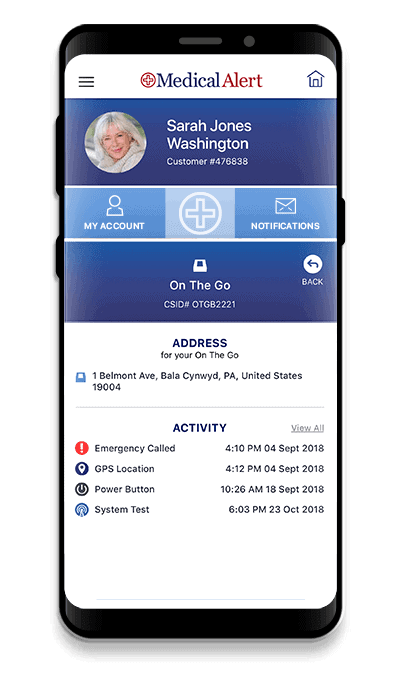
Here’s what Medical Alert’s Connect mobile app looked like on our iPhone
Now that we’ve covered how much each of Medical Alert’s five systems cost, let’s get into what you can expect, our experience with them, and whether or not it’s worth the price.
If you’re considering Medical Alert because of their low prices, their at-home systems are their most affordable options.
Editor's Note: While Medical Alert has discontinued their Home Landline system, we’re keeping the information here so you can compare other providers to what Medical Alert used to offer.
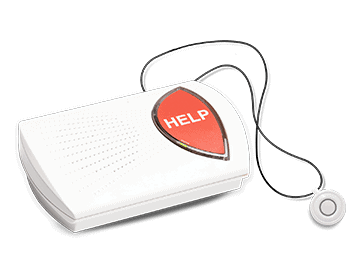
This system includes a base station and a waterproof help button, and as the name suggests, it requires a landline connection in the house. One detail we appreciated is that the help button can be worn as either a necklace or bracelet, a choice that not every competitor offers. When we tested ADT Medical, for instance, we had to commit to one form factor or the other.
The Home Landline system offers an 800-foot range in our testing, enough coverage that even a home sitting in the middle of a 14-acre property would stay protected across the land. That’s sufficient for most households. If extended range is a priority, our Medical Guardian review is worth a look, its system reaches up to 1,300 feet.
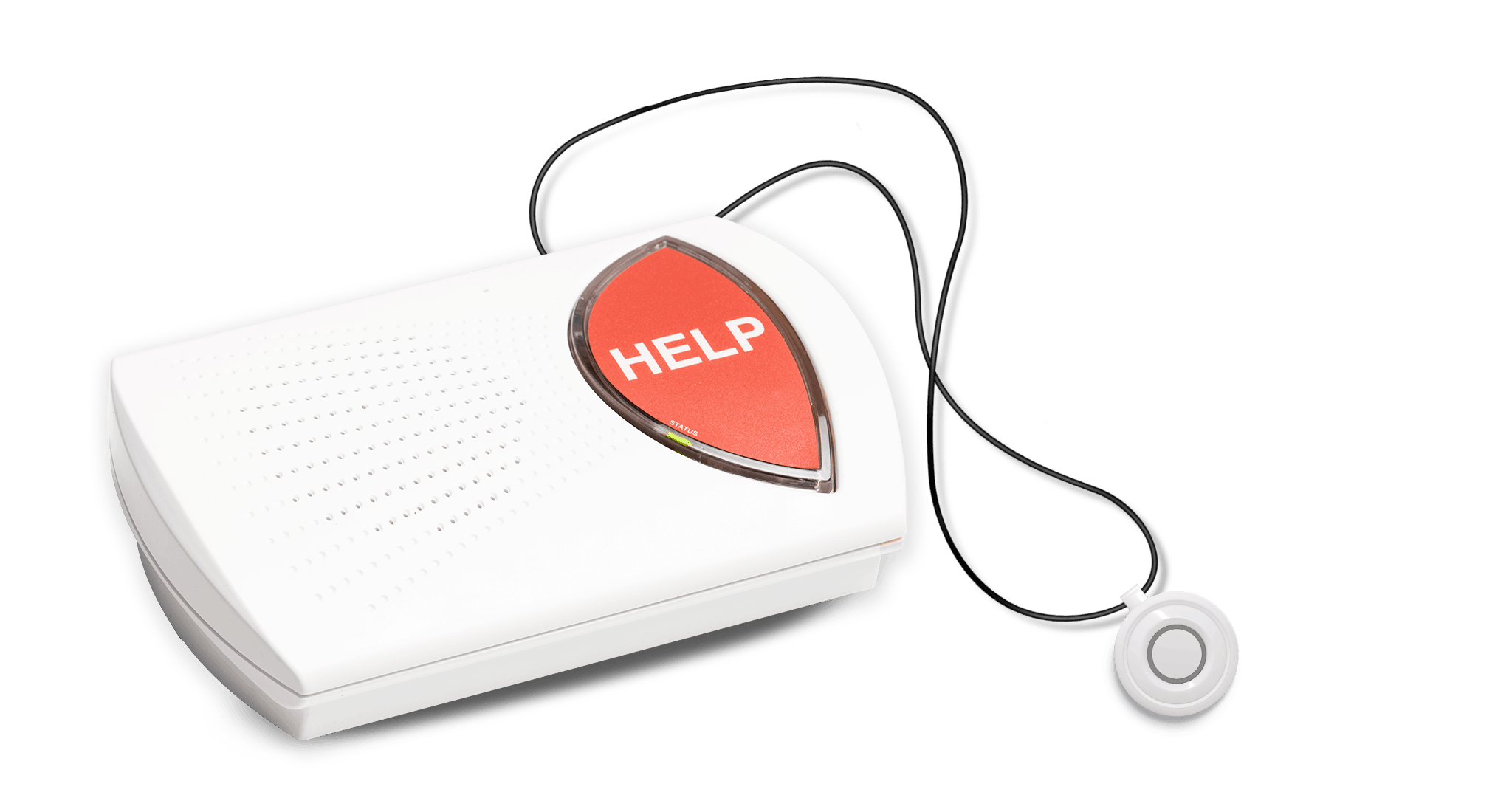
The help button that comes with the Medical Alert Landline can be used as a necklace or bracelet
Who It’s Best For: Medical Alert’s At Home Landline system works well for seniors on a budget who have a landline and primarily stay home or leave only when accompanied.
FYI: Medical Alert uses only U.S. based agents who are SIA-Certified multilingual operators.2 They are equipped to handle real-time translation in 140 different languages.
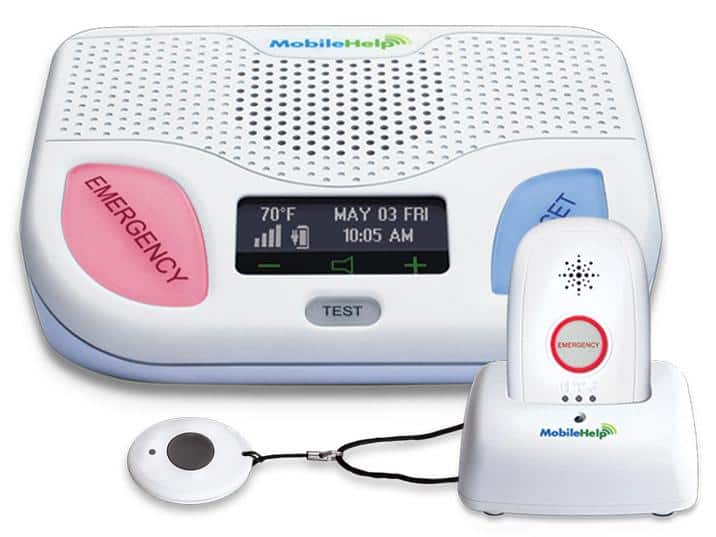
While the Home Cellular system sports a different look than the Home Landline model, the two share identical functionality. They both come with a base station and waterproof, wearable help button.
The key difference is that the Home Cellular connects to AT&T’s cellular network, so there’s no landline required. Before you buy, it’s worth checking the FCC’s cellular coverage map to make sure you’ve got solid connectivity in your area.3
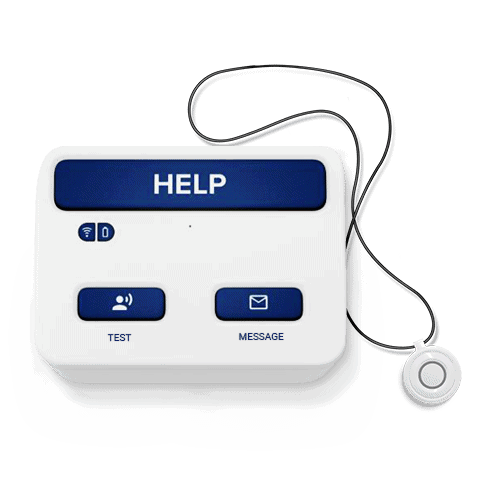
Despite the different aesthetic, Medical Alert’s Home Cellular system offers the same capabilities as the landline system
Who It’s Best For: The Home Cellular System is best for seniors who don’t need on-the-go protection but also don’t have a landline at their home.
Most on-the-go medical alert systems split the help button and communication device into two separate pieces, which means carrying both wherever you go. Medical Alert takes a simpler approach, building everything into a single wearable device across both of its mobile systems, with the charging dock as the only additional component to manage.
Medical Alert’s Standard Mobile System stood out during our testing thanks to its multi-day battery life, which holds its own against the competition. We’ve seen some systems stretch to five days — including when we tested the Medical Guardian MGMini — but four days still gives most users plenty of breathing room between charges.
Because the device has a built-in speaker and microphone, the casing includes small holes to keep audio clear, which means it’s not quite as waterproof as the help buttons on at-home systems. In our testing, it held up fine in the shower, but submerging it in water is still a step too far.
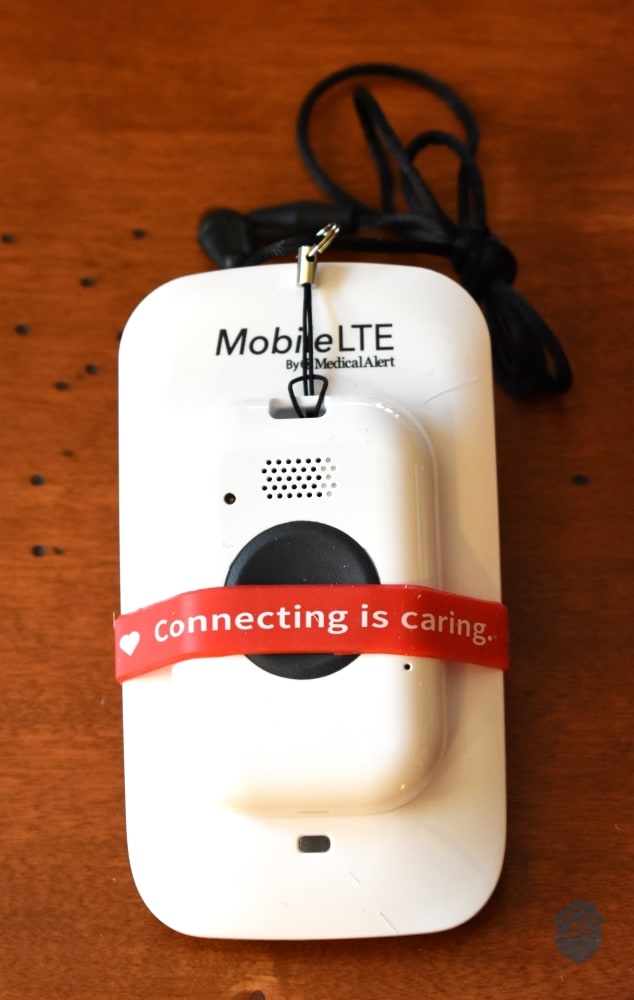
While we tested an older model, it still had all of the capabilities of the current Medical Alert Mobile System
Who It’s Best For: Seniors who enjoy spending time away from home and want the added protection of on-the-go coverage but don’t mind a device others can see.
Remember: Most Medical Alert equipment comes with a $99.95 setup fee but no charge for their equipment. That lowers your upfront costs, but you will have to return the devices if you cancel your service.
Medical Alert’s Mobile Mini System lives up to its name as one of the most compact all-in-one mobile systems around. You can wear it as a bracelet or pendant. We think the pendant option offers more versatility since it easily tucks into a pocket or purse. The bracelet works best when worn on the wrist. The Mobile Standard, by contrast, is only suitable as a necklace.
Who It’s Best For: Seniors who need portable protection but prefer their medical alert system is discreet and unobtrusive.
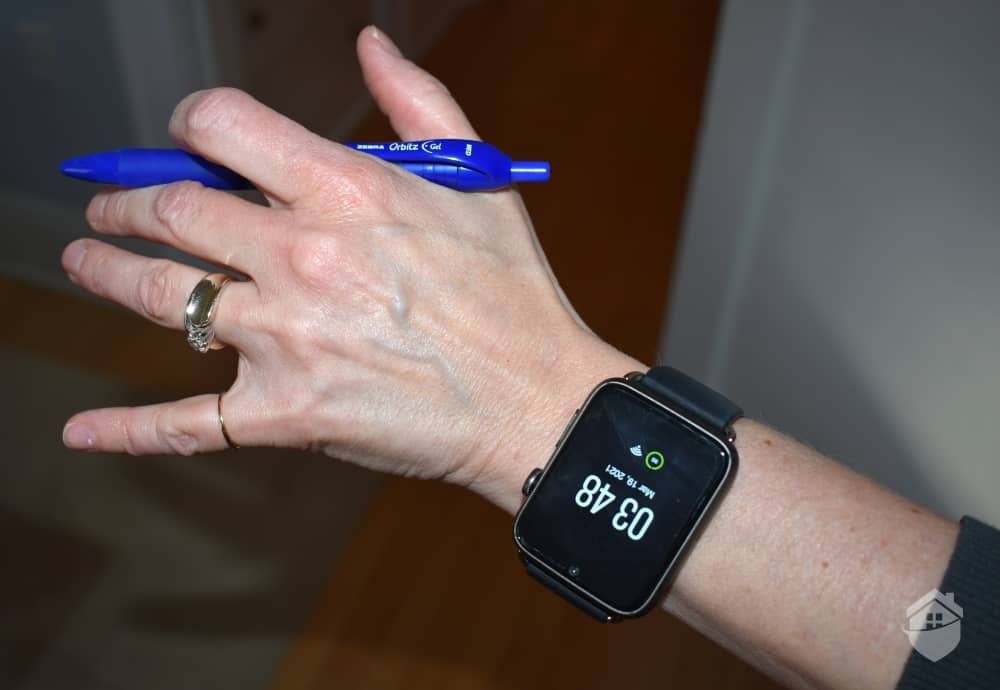
Medical Alert only offers one smartwatch option. While it didn’t make the cut for our list of the best medical alert smartwatches, it’s still a decent option. The main limitation is its basic feature set compared to competitors in the same price range.
Medical Alert’s smartwatch offers heart rate monitoring and step tracking, but that’s about it. At this price point, we expect more. For comparison, the Medical Guardian MGMove smartwatch we tested comes loaded with weather updates, messaging capabilities, and reminder apps. That makes it a better pick for seniors who want more from their medical alert smartwatch.
Who It’s Best For: Seniors seeking basic fitness tracking and on-the-go emergency response capabilities.
Medical Alert is currently offering free shipping when you sign on with a semi-annual plan. Opt for an annual plan and you’ll also score a free lockbox. Those longer plans also come with discounts to your monthly rate. To top it off, they also run a promotion for 10 percent off your online order when you join their email list. Here’s a quick look at Medical Alert’s current rates:
| Home System | On The Go | Smartwatch |
|---|---|---|
| $37.95/mo/mo | $42.95/mo | $39.95/mo/mo |
| View Packages | View Packages | View Packages |
| Services | Services | Services |
| 24/7 Monitoring | 24/7 Monitoring | 24/7 Monitoring |
| Equipment | Equipment | Equipment |
| Wireless Medical Alert System | Handheld Medical Alert System | Smartwatch Medical Alert System |
| Battery Backup | Carrying Case | Wristband |
| Neck Button | Interchangeable Wrist/Neck Button | Charging Base |
| Wrist Button | ||
| Options | Options | Options |
| Lock Box | Lock Box | Lock Box |
| Protection Plan | Protection Plan | Protection Plan |
| Fall Detection | Fall Detection | Fall Detection |
Medical Alert is part of the Connect America brand, a nationwide company based outside of Philadelphia, Pennsylvania, with decades of experience in personal emergency response systems. The brand is also a member of the Medical Alert Monitoring Association (MAMA).4
To assess Medical Alert’s value, we compared it against Bay Alarm Medical and Medical Guardian, two of our top-rated providers. When compared to Bay Alarm, Medical Alert costs less for their at-home systems, but we still prefer Bay Alarm overall. We find their equipment to be of higher quality, their mobile app more user-friendly, and their customer support more responsive. Beyond at-home systems, Medical Alert’s pricing is comparable to Bay Alarm.
Similarly, when compared to Medical Guardian, Medical Alert offers lower pricing, but that’s where their advantage ends. Other than cost, we recommend Medical Guardian for most users. Their at-home systems feature a longer range (up to 1,400 feet versus Medical Alert’s 800 feet), and their on-the-go systems, particularly their smartwatches, offer more advanced technology including GPS tracking, fall detection, and health monitoring features. We find Medical Guardian worth the extra investment.
To make sure our reviews deliver real value, we purchased a Medical Alert system and used it daily for about two and a half weeks. During testing, we evaluated it using the same criteria we apply to every medical alert system to measure both performance and overall value:
This Medical Alert review was conducted by our senior care experts, who bring years of hands-on industry experience to every evaluation. We assess every factor that could impact your safety, and we also consult third-party specialists and real customers to ensure our conclusions reflect both expert insight and real-world use.
If you’re looking for a budget-friendly medical alert system for your home—or a loved one’s—Medical Alert is worth considering. At $29.95 per month (with an annual plan), its Home Cellular System remains one of the more affordable cellular options available in the industry.
That value doesn’t extend as clearly to the rest of the lineup. In our testing, Medical Alert’s other systems were priced similarly to competitors but offered fewer features and less advanced technology. They’re not poor-performing systems, and we’d call them reliable but average. Still, with more feature-rich options available at similar price points, there may be stronger choices depending on your specific needs and lifestyle.
The cellular, mobile, and smartwatch alert system will work anywhere in the United States, provided you have AT&T coverage. If you have a landline, but limited AT&T coverage, you can still use the Home Landline system.
No, Medical Alert does not currently offer a free trial period or money-back guarantee. Be sure to review their cancellation policy before committing to a plan.
No, Medical Alert does not offer a free trial period or money-back guarantee.
Not a problem. The response center staff is trained to use a real-time translation service that is capable of translating 140 languages.
If you press the help button and a monitoring center associate is unable to speak with you, they will still dispatch emergency services to your last known location or the GPS coordinates of your device. A message will also be relayed through the caregiver’s app.
Social Security Administration. (2026). What is the average monthly benefit for a retired worker?.
https://www.ssa.gov/faqs/en/questions/KA-01903.html
Security Industry Association. (Accessed 2025). About SIA.
https://www.securityindustry.org/about-sia/
Federal Communication Commission. (2026). FCC National Broadband Map.
https://broadbandmap.fcc.gov/
Medical Alert Monitoring Association. (Accessed 2025). Membership Directory “Regular Members”.
https://www.medicalalertmonitoringassociation.com