

Yes, LifeLock is worth it for most people because its plans include some of the largest insurance policies in the industry and the support of reliable restoration teams.
After testing and reviewing identity theft protection services across the industry, LifeLock consistently stands out as one of the most full-featured options available. Whether you’re a senior managing retirement accounts, a parent covering your whole household, or someone who already uses Norton for device security, LifeLock delivers real, measurable protection that justifies the cost for most buyers. That’s why it consistently ranks among the best identity theft protection services.
That said, “worth it” depends on your situation. Below, we break down exactly what you get, what it costs, who benefits most, and who might be better served by a leaner alternative.
What Does LifeLock Actually Do?
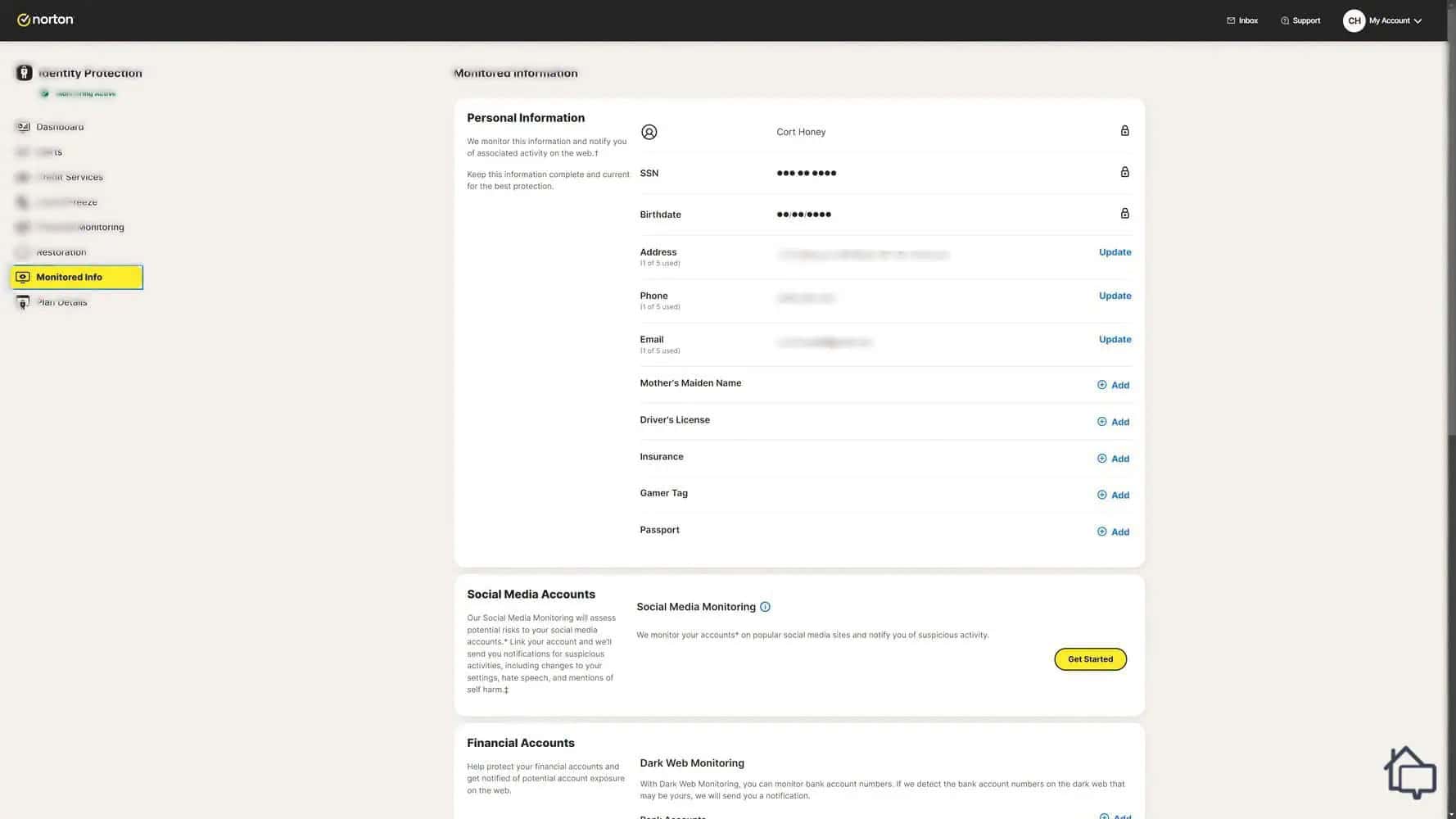
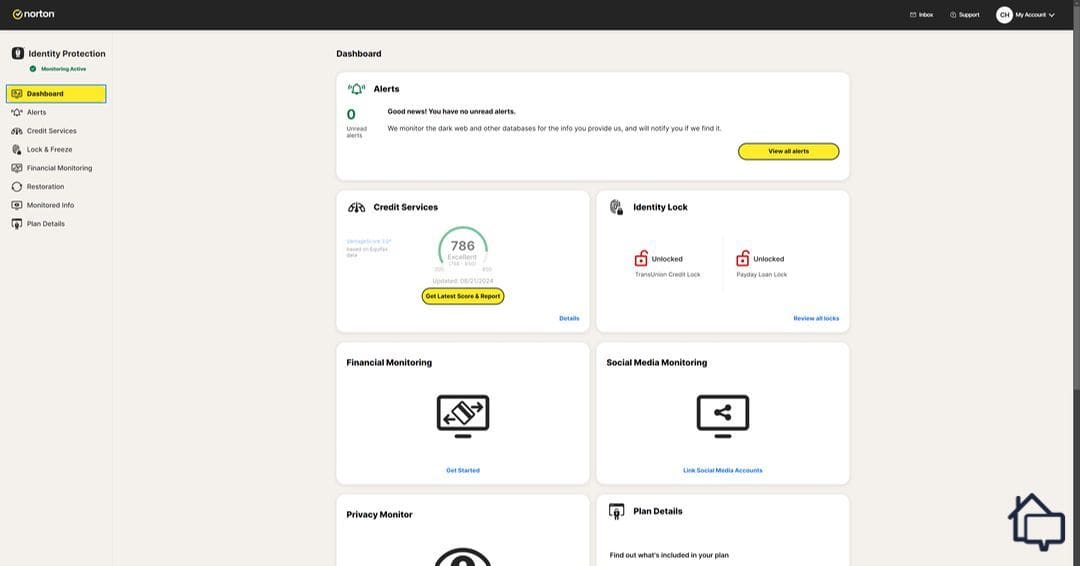
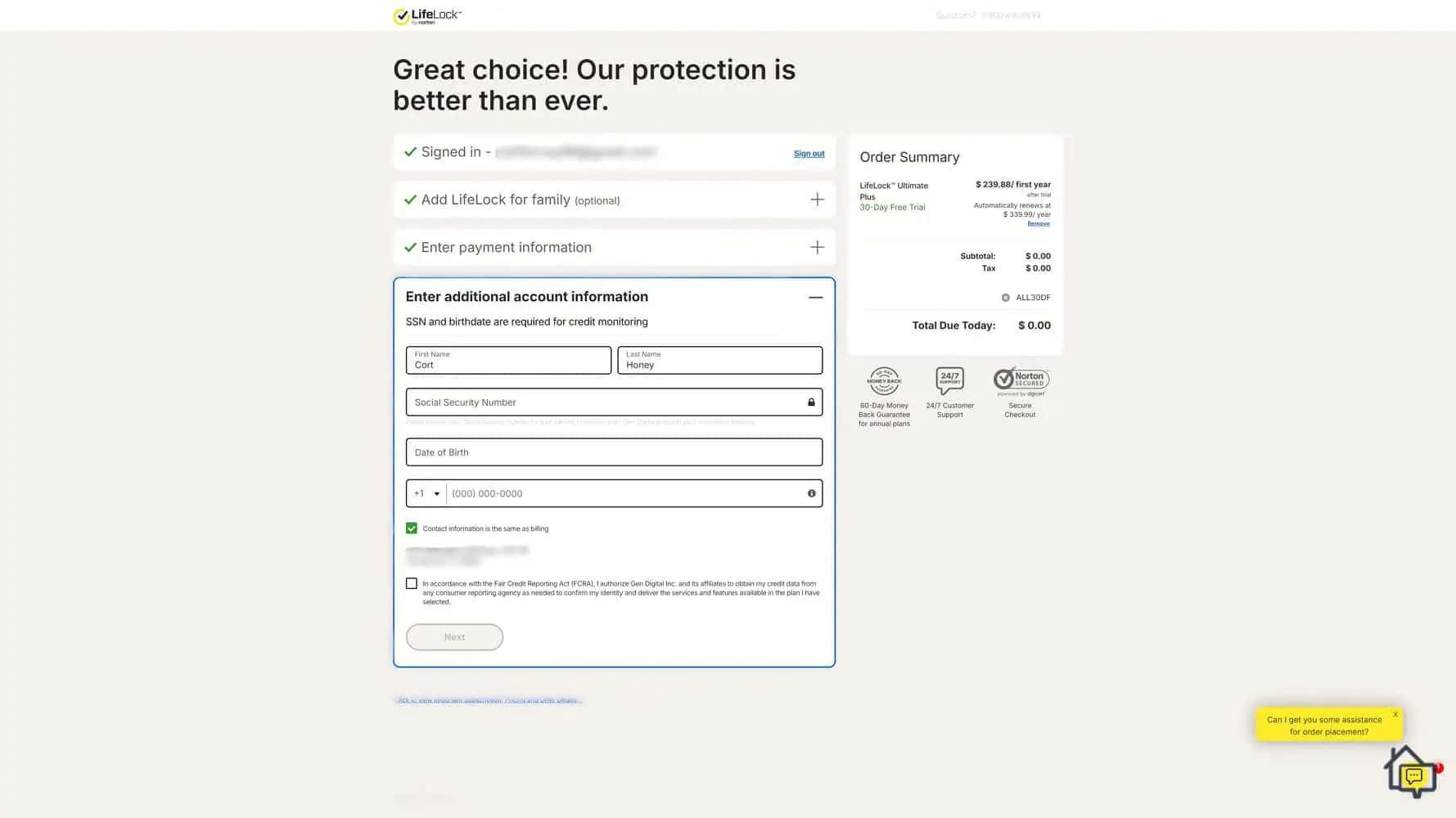
After signing up for a plan, we had to add all of our information that we wanted LifeLock to monitor.
LifeLock monitors your personal information across a wide range of threat vectors — from dark web marketplaces and data brokers to court records and financial account activity. When something looks off, you get an alert with guidance on how to address the potential issue. If an issue escalates into identity theft, LifeLock provides a dedicated U.S.-based restoration specialist to help you recover.
More specifically, LifeLock’s plans include the following protections:
- SSN alerts: LifeLock notifies you when your Social Security number is used to apply for credit or shows up in suspicious contexts.
- Dark web monitoring: Continuous scanning for your personal data, email addresses, and financial credentials on known dark web marketplaces and forums.
- Bank and credit card activity alerts: Flags unusual activity across a set number of bank accounts depending on your plan. It also notifies you of new account openings tied to your identity.
- Credit monitoring: Depending on your plan tier, you get one-bureau, two-bureau or three-bureau credit monitoring with score tracking.
- Stolen wallet protection: Assistance replacing key documents if your wallet is lost or stolen.
- Million Dollar Protection Package: LifeLock’s headline benefit is its up to $1 million in coverage for lawyers and experts, plus separate reimbursement limits for personal expenses and stolen funds that scale up to $1 million each with your plan tier.
Higher-tier plans (Advanced, Total and Ultimate Plus) add features like fictitious identity monitoring, investment account alerts, home title monitoring, and identity consultations. That last one means an expert will assess your exposure and advise you on how to best secure your identity vulnerabilities. We dig into how each of these features worked for us in our LifeLock review.
>> Learn About: Keeping Kids Safe in the Digital Age
How Much Does LifeLock Cost?
LifeLock uses a tiered pricing structure with three main individual plans and family add-on options. Because rates are updated regularly, we recommend checking LifeLock’s website for the most current pricing before purchasing. However, make sure to note that the prices LifeLock advertises prominently are promotional rates for the first year. When you renew, you’ll need to pay the current full price.
As a general framework, here’s a look at LifeLock’s main plans:
- Core: Entry-level plan covering SSN alerts, dark web monitoring, and two-bureau credit monitoring. Suitable for individuals who want foundational monitoring without a large commitment.
- Advanced: Mid-tier plan adding scam reimbursement, three-bureau credit monitoring, and higher reimbursement limits. A strong value pick for most adults.
- Total & Ultimate Plus: The most comprehensive individual plan, with extensive credit monitoring and reporting, investment account alerts, home title monitoring, and insurance policies that total over $3 million.
Every plan is available as bundles for couples or families as well, allowing for coverage of up to two adults and ten children under one subscription. There are also options to bundle LifeLock with Norton 360. This can save you money if you already pay for Norton antivirus or want both identity theft protection and digital security.
Expert Insight: We’ve found through long-term testing that LifeLock’s renewal pricing is higher than their first-year promotional rate. We recommend setting a calendar reminder one week before your renewal date, so you can check LifeLock’s current renewal pricing and decide if you want to renew.
Who Is LifeLock Best For?
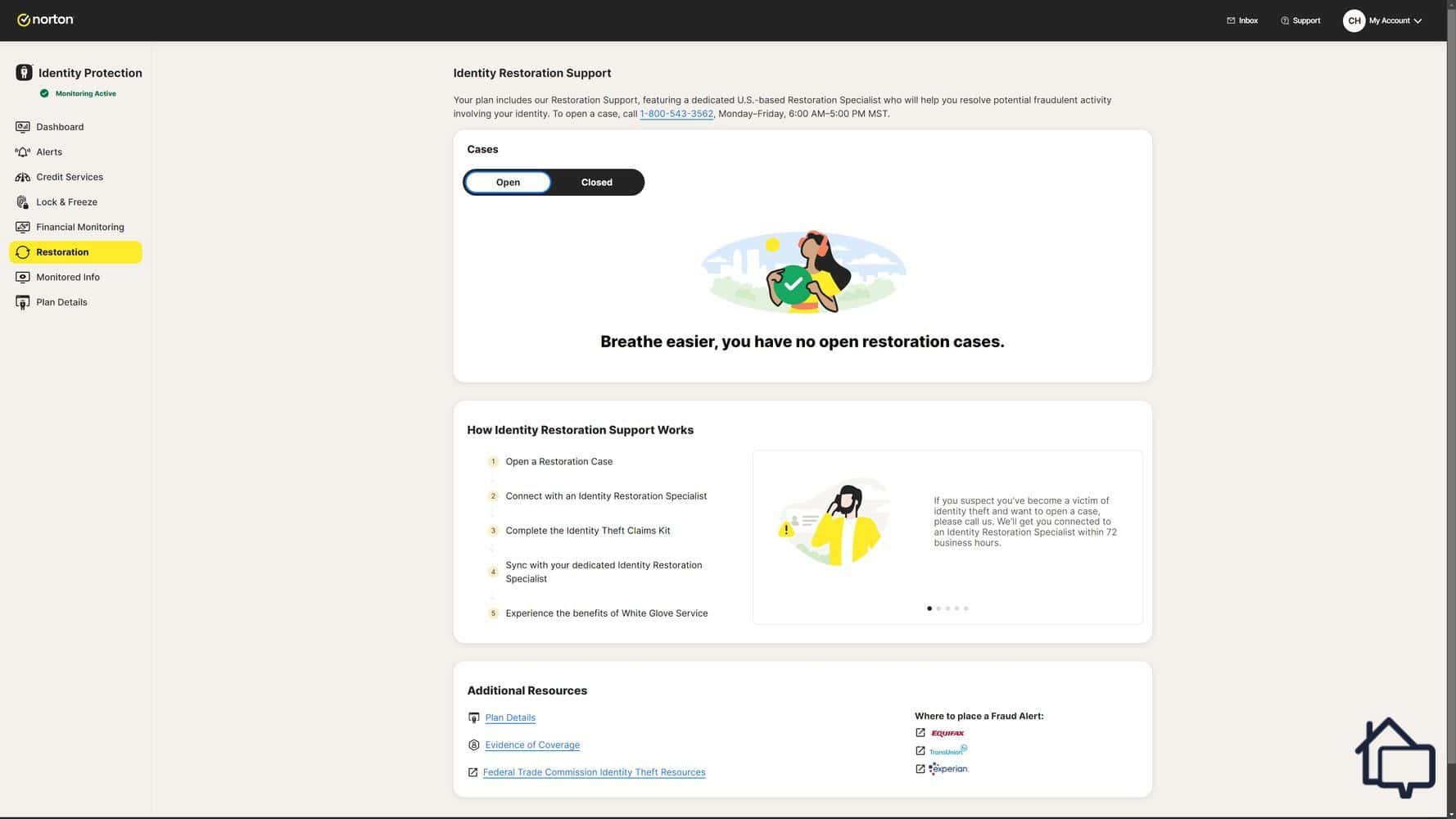
LifeLock has a dedicated page for submitting identity theft claims and restoring your identity.
There’s no such thing as a one-size-fits-all solution when it comes to identity theft protection and we’re not here to tell you that’s what LifeLock is. That said, its mix of monitoring, alerts, and restoration support makes it the ideal choice for specific use cases. A few of the most common ones include:
Seniors and Retirees
Older adults are disproportionately targeted by identity thieves, Medicare fraud schemes, and Social Security scams.1 LifeLock’s SSN monitoring and court record scanning offer protections where seniors need it. Another big perk is the dedicated restoration team giving seniors access to human support — not just app alerts — when something goes wrong. That means you’ll be able to reach a live U.S.-based specialist for guidance and support when you need it.
Families with Children
Children’s Social Security numbers are frequently stolen and misused for years before anyone notices because kids don’t have credit histories that trigger alerts. LifeLock protects against this with their family plans that include SSN monitoring for kids. This will help you identify suspicious activity before it escalates into serious issues. Plus, LifeLock’s family plan costs less per-person than buying individual plans separately.
>> More Options: Best Family Identity Theft Protection in 2026
Norton Ecosystem Users
If you’re already paying for a Norton product, you can bundle Norton 360 and LifeLock for a far lower cost than buying them separately. You get device security and identity monitoring under one subscription. However, Norton 360 and LifeLock do not share the same app. That can make them feel disconnected at points, although this bundle really does offer the best in device and identity protection.
People with Recent Data Breach Exposure
If your personal information was exposed in a major breach — a healthcare provider, financial institution, or any large employer — LifeLock provides meaningful peace of mind. The monitoring coverage is broad enough to catch the downstream misuse of stolen credentials that often shows up months or years after the original breach. We also like that LifeLock offers up to $3 million in reimbursement if your identity gets stolen, tripling the industry-standard $1 million policies.
Who Might Not Need LifeLock?
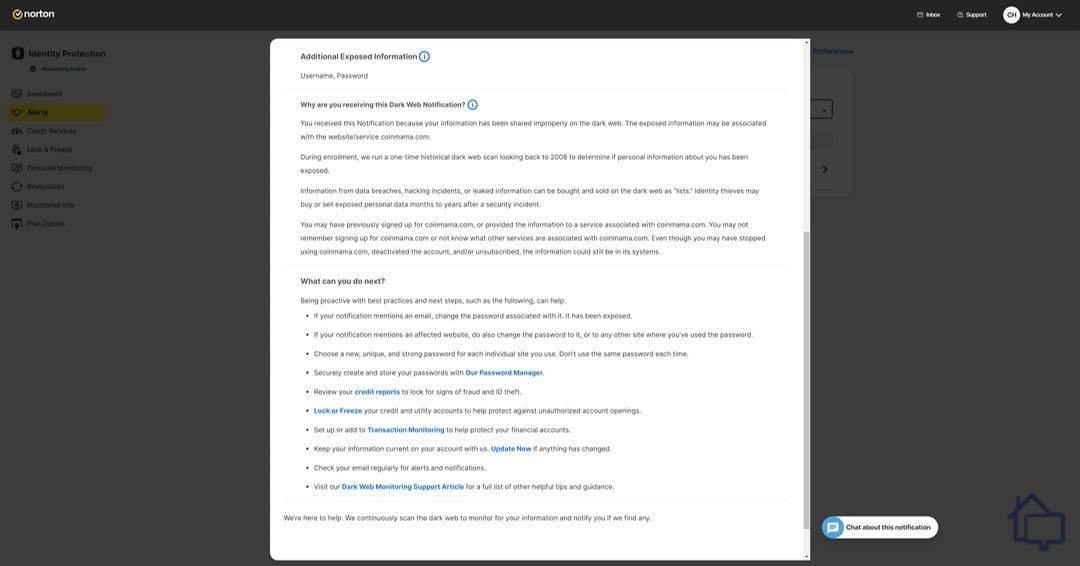
Every alert LifeLock sent us came with detailed instructions on what we should do next.
Just like there are use cases that perfectly fit LifeLock’s service, there are also users who would be best off with an alternative. If you fall into any of the following categories, LifeLock most likely is not the right option for you:
- Budget-focused individuals who just want credit monitoring: If your only concern is someone opening a credit card in your name, a free credit monitoring service or a direct credit freeze through the three bureaus may be sufficient. Check out our list of the best credit protection services to find a service that will work for you.
- Younger adults with minimal financial footprint: Someone with no investment accounts, no home equity, and a thin credit file may be paying for features they don’t yet need. Even the Core plan likely offers more than you would need.
- People who want a simpler, all-in-one interface: Some competing services prioritize a cleaner user experience. LifeLock’s app is functional but can feel dense. If app polish matters more than monitoring depth, it’s worth considering alternatives.
For a roundup of the services we recommend when LifeLock is not a good fit for you, take a look through our list of the best LifeLock alternatives.
>> Read More: LifeLock vs Identity Guard Comparison
LifeLock Pros and Cons
PROS
- Up to $3 million in identity theft coverage per adult
- Can be bundled with Norton 360, a high-quality antivirus
- Includes alerts for bank account takeovers, and 401(k) and investment accounts
- All plans include at least $1 million in identity theft coverage
- Quality notifications with helpful descriptions and tips for minimizing exposure
CONS
- Expensive even with an annual plan discount
- Only the highest subscription tier includes three-bureau monitoring (the others have just one-bureau monitoring)
- Prices increase after the first year
What Makes LifeLock Stand Out
Not all identity theft protection services are built the same way. What we think separates LifeLock from the field is the combination of monitoring depth, financial protection, and human recovery support. In our experience, those are the three things that matter most when your identity is actually compromised.
Most services can send you an alert. Fewer have a restoration team standing by to work your case. LifeLock offers a best-in-class service with U.S.-based specialists. They’ll help you navigate the entire recovery process step-by-step — filing disputes, contacting creditors, and working through the paperwork that identity theft victims typically face alone. That type of hands-on support really stands out.
The up to $3 million of reimbursement if you fall victim to identity theft is another big differentiator. Most competitors only offer $1 million per adult. LifeLock offers more than that in all of their plans, although the $3 million of coverage is only for the Total and Ultimate Plus plans. This provides a financial backstop that leads the industry in case a threat gets through the preventative monitoring.
Did You Know? Most years, LifeLock runs Black Friday sales that further reduce their first-year promotional pricing. However, we don’t think it’s worth waiting for unless it’s right around the corner. Identity theft protection is a long-term investment, so a discount on only the first year doesn’t end up saving you much in the long run.
Our Verdict
LifeLock is worth it — and for most people looking for identity theft protection with real restoration support behind it, it’s the service we’d recommend first. The combination of wide monitoring coverage, a meaningful insurance package, U.S.-based specialist access, and family plan options makes it hard to match at a comparable price point. This is especially true if you’re already a Norton user or managing protection for more than just yourself.
That said, the renewal price increase is real and worth planning for, but the overall service justifies the cost for the majority of households. Start with the Advanced plan if you’re unsure — it covers the features most people need without the premium extras of the Total plan.
Frequently Asked Questions
- Is LifeLock worth it?
Yes, LifeLock is worth it for most people. It offers one of the broadest identity monitoring footprints in the industry — covering SSN, dark web, court records, investment accounts, and more — combined with up to $3 million of reimbursement for identity theft and access to U.S.-based restoration specialists. For individuals, families, and seniors who want genuine protection and human support if something goes wrong, LifeLock consistently ranks among the best available options.
- How much does LifeLock cost?
LifeLock offers three main individual plan tiers — Core, Advanced, and Total — along with family plans. Promotional first-year rates are typically lower than annual renewal pricing, so it’s important to check the full renewal cost before committing. Pricing changes periodically, so we recommend visiting LifeLock’s website directly for current rates. At last check, those three main plans started at $10.42 per month.
- What does LifeLock protect against?
LifeLock protects against a wide range of identity-related threats, including Social Security number misuse, new credit account fraud, dark web exposure of personal data, bank and credit card account takeovers, court and criminal record fraud, fictitious identity creation, and — on higher tiers — investment account fraud and home title fraud. All plans will also reimburse you up to $1 million if your identity is stolen to cover lawyer and expert fees as well as additional coverage for stolen funds that varies by plan.
- Is LifeLock better than Aura?
Both are strong services, but they have different strengths. LifeLock offers deeper identity-specific monitoring at the higher plan tiers and integrates with Norton 360 for device security. That makes it a better fit for families, seniors, and existing Norton users. Aura offers a cleaner all-in-one interface with device security tools included at every tier. For most people prioritizing restoration support and monitoring breadth, LifeLock is the stronger recommendation — but Aura is a legitimate alternative for users who prioritize simplicity.
- Does LifeLock work for seniors?
Yes, LifeLock is particularly well-suited for seniors. Older adults are among the most frequently targeted demographics for identity fraud, Medicare scams, and Social Security number theft. LifeLock’s SSN monitoring, court and criminal record scanning, and access to live U.S.-based restoration specialists make it one of the best-matched services for seniors who want real human support during a recovery process. The service is also accessible via phone for those who prefer not to manage everything through a mobile app.