


LifeLock is our top-recommended identity theft protection service for seniors. It offers continuous monitoring of your Social Security number, financial accounts, and the dark web. If a threat gets through, LifeLock helps you recover with a U.S.-based restoration team available 24/7 and insurance coverage up to $3 million on eligible plans. That hands-on support makes it great for older adults who struggle with technology and need the extra help. It also features a 60-day money-back guarantee on annual plans and a free 30-day trial, so you can try it risk-free.
In this guide, we cover which LifeLock plans make the most sense for seniors, what protection they include, and how pricing works (including the renewal increase to be aware of). We’ll also discuss a few scenarios where a different identity theft protection service might serve you better based on our hands-on LifeLock tests.
Why Seniors Face a Higher Risk of Identity Theft
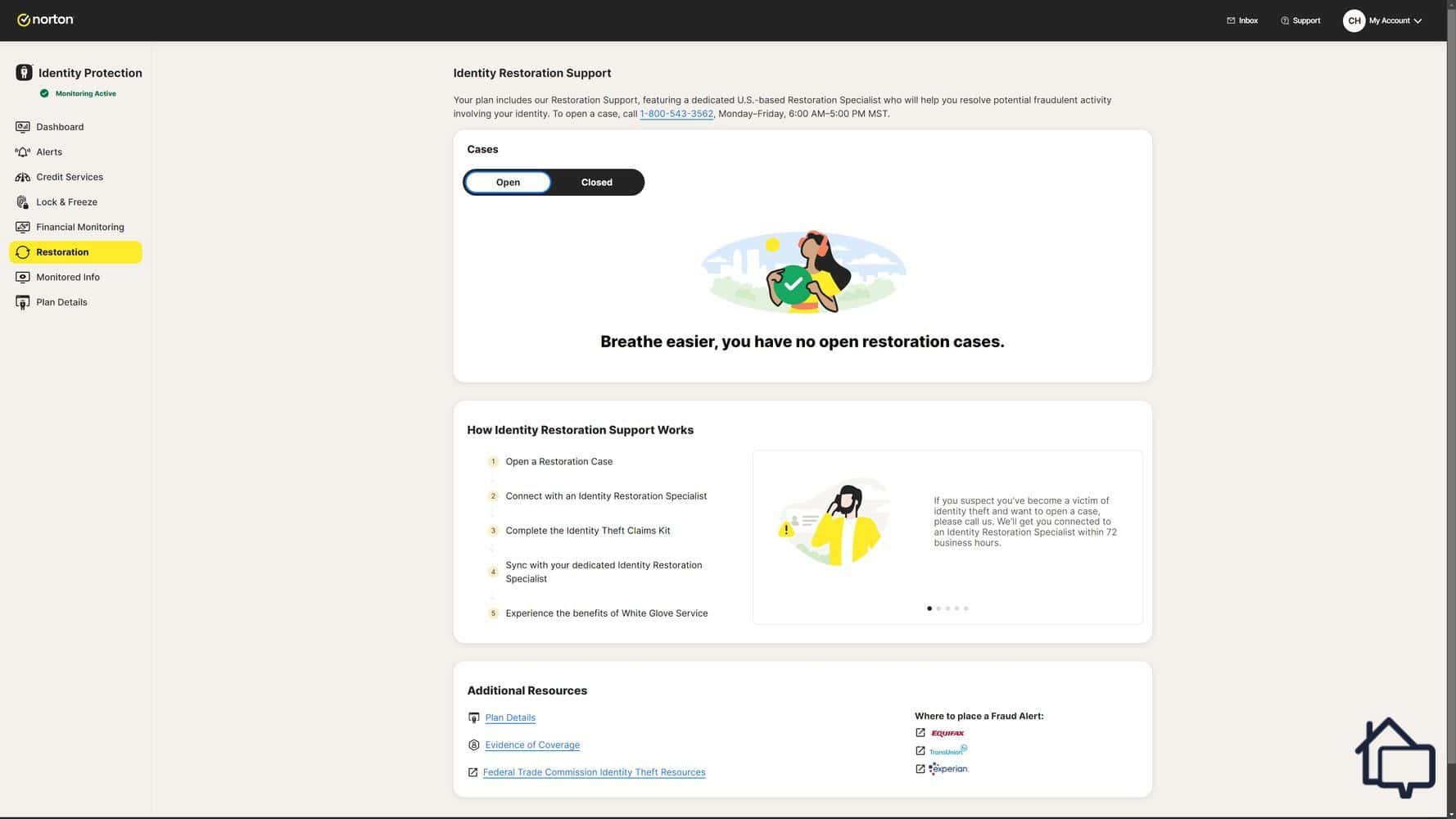
LifeLock’s white-glove identity theft restoration support helped it earn our recommendation for seniors
Identity theft is growing across all ages, but the data consistently show older Americans bear the heaviest financial losses. According to the FTC's most recent report to Congress, adults 60 and older filed more than 200,000 fraud complaints in 2025 and reported $7.7 billion in total losses.1 That’s the highest of any age group. Adults in their 70s reported a median individual loss of $1,000, more than double the median reported by people in their 20s.2
These higher rates of identity theft stem from a few key factors, including:
- Higher assets and savings: Retired adults often have more accessible funds, making them more attractive targets for financial fraud. Adults 80 and over reported median losses exceeding $1,600.3
- Medicare and Social Security exposure: These government-issued identifiers are frequent targets in medical identity theft and benefits fraud.
- Tech support and impersonation scams: Older adults are significantly more likely than younger adults to report losing money to impersonation scams and tech support fraud.
- Rising investment scam losses: In 2025, older adults reported losing more money to investment scams than to any other fraud type, with social media as the most common point of contact.
None of this reflects a lack of intelligence or caution. Rather, older adults have more exposure to the attack vectors scammers use to exploit their victim’s trust. Seniors also own more assets for scammers to steal, making them more attractive targets.
>> Related Reading: Guide to Avoiding Door-to-Door Scams
Why We Recommend LifeLock for Seniors
LifeLock is our recommended identity theft protection service for seniors, as its capabilities align directly with the risks described above.
24/7 U.S.-Based Support
One of the most consistent points of praise from older LifeLock customers is the quality and patience of the company's support team. If an alert comes in and you're not sure what it means, you can call a real person at any hour. For seniors who may need more personal help, this is a meaningful differentiator. Aura’s another provider that offers U.S.-based support. Head over to our LifeLock vs. Aura comparison to find out why we recommend LifeLock over Aura for seniors.
Hands-On Identity Restoration
Most identity theft services alert you to a problem and then expect you to handle the paperwork. LifeLock works differently: if your identity is compromised, a dedicated restoration specialist takes over the process. They work with creditors, agencies, and institutions to restore your identity on your behalf. This can save hundreds of hours of stressful follow-up.
FYI: In addition to identity theft restoration, LifeLock also offers stolen wallet protection. With select plans, they’ll help you cancel and replace cards, licenses, and other documents to limit the window during which a thief can misuse your identity. For seniors who carry Medicare cards and other sensitive documents, this service reduces the administrative burden after a wallet loss.
Advanced Monitoring
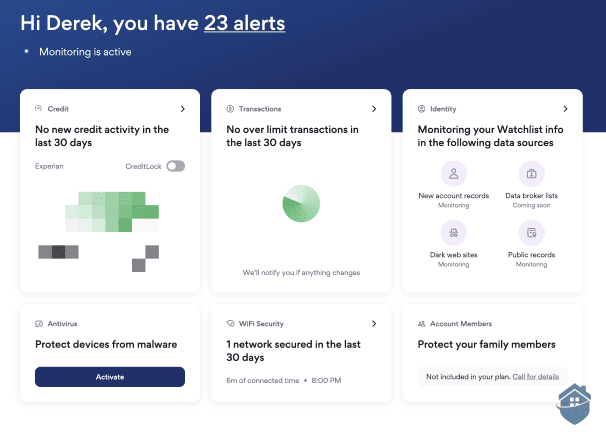
LifeLock monitors your Social Security number and other personal information across a network of databases. If it appears in a credit application, on the dark web, or in other suspicious contexts, LifeLock alerts you. For seniors whose SSNs are tied to Medicare, Social Security benefits, and decades of financial history, early detection of SSN misuse is critical.
Core, Advanced and Total plans also include alerts for suspicious activity on your bank accounts and credit cards. Higher tier plans support monitoring for more accounts. This is particularly valuable for seniors that rarely check their accounts and could benefit from an automated second set of eyes on their finances.
You’ll also get credit monitoring with every LifeLock plan. Higher tier plans offer up to three-bureau credit monitoring, but all of them monitor at least one bureau. This provides a safeguard for seniors with established credit histories and retirement accounts.
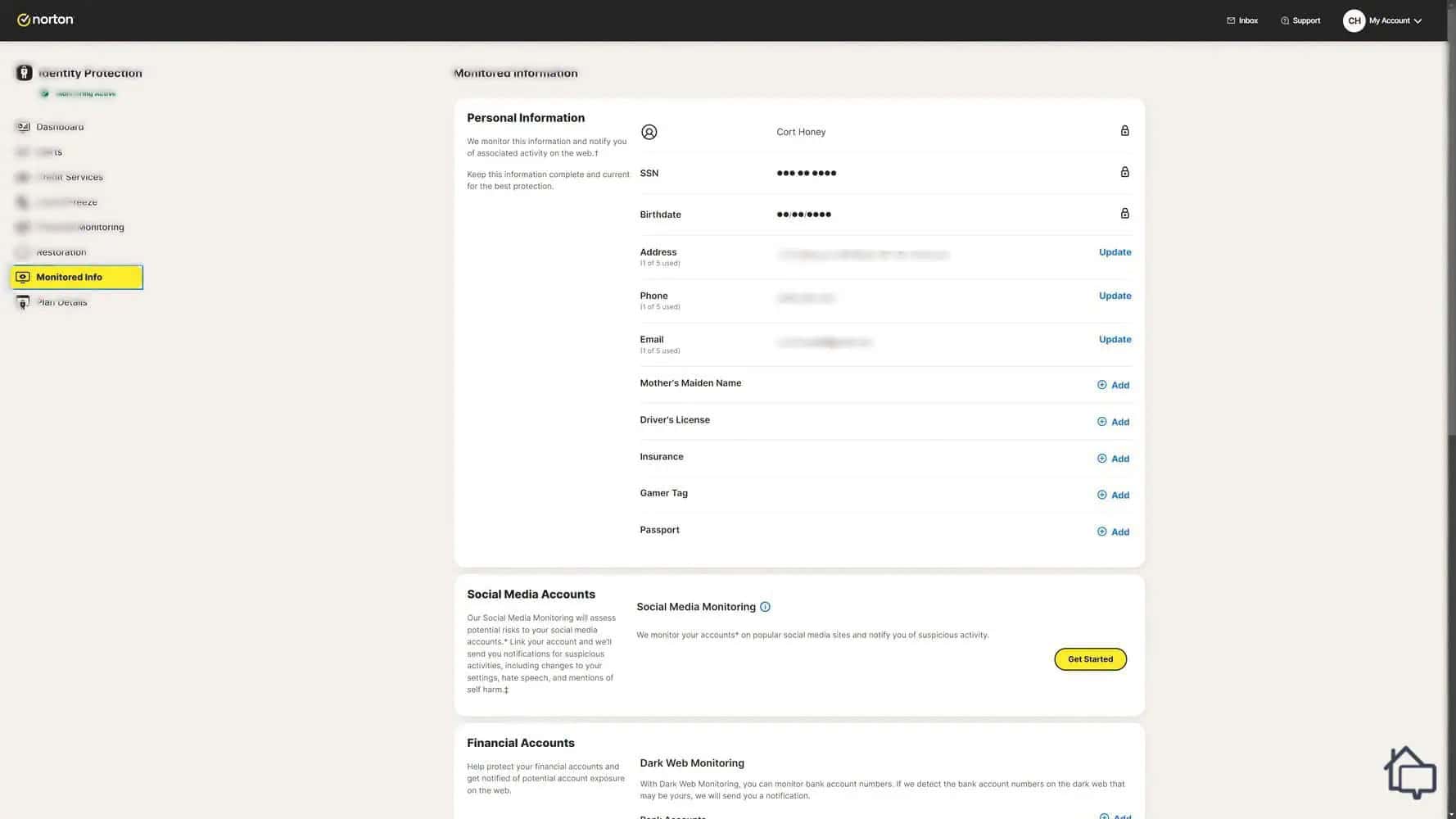
LifeLock monitors all of the information we input in the “Personal Information” section of our account
Million-Dollar Protection on Eligible Plans
LifeLock's plans cover up to $1 million for lawyers and experts in the event of a covered identity theft incident. They also include separate coverage for stolen funds and personal expenses, with up to $1 million for both in the Total and Ultimate Plus plans. Seniors with significant retirement savings or investment accounts benefit most from this level of financial backstop.
60-Day Money-Back Guarantee
Annual LifeLock subscriptions come with a 60-day money-back guarantee, which is one of the most generous trial windows in the industry. Monthly subscriptions come with a shorter 14-day window. This removes most of the financial risk from trying the service.
Expert Insight: Even better, LifeLock renews this 60-day money-back guarantee when your subscription renews. That means you don’t have to worry about forgetting to cancel your subscription before it renews. As long as you cancel it within 60 days of being billed, you’ll get a full refund.
LifeLock Plans for Seniors: What's Included and What It Costs
LifeLock no longer offers a dedicated senior plan — it discontinued LifeLock Senior in 2019. Today, seniors choose from the same three-tier lineup as everyone else: Core, Advanced, and Total. Here's how each breaks down for an individual adult.
| Plan | Starting Price (Year 1) | Credit Monitoring | Max Coverage | Best For |
|---|---|---|---|---|
| Core | $10.42/mo (annual) | 2 bureaus | $25K stolen funds / $25K personal expenses / $1M lawyers & experts | Budget-conscious seniors, basic monitoring |
| Advanced | $16.67/mo (annual) | 3 bureaus | $100K stolen funds / $100K personal expenses / $1M lawyers & experts | Most seniors — best balance of features and cost |
| Total | $29.17/mo (annual) | 3 bureaus | $1M stolen funds / $1M personal expenses / $1M lawyers & experts | Seniors with high assets and investment accounts |
Rates are introductory and increase after the first year. Check LifeLock’s website for current pricing and any active promotions before subscribing.
Looking for a plan that covers more than just you? We cover all of those options in our guide to LifeLock’s family plans.
>> Learn About: Is LifeLock Worth the Price? Our Expert Take
A Note on Renewal Pricing
This is one of the most important things to understand before signing up. Some LifeLock plans include steep first-year discounts. In the second year, you’ll be paying the then-current full price. When assessing your budget, make sure to factor in that price increase. The good news is that you’ll get 60 days to request a refund when your annual plan renews in case you no longer think it’s worth the price.
Did You Know? LifeLock is moving away from the practice of increasing prices at renewal. Their latest Core, Advanced, and Total packages renew at the same rate as the first-year price.
Coverage for Senior Couples
If you and a spouse or partner both want protection, LifeLock offers couples plans at a meaningful discount versus two individual subscriptions. We recommend this for married seniors. The protection applies independently to each person's identity with both receiving their own monitoring, alerts, insurance policies and access to the restoration team.
>> Check Out: Best Family Identity Theft Protection in 2026
Can Seniors Get a Discount on LifeLock?
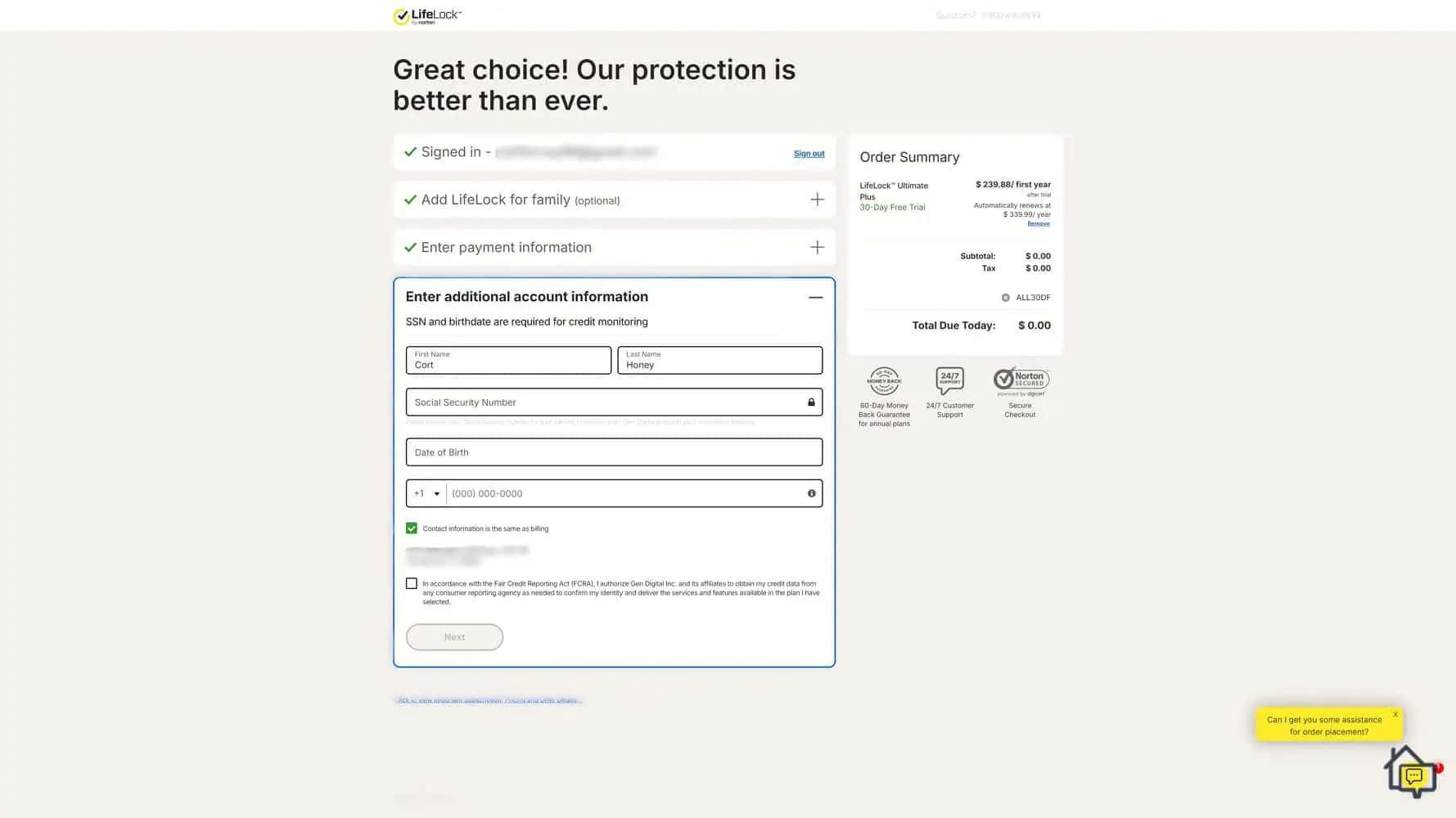
You can try LifeLock for free just like we did
Unfortunately, LifeLock does not offer a discounted senior plan. That said, AARP members can access discounted rates through the AARP member benefits portal. Just note that renewal price increases still typically apply after the first year. It’s also important to mention that these discounted plans typically include fewer features than the main plans, unlike with LifeLock’s Black Friday deals.
What LifeLock Doesn't Cover
Being clear about limitations is part of giving useful advice. LifeLock is a monitoring and restoration service — it cannot completely prevent identity theft from occurring. There’s always some risk. A few specific limitations of LifeLock worth knowing include:
- No dedicated Medicare fraud alert: LifeLock's SSN monitoring covers some of this risk but it does not have a separate Medicare-specific alert feature.
- Two-bureau credit monitoring on the Core plan: You'll need the Advanced or Total plan for full three-bureau coverage.
- Priority support requires Advanced plan or higher: On LifeLock’s basic plans, you only get standard 24/7 support instead of priority support, which can mean waiting on hold when you need help most.
- Device security requires a Norton 360 bundle: If you want an antivirus and VPN alongside identity protection, you'll need a Norton 360 bundle, which increases the price of your plan.
If these drawbacks are dealbreakers for you, head over to our roundup of the best LifeLock alternatives to find a service that better fits your needs.
>> Comparison Shopping: LifeLock vs Equifax Comparison 2026 | Which is Best?
Our Verdict: Is LifeLock Worth It for Seniors?
For most seniors, yes. The combination of 24/7 U.S.-based support, hands-on restoration specialists, SSN and financial account monitoring, and a 60-day money-back guarantee addresses the specific risks older adults face better than most services at a similar price point.
We recommend LifeLock Advanced as the starting point for most seniors — it covers the monitoring touchpoints that matter most (bank and credit alerts, SSN monitoring, dark web scanning) and carries up to $100K in stolen funds reimbursement. Seniors with significant retirement or investment accounts, or those with a history of fraud attempts, should consider upgrading to Total for the higher reimbursement ceiling and expanded financial account monitoring.
If cost is the primary concern, LifeLock Core is still a meaningful improvement over having no monitoring at all. The 60-day trial on annual plans gives you two months to evaluate whether the alerts and coverage match your actual needs before you're committed.
Frequently Asked Questions
- Does LifeLock offer a senior discount?
LifeLock discontinued its dedicated senior plan in 2019. That said, AARP members can access LifeLock discounts through the AARP member benefits portal. Seniors who are not AARP members can still take advantage of LifeLock's standard promotional pricing. Check LifeLock.com for current offers.
- Which LifeLock plan is best for seniors?
For most seniors, LifeLock Advanced is our recommendation — it includes bank and credit card alerts, three-bureau credit monitoring, and up to $100,000 in stolen funds reimbursement at a reasonable price point. Seniors with significant assets or investment accounts may want to step up to Total for 401K monitoring and $1 million in stolen funds coverage.
- Is LifeLock worth it for seniors?
For most seniors, yes. Adults 60 and older reported $7.7 billion in fraud losses in 2025 — the highest of any age group. LifeLock helps you avoid becoming a part of this statistic with dark web monitoring, financial alerts, and a dedicated restoration team that handles recovery on your behalf if your identity is compromised. The 60-day money-back guarantee on annual plans makes it risk-free to try.
- Does LifeLock monitor Medicare and Social Security fraud?
LifeLock monitors for Social Security number misuse across a wide range of databases and alerts you if your SSN appears in credit applications or on the dark web. While LifeLock does not have a dedicated Medicare fraud alert feature, SSN monitoring covers a significant portion of the medical identity theft risk seniors face.
- Can seniors add a spouse to LifeLock?
Yes. LifeLock offers couples plans that cover two adults under a single subscription at a lower per-person cost than two individual plans. This is a practical option for married seniors or partners who both want identity protection coverage.