There’s no doubt that Medical Guardian offers one of the top medical alert systems. Their devices are high-tech and their monitoring team is responsive. However, that doesn’t mean it’s the ideal fit for everyone. After all, choosing the right medical alert system depends on your specific needs, lifestyle, and budget.
That’s why our team of care experts spent serious time putting Medical Guardian’s systems through rigorous real-world testing. We found impressive features as well as a few limitations we think you should know about before you buy. We’ll cover everything in this comprehensive Medical Guardian review — let’s dig in.
Key Takeaways
All devices require a one-time equipment fee ($149.95 to $199.95)
Fall detection is not included, but you can buy it as an add-on for an extra $10 per month
Mobile Medical Guardian devices work anywhere in the U.S. with 4G cellular service
Did You Know?Falls are the leading cause of injury and inury-related death in adults over the age of 65.1 That’s why we always recommend opting for fall detection in your medical alert system. If you’re prone to falls, you can reduce your risks with one of thebest medical alert systems with fall detection.
Packages and Pricing
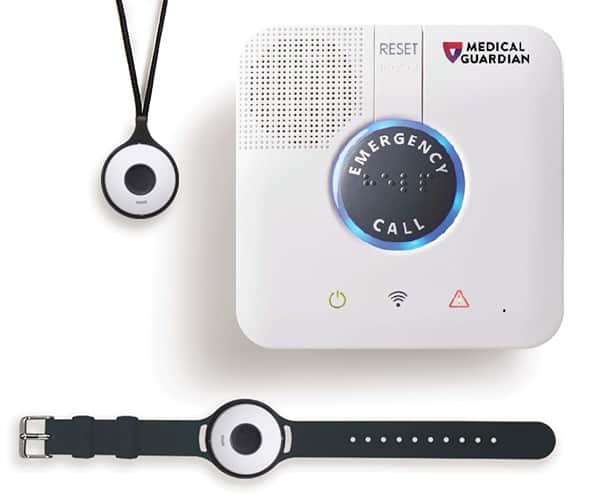
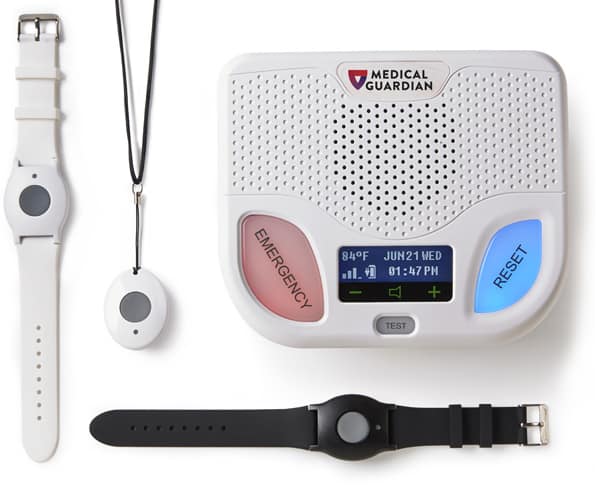
Medical Guardian offers two at-home systems. One connects via a landline and the other uses a cellular connection. Both include a base station and wearable button with an upfront equipment fee of $149.95. On top of that, monthly fees start at $27.95 for the landline system or $34.95 for the cellular system with an annual subscription.
The mobile, on-the-go systems are another option. They cost more, but they deliver advanced capabilities like GPS tracking. That means when you press the SOS button, Medical Guardian monitoring agents will see your exact location and send help straight to you. Here’s the complete list of plans, and for more detailed information, we recommend checking out our complete Medical Guardian price guide.
Medical Guardian System
System type
Connection type
Monthly plan cost
Equipment fees
Guardian Flex
Mobile/wireless
Cellular
$44.95
$149.95
MGMove
Mobile/wireless
On-the-go
$42.95
$199.95
MGHome Landline
At-home/landline
Landline
$31.95
$149.95
MGHome Cellular
At-home/cellular
Cellular
$38.95
$149.95
If you’re overwhelmed by all of Medical Guardian’s many choices, we suggest checking out our ADT Medical Alert System Guide. ADT offers just three options, though you can always add customizations to those three to suit your individual needs.
Expert Examined
From Christopher Norman, a Board-Certified Geriatric Nurse Practitioner with the National Council on Aging (NCOA)
“In my experience, well-intentioned family members that are comfortable with technology may get a medical alert system (MAS) that has a variety of features that THEY think they will find useful, but if the user is intimidated by them or resistive to them, then the usefulness is limited. When shopping for a MAS, pay for features you and/or the intended user will actually use – with the recognition that needs will likely change over time – rather than paying for all the features just because they’re available.” Read more about Christopher Norman →
Choosing Options and Apps
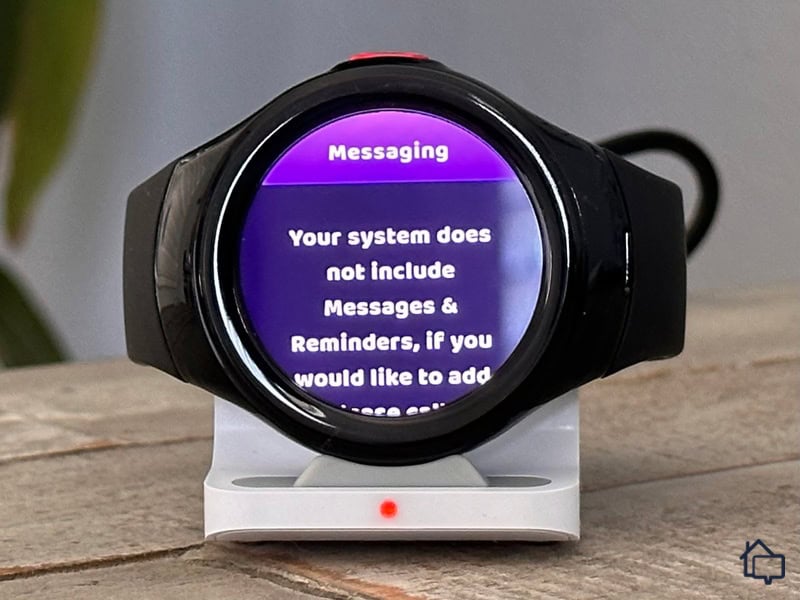
Medical Guardian charges an extra fee to unlock Messages and Reminders on the MGMove smartwatch.
Whatever Medical Guardian device you select, you’ll get a reliable set of safety features designed to keep you protected. The MGMove smartwatch, for example, includes a built-in SOS button you can use anywhere, and you can unlock extra apps for an additional $5 per month.
If you prefer an in-home system, Medical Guardian shines there as well. You can pick a wristband or pendant help button, both offering an impressive 1,400-foot range from the base station. That’s usually enough to cover your entire home, yard, and even parts of your neighbor’s driveway.
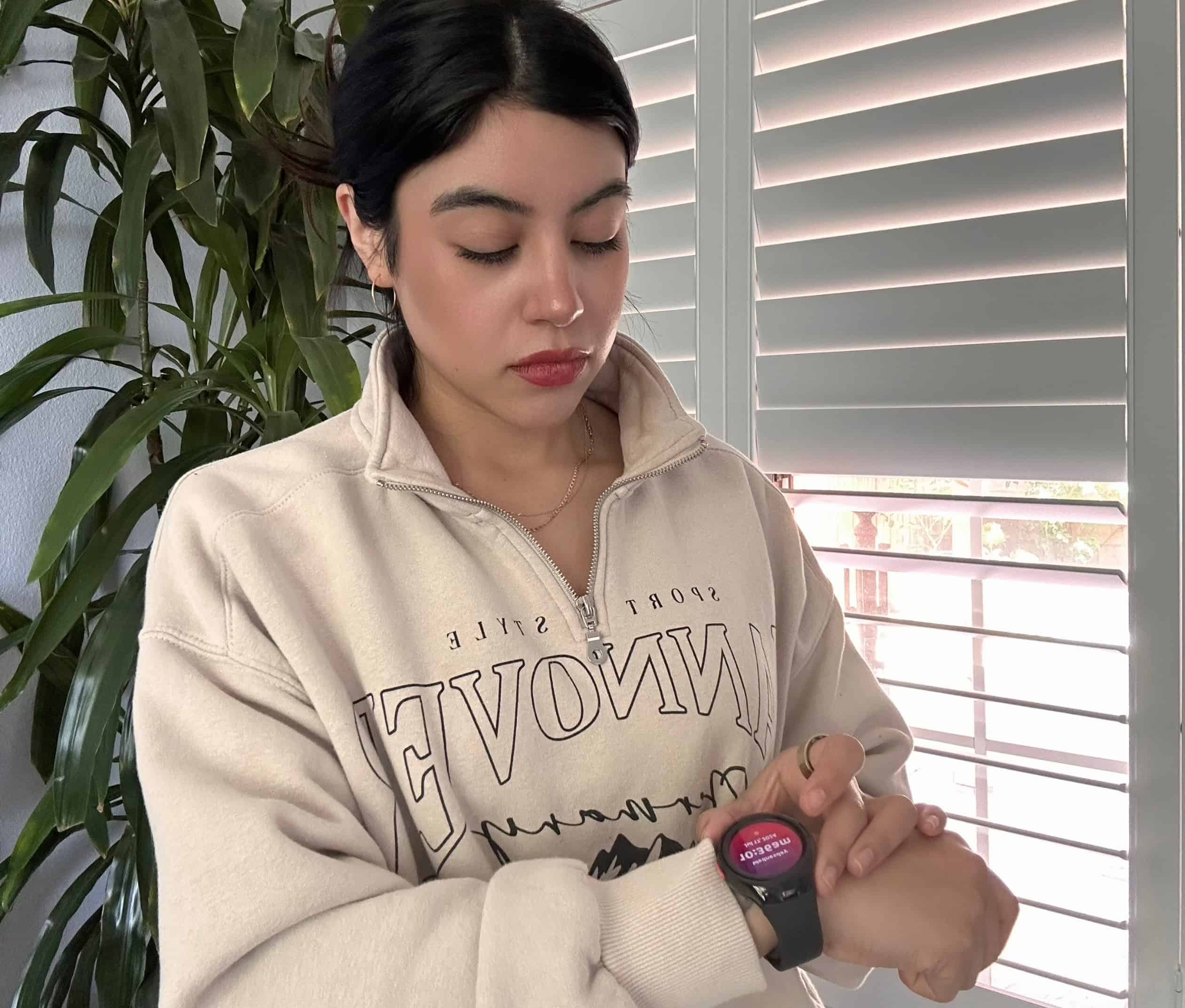
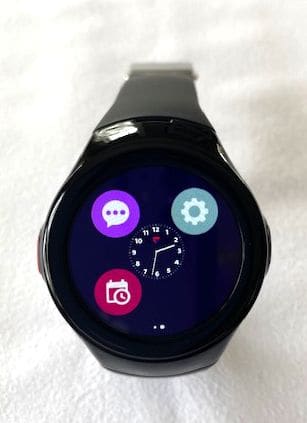
Here we are testing the help button on the MGMove smartwatch.
Beyond the core products, Medical Guardian offers a solid lineup of optional add-ons. This way you can tailor the system to your specific needs. Compatibility varies depending on which device you have. Here’s a full breakdown of what’s available and what each add-on costs.
Add-on equipment
Cost
Features and functionality
MG Protection Plan
$6.99 per month
Covers damaged equipment and comes with unlimited free battery replacements
Elite 911
$9.99 per month
Speaker box that connects to a 911 operator at the touch of a button
Two-way communication
Works with any cell network
Entryway lockbox for keys
$2.99 per month
Allows first responders, friends, and family members to gain entry to your home in case of an emergency
OnGuard alerts
$2.99 per month
Lets you send text messages and emails to people in your Care Circle in case of an emergency
Support Circle apps
$5 per month
Lets you chat with loved ones
Can also schedule reminders
Fall detection
$10 per month
Automatically detects falls and calls for help without needing to press a button
Wireless wall button
$2.99 per month
Help button with a 500-foot range that connects to Medical Guardian’s monitoring center wirelessly
Voice-activated wall button
$4.99 per month
Activates hands-free calls to Medical Guardian’s monitoring center
Comes with a call button and emergency pull cord
Additional alert pendants
$2.99 per month (each)
Water-resistant
Can be used as a bracelet or necklace
Expert Examined
From Christopher Norman, a Board-Certified Geriatric Nurse Practitioner with the National Council on Aging (NCOA)
“In the case of a fall or history of falling, many people have told me that the fear of falling is worse than whatever pain was experienced during the actual fall. There are lots of levels to this: anatomical (whether or not a body part is injured or broken), psychological (threatened independence), emotional (fear), and even cultural (how we generally as a society fear and revile aging as a time when we get weaker or lose the things we love). Any intervention that can lessen the multi-layered concerns that accompany falling is worth investigating in my book.”
FYI: In our latest testing, we noticed that the help button (worn as a necklace or wristband) that used to be bundled with the original Mobile Guardian is no longer included with the Guardian Flex. It’s not even available as an add-on, although Medical Guardian’s team can likely help if you need one.
Ordering Medical Guardian
Buying Experience
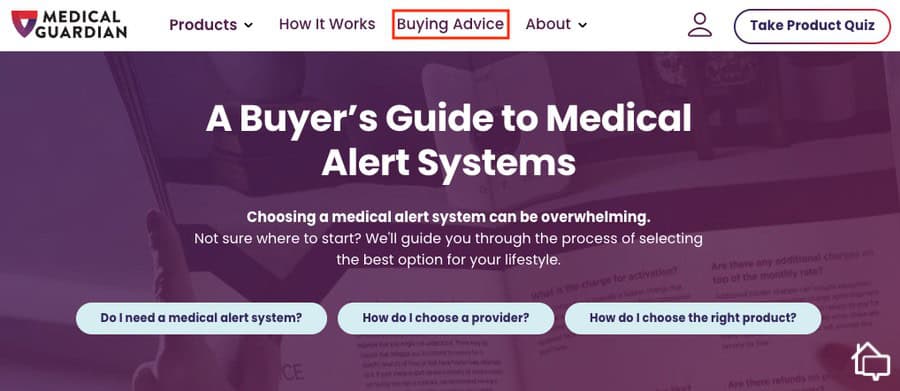
Medical Guardian’s website makes the shopping process straightforward. You’ll find clear product photos, easy-to-digest descriptions, and side-by-side comparisons so you’re not left guessing which system fits your situation. There’s even a short quiz that recommends the best option based on your lifestyle and needs.
If you want to dig deeper before committing, a dedicated resources page covers buying tips, statistics, product comparisons, customer reviews, and a full FAQ. Prefer talking to a real person? You can call their team directly and get your questions answered without any pressure.
Delivery was just as smooth. To get a full picture of the company’s equipment and monitoring plans, we ordered three different systems at separate times. This helped us see how quickly and how consistently each package arrived.
Product
Delivery time
Ground shipping
Overnight shipping
Second-day shipping
MGMove
3 business days
7 to 10 business days
Guaranteed next business day if ordered before 2 p.m. ET (not on holiday)
Guaranteed next business day if ordered before 2 p.m. ET (not on holiday)
MGHome Cellular
3 business days
7 to 10 business days
Guaranteed next business day if ordered before 2 p.m. ET (not on holiday)
Guaranteed next business day if ordered before 2 p.m. ET (not on holiday)
Guardian Flex
4 business days
7 to 10 business days
Guaranteed next business day if ordered before 2 p.m. ET (not on holiday)
Guaranteed next business day if ordered before 2 p.m. ET (not on holiday)
We typically stick with standard ground shipping to keep costs manageable, but it’s worth knowing that Medical Guardian offers expedited options for situations that call for immediate setup. That’s a smart upgrade to consider if you’re preparing for a loved one’s hospital discharge or an upcoming procedure.
We used Medical Guardian’s Buying Advice page to pick out the two systems we tested.
Installation Process
Patience was required once the boxes arrived, since the equipment needed a full charge before setup could even begin. Roughly three hours later, once everything was charged, the actual installation proved refreshingly straightforward.
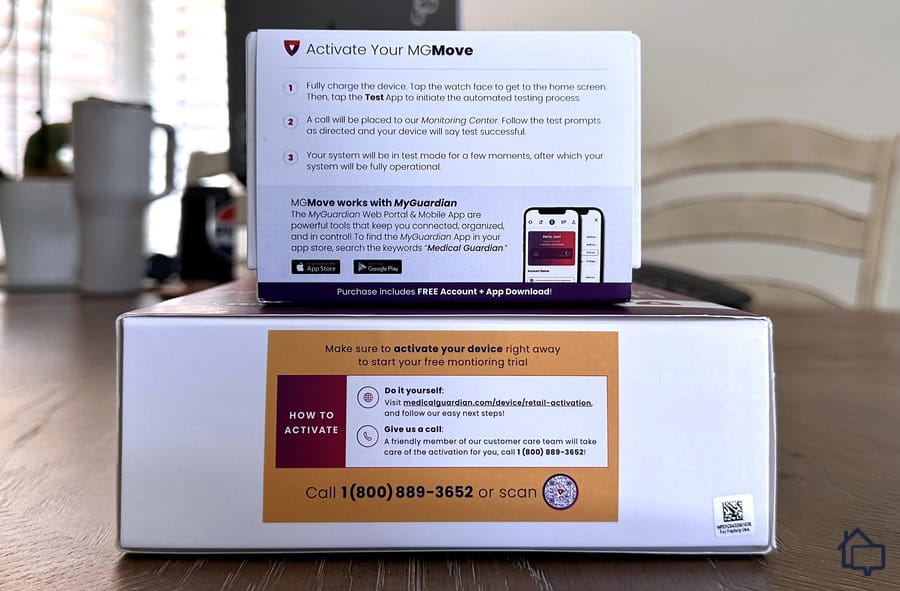
Each box had the system’s QR code printed right on the side for quick access to setup instructions. As a backup, those same instructions are available on the Medical Guardian website, or you can call customer service to walk through it with someone directly. Either way, the directions stayed simple and easy to find throughout.
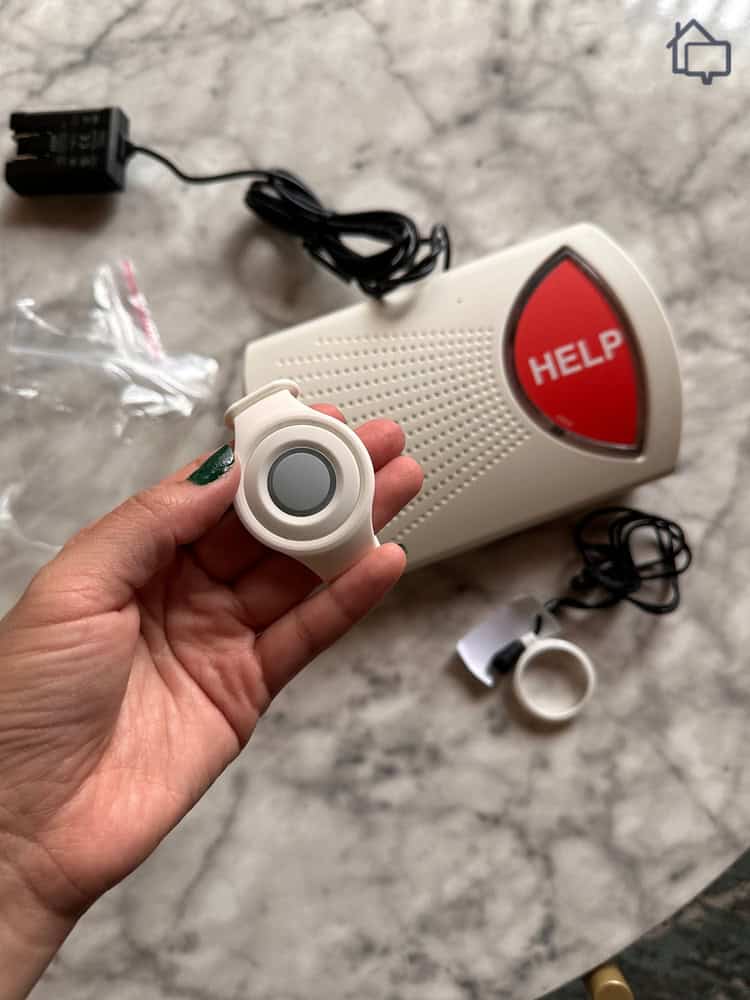
The clear instructions right on the box made it easy for us to set up our MGMove and MGHome systems.
During installation, you’ll need to provide basic subscriber information, including your product number so Medical Guardian can connect your account to your system. You’ll also select a monitoring subscription. Beyond that, installation is simply about finding a suitable location to plug in your equipment. The entire process took us approximately 15 minutes from start to finish.
At that point, we were ready to power up our devices and do a little testing.
Response Time
Response time is one of the most critical factors we evaluate in any medical alert system. During a medical emergency, every second matters — faster response times can significantly reduce the severity of the situation and improve outcomes.2
On average, our MGMini (recently replaced by the Guardian Flex) and MGMove connected us to a live monitoring agent in just 23 seconds. That includes everything from pressing the button to hearing a human voice ready to assist. We were impressed with that average, though we encountered one outlier where the automated system kept us waiting approximately 90 seconds before connecting.
Testing the MGMove Medical Alert Smartwatch by Medical Guardian
Pro Tip: If you’re looking for a smartwatch alert system, check out our guide to the best medical alert systems worn as watches. Apple surprisingly landed on our list, but you’ll have to read the article to find out why.
Our experience with the MGHome system, however, was less smooth. We followed our standard testing procedure by calling out through the device, but it just rang and rang — no response from an agent or automated system, no matter how long we waited. While troubleshooting through Medical Guardian’s online database, we noticed several missed calls on our phone, which we had left in another room.
We initially dismissed these as spam calls since they came from an unlisted number. As we continued investigating the issue, our phone rang again. This time we answered, and sure enough, a Medical Guardian agent was on the line.
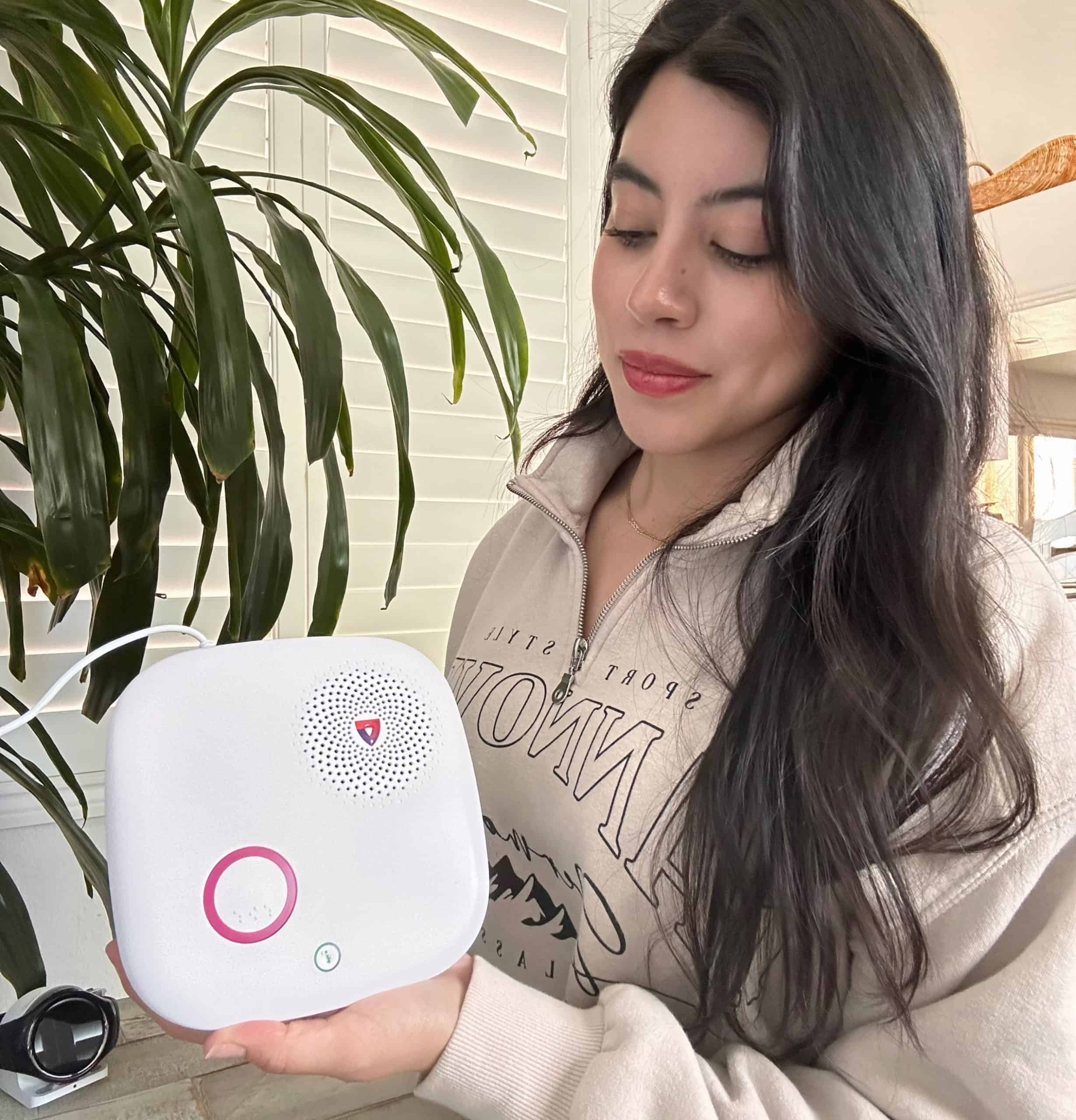
After pressing the information button on our MGHome, it told us the current status of our system.
The whole situation escalated from there. Because the monitoring center hadn’t been able to get in touch with us by phone, agents decided to get in touch with our local sheriff. And while the center recognized the mistake and tried to recall emergency dispatch, the process was already set in motion.
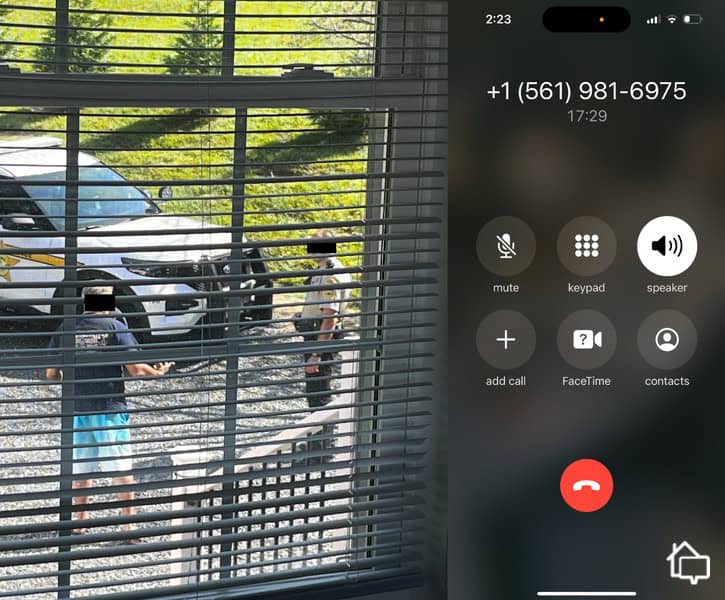
About 30 minutes after we’d started the whole process, a couple of officers started knocking on our door. It was just a wellness check, but having police at your door is still nerve-wracking. The good news is that the whole incident verified the vigilance of Medical Guardian’s and our local sheriff’s office.
So what actually went wrong? Our unit had connectivity issues that caused dropped calls. After about 20 minutes of troubleshooting, Medical Guardian remotely reset the device over the phone, and everything worked fine from there.
That said, the incident is worth taking seriously. It’s possible the issue came down to a setup error on our end, or the unit had a defect out of the box, these things happen. Either way, it’s a solid reminder to run the standard setup tests within the first 24 hours of installation. Don’t skip that step.
One of our tests was a bit too realistic and resulted in the police at our home.
The whole debacle had a silver lining. We gained absolute confidence that Medical Guardian takes emergencies seriously. Even when technical issues arose, the monitoring center followed proper protocols to ensure our safety. While explaining the situation to responding officers and worried family members wasn’t ideal, it reinforced that we’re never truly alone with this system.
FYI: If Medical Guardian devices aren’t as discreet as you’d like them to be, check out our guide about Lifeline. The GoSafe 2 is smaller and less noticeable than most Medical Guardian devices.
MyGuardian App
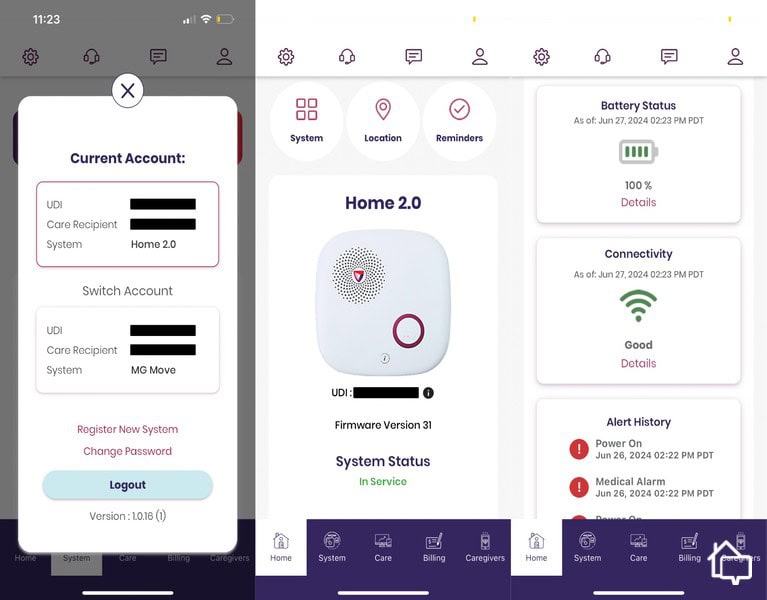
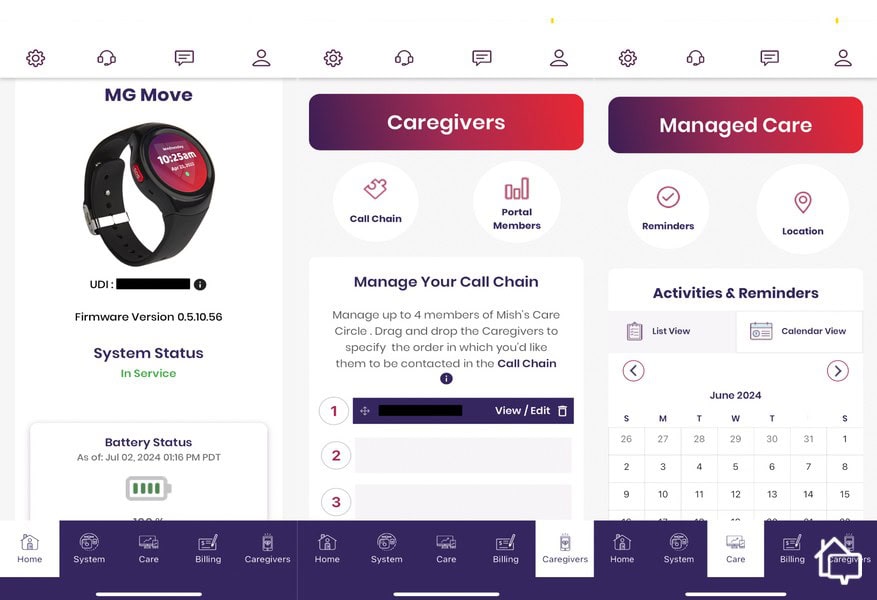
The MyGuardian app is the easiest way to control your system. We used the app to view all our connected devices, toggle them on or off, and access critical features, like battery status and alert history.
Medical Guardian’s mobile app made it easy to manage both of our systems.
MyGuardian’s standout feature is its clean, intuitive design. Everything you need is right there on the home screen — no digging through confusing menus or hunting for buried settings. Whether you want to update emergency contacts, review billing details, or track your daily step count from the MGMove, it’s always just one or two taps away.
We used the mobile app to add caregivers, manage our reminders, and check the status of our MGMove.
Medical Guardian runs promotions regularly, making its systems more budget-friendly. Most deals bundle a discount on top-selling devices with perks like free activation, free shipping, and a complimentary lockbox for annual plan sign-ups. Offers rotate, but there’s almost always something available. Here’s what’s currently on the table.
Guardian Flex
Deal and perks
Up to 75 percent off equipment, plus free shipping and setup
Services
Cellular/landline
Equipment
Wearable medical alert button
Options and add-ons*
Free lockbox included with annual plans for new customers
Reading the Fine Print
Contracts may not be exciting, but knowing the details can prevent unwelcome surprises—especially when your safety depends on a medical alert system. Here’s what we found in Medical Guardian’s terms and conditions:
Contracts
Medical Guardian has a no-contract policy for all subscriptions and equipment purchases. Monthly monitoring is required to keep your device active, but you can cancel anytime without penalties or termination fees. Once you buy the equipment, it’s yours to keep. Note that Medical Guardian offers a 30-day money-back guarantee on equipment for new customers, and prorated refunds are still available for unused subscription time.
Warranties
Medical Guardian includes a manufacturer’s warranty that lasts throughout your subscription. There’s also a one-year warranty covering materials and workmanship. For the MGMove smartwatch, a 90-day warranty addresses technical issues and malfunctions, offering extra reassurance for this more complex device.
Bottom Line
Medical Guardian serves a broad range of users, from homebodies to active seniors who spend a lot of time on the go, along with anyone managing a medical condition or elevated fall risk.
Setup and daily use were both straightforward in our testing. Controls are intuitive and most functions take only a click or two, and when we contacted customer support, agents were friendly and responsive.
Pricing runs slightly above industry averages, but we think they justify the premium with reliable 24/7 monitoring, approachable technology, and flexible plans. The overall value and quality of Medical Guardian continues to earn it a spot among the top medical alert systems.
Medical Guardian equipment ranges from $49.95 to $199.95, with monthly monitoring fees starting at $27.95. Optional add-ons like automatic fall detection increase your total cost.
Medical Guardian systems typically are not covered by standard health insurance plans. However, some Medicare Advantage plans, long-term care insurance, or state Medicaid programs may provide partial or full reimbursement. Contact your insurance provider to verify coverage options.
Medical Guardian has a free manufacturer’s warranty that is active as long as you have a subscription. It also offers product warranties that protect against defects in materials and workmanship for up to one year after your purchase.
Response times for Medical Guardian alert systems average under 30 seconds based on our testing and user reports. During our evaluation, we achieved an average response time of 23 seconds, though response times vary based on network conditions and call volume.
Yes, Medical Guardian’s monitoring center will contact 911 and dispatch emergency services when needed. They first attempt to reach you through the device to assess the situation, then contact your designated emergency contacts if necessary. After that, they dispatch appropriate emergency responders based on the severity of the situation.
After earning a degree in journalism, Jenny Wisniewski spent much of her professional life in education; however, she returned to writing in earnest in the senior care space, acting as caregiver to her mother. She has hand-tested the industry’s top medical alert systems, writing nearly 50 in-depth articles that help seniors age safely in place. Jenny also covers caregiving, Medicare, assisted living, memory care, and Alzheimer’s and Parkinson’s diseases. Previously, she’s written for national publications such as Country Magazine and Sierra Magazine. Jenny holds dual bachelor’s degrees in English/Journalism and Political Science from Miami University in Oxford, OH. She currently resides in Milwaukee, WI.
 Updated August 26, 2026
copied!
Updated August 26, 2026
copied!