SafeHome.org may receive compensation from some providers listed on this page. Learn More
We may receive compensation from some providers listed on this page. Learn More
SafeHome.org may receive compensation from some providers listed on this page. Learn More
We may receive compensation from some providers listed on this page. Learn More
We bought Life Alert to see if it's worth $49.95 per month, nearly double what competitors like Bay Alarm Medical charge.
 Updated August 18, 2026
copied!
Updated August 18, 2026
copied!

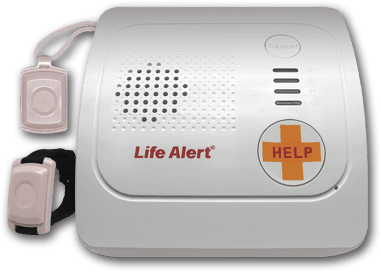
“I’ve fallen and I can’t get up.” If you’ve heard that phrase before, you have Life Alert’s decades-old commercial to thank; it’s one of the most recognizable taglines in advertising history. But name recognition alone doesn’t tell you whether the product holds up, and Life Alert’s own website doesn’t make that easy to find out. The design feels stuck in an earlier era of the internet, details are thin, and pricing is nowhere to be found.
So we did the digging ourselves. We purchased a Life Alert system directly, sidestepping the sales calls most people have to sit through just to get a straight answer on cost. From there, we spent three weeks living with the device to see how it actually performs against the best medical alert systems on the market. Here’s what we learned.

Check out more recommendations from the SafeHome team:
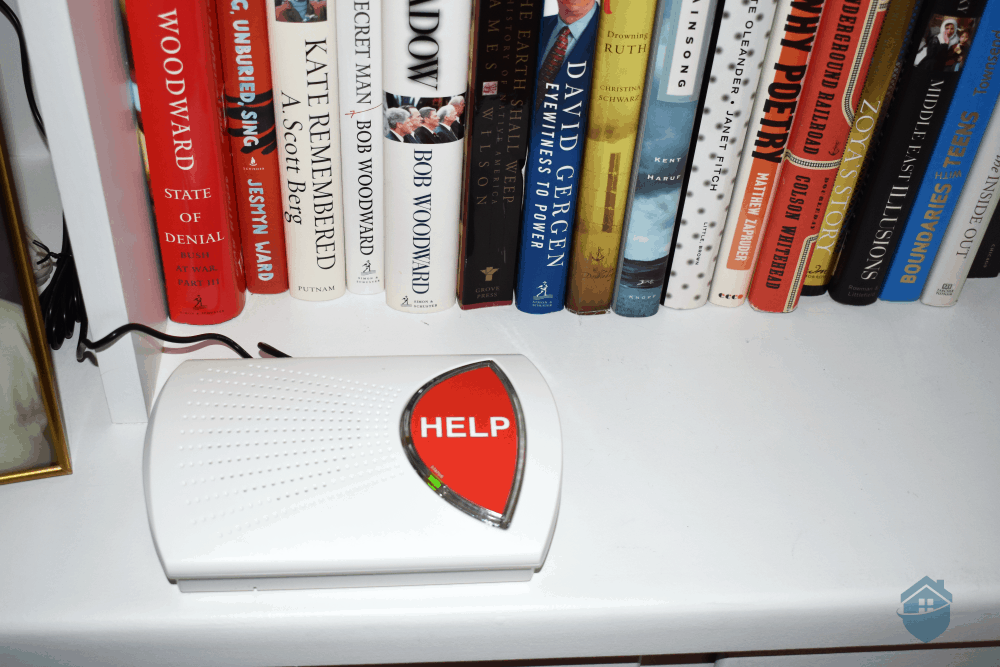
The Life Alert base station’s design shows its age.
Life Alert’s pricing is on the higher end of the market. We had to call directly to obtain a quote and discovered their plans range from $49.95 to $89.85 per month, based on the features you select. Additionally, there’s a one-time $197 fee covering delivery, installation, and activation – significantly higher than the $99 to $125 fee typical among most providers.
Here’s a breakdown of Life Alert’s packages and pricing:
| Life Alert Medical Alert Systems | System Type | Monthly Plan Cost |
|---|---|---|
| Basic In-Home Plan | At-home Cellular Alert | $49.95 |
| Modified In-Home Plan | At-home Cellular Alert | $69.95 |
| Complete In-Home Plan | At-home Cellular Alert | $89.85 |
| Mobile Device | Adds a mobile device to any in-home plan | $+20 |
| Help Button | Adds a help button to any in-home plan | $+20 |
FYI: While Life Alert’s pricing technically starts at $49.95 per month, they require customers to add at least one device to the basic in-home system. That means pricing effectively starts at $69.95 per month.
One drawback we discovered after reaching out to Life Alert directly is that all plans lock you into a three-year contract. That kind of long-term commitment used to be the norm in this industry, but it’s rare today. Most medical alert providers we’ve tested now offer monthly plans without any long-term commitments. Our top picks, Bay Alarm Medical and Medical Guardian, both offer contract-free plans, so you can cancel or switch without worrying about early termination fees.
We were also disappointed to find that Life Alert still doesn’t offer fall detection. That’s a big deal considering falls are the leading cause of injury-related deaths among older adults. Most providers include fall detection as an add-on for both at-home and on-the-go systems. With Life Alert, you’re counting on someone else to help if a fall leaves you unconscious or unable to reach the button.
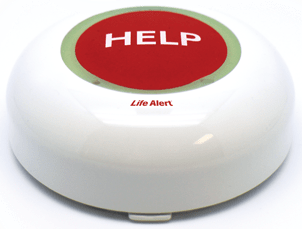
We appreciate that Life Alert made their wall-mount help button waterproof so we could set it up near our shower.
Overall, Life Alert lacks several features we’ve come to expect from modern medical alert systems, such as advanced wearable options like the Medical Guardian MGMove smartwatch we tested.
That said, Life Alert offers a price-lock guarantee and lifetime warranty, which we can appreciate. For comparison, some competitors like Medical Guardian offer limited warranties and no price lock, while others like ADT provide similar lifetime warranties and price-lock guarantees when we tested ADT’s medical alert system.
Here’s a more comprehensive look at Life Alert’s upgrade options and freebies:
| Life Alert Add-Ons | Device Type | Price |
|---|---|---|
| Spouse Monitoring | Service + 1 Additional Wearable Help Button | $10 per month |
| Standard Waterproof Help Button | In-Home Help Button | $19.95 |
| Lifetime Warranty | Warranty | Free (included with $198 one-time membership fee) |
| Lifetime Price Guarantee | Feature | Free |
| Personal Health Information | Feature | Free |
| Life Alert App | Mobile App Feature | Free |
Life Alert is more expensive than most competitors, but you’re paying for a system that’s been around for nearly four decades. If you want something equally reliable but easier on the wallet, check out our review of Bay Alarm Medical for a look at another time-tested solution that costs less and has done a better job at keeping up with the times.
>> Read More: Bay Alarm Medical Alert Systems Cost & Packages
FYI: Life Alert’s equipment has an extended battery life of up to 10 years, so you don’t have to worry about charging your devices. Batteries will be replaced by Life Alert if they ever stop working.
Life Alert offers three system options, all built around 24/7 professional monitoring. Every plan runs on either a landline or cellular connection. Here’s a breakdown of each, starting with its at-home systems.
The In-Home systems both revolve around the same base station. The only difference is the Complete In-Home Plan comes with two add-on devices whereas the Modified In-Home Plan comes with one add-on device. Let’s jump in with an overview of the Complete plan.
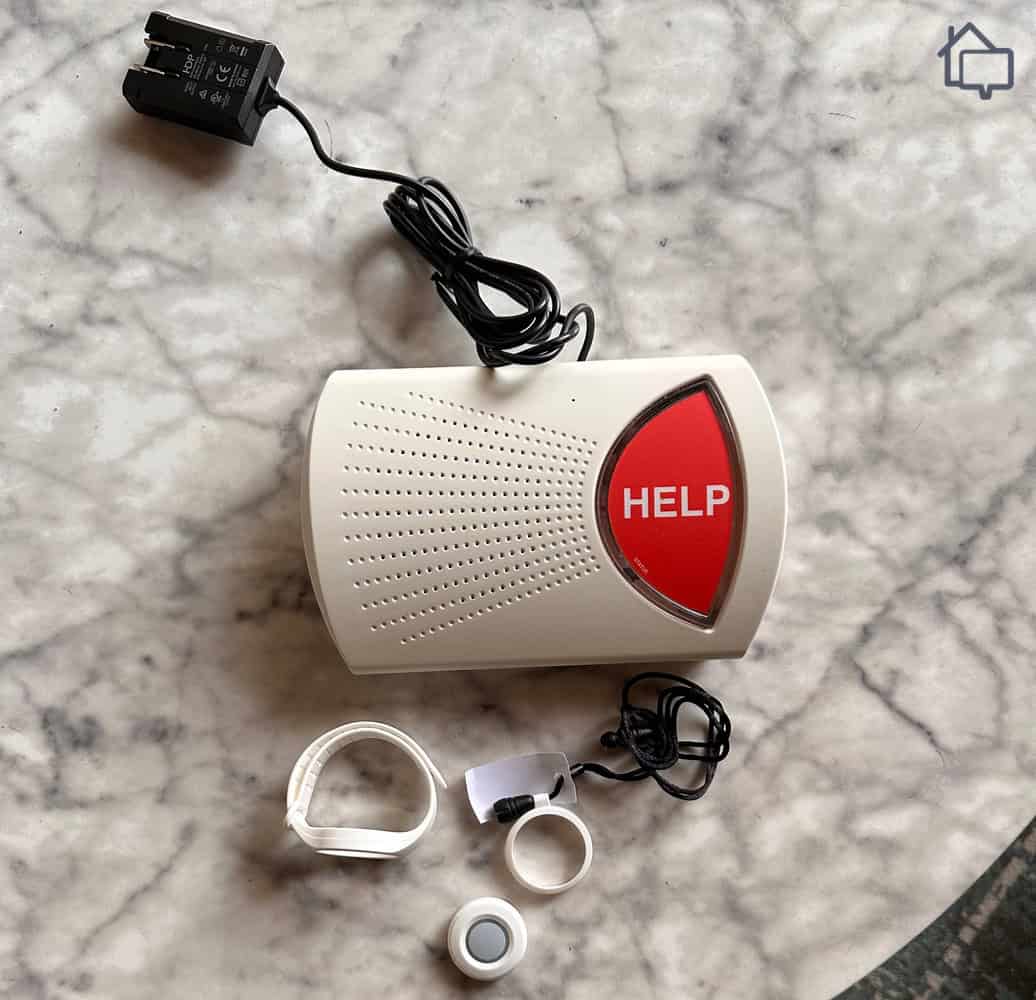
Life Alert’s main system comes with a base station and a wearable neck or wrist pendant. With the Complete plan, you get two add-on devices—their waterproof wall-mount buttons. We put one in our bathroom and one in our kitchen, the two locations where falls are most likely to happen. 1
The pendant works up to 600 feet from the base station, and the wall-mount buttons can be placed anywhere within that same range. That’s on par with the best long-range medical alert systems out there.
Who It’s Best For: Seniors who do not want to wear their pendant 24/7 so they want an additional wall-mount help button they can use instead.
Remember: Life Alert provides spouse monitoring for an additional fee. Spouse coverage ensures that both you and your loved one are protected at all times.
Life Alert’s most affordable plan costs $69.95 per month, which is on the high end of the industry. That said, this plan is the best starting point for most people. The Complete system only adds an extra wall-mount help button. At $20 more per month, that’s hard to justify. For comparison, most other providers charge a one-time $20 fee for an extra wall-mount button.
Who It’s Best For: The Modified plan is best for home-bound seniors that don’t mind wearing their pendant as a necklace or wristband throughout their home.
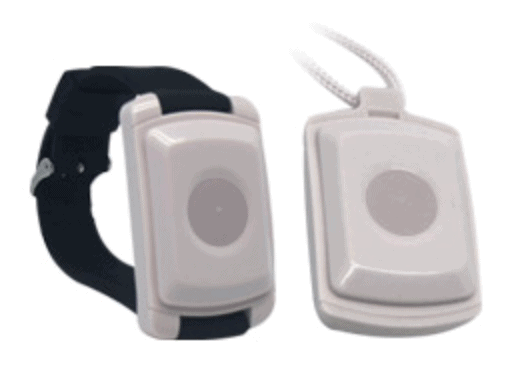
We were able to wear our Life Alert pendants as a wristband or a necklace.
To get Life Alert’s on-the-go solution, you’ll need to bundle it with its at-home system. Bundling tacks on an extra $20 per month to the cost of the at-home plans, bringing the total to $89.95 per month. For context, a separate at-home and on-the-go system from Medical Guardian starts at $74.90 per month.
Overall, Life Alert’s mobile device works like its at-home system, but it includes GPS so emergency personnel or a caregiver can locate you when you press the help button. One standout feature is its extended battery life. We appreciated not having to charge it frequently. With most competitors, we had to charge our on-the-go system every four to seven days.
Who It’s Best For: Seniors who live an active lifestyle that want both an at-home system and a mobile device for protection anywhere.
When we last called Life Alert they were offering a free month of service when you opt to pay annually. However, these deals change regularly and with LifeLock requiring a call to get a quote, your sales agent could offer a different deal. You’ll want to call directly to find out what deals you qualify for. Here are the options we were offered:
| Complete In-Home | Modified In-Home | Home and GPS |
|---|---|---|
| 89.85/mo | 69.95/mo | 89.85/mo |
| See Comparison | See Comparison | See Comparison |
| Services | Services | Services |
| 24/7 U.S. Based Monitoring | 24/7 U.S. Based Monitoring | 24/7 U.S. Based Monitoring |
| Two-Way Communication with 1,000 Feet of Coverage | Two-Way Communication with 1,000 Feet of Coverage | Two-Way Communication |
| Free Shipping, Setup and Installation | Free Shipping, Setup and Installation | GPS-Enabled Tracking |
| Lifetime Price Guarantee | Lifetime Price Guarantee | Free Shipping, Setup and Installation |
| Lifetime Warranty | Lifetime Warranty | Lifetime Price Guarantee |
| Lifetime Warranty | ||
| Equipment | Equipment | Equipment |
| 2 Waterproof In-door Help Buttons | 1 Waterproof In-door Help Button | 1 Waterproof In-door Help Button |
| 1 Waterproof Wearable Help Button | 1 Waterproof Wearable Help Button | 1 Waterproof Wearable Help Button |
| Base Station | Base Station | Base Station |
| Mobile GPS Button (with 7 to 10-year battery life | ||
| Options | Options | Options |
| Additional Wall-Mount Help Button | Additional Wall-Mount Help Button | Additional Wall-Mount Help Button |
| Spouse Monitoring | Spouse Monitoring | Spouse Monitoring |
| Personal Protection At Home | Personal Protection At Home | Personal Protection At Home |
>> Check Out: Cheapest & Most Affordable Medical Alert Systems of 2026
Life Alert’s monthly fees are pricey, ranging from $69.95 to $89.85 per month. For context, we discuss in our medical alert buying guide that top-tier systems generally start at around $25 to $35 per month. With that in mind, we find Life Alert costs more than the value they provide.
They do offer a lifetime warranty and price-lock guarantee. That’s rare for the industry, although not unheard of. If those features are your priority, you can get them for a lot less through ADT Medical.
Another big drawback is Life Alert’s lack of fall detection, which we consider a standard service in the industry and a lifesaving investment.
FYI: According to the Centers for Disease Control, falls are the leading cause of injury-related death among adults age 65 and older. In fact, about 14 million falls are reported among older adults each year, resulting in more than 38,000 deaths.2 Needless to say, fall detection is worth seeking out.
Finally, while there are no equipment fees, they charge an upfront fee of $198 for various upfront costs such as shipping, installation, and activation of equipment. That’s about the same as Medical Guardian charges for their fanciest equipment.
Life Alert is one of the most recognizable names in the industry and has built a solid reputation over decades. Name recognition only goes so far, though. At this price point, we’d really like to see Life Alert upgrade its tech, add modern features like fall detection, and bring costs more in line with what competitors are offering.
As we’ve noted throughout this review, Life Alert offers a genuinely solid service — but the picture isn’t all positive. Its equipment feels dated, and it costs noticeably more than the competition. Stack it up against Bay Alarm Medical, a company with a comparably long track record, and Life Alert runs nearly twice the cost while offering fewer equipment options.
When we tested Medical Guardian, the gap became even clearer: we paid less overall and got significantly more advanced equipment for it. The MGMove smartwatch ran $199 upfront — almost identical to Life Alert’s own upfront fee — while the MGHome Cellular system came in around $150 upfront with no hidden fees. For roughly the same money, or less, you’re getting newer technology and more flexibility with the competition.
>> Learn More: The Best Medical Alert Watches for Seniors in 2026
Calling Life Alert and speaking with their sales reps only gave us half the story on pricing. To really assess the value here, we knew we’d have to buy a system ourselves and put it through its paces — so that’s exactly what we did. During testing, we evaluated the system against four criteria:
To round out the assessment, our senior care experts — who bring years of hands-on experience to this category — also consulted third-party experts and current Life Alert users to see how the system holds up beyond our own testing.
Life Alert is a household name and has been providing reliable products and services for nearly 40 years, having been founded in 1987 in California by Isaac Shepher, Zohar Loshitzer, and Arik Amir.3 The company built its reputation in part on its now-iconic “I’ve fallen and I can’t get up” tagline, one of the most memorable ad campaigns in American advertising history, which helped make Life Alert synonymous with personal emergency response systems for an entire generation of seniors and their families.
Today, Life Alert employs over 600 people at its headquarters in Encino, California, and handles over two million calls a year. Unlike many competitors that outsource their monitoring, Life Alert operates its own in-house Monitoring Center, staffed by dispatchers trained specifically to handle emergency calls around the clock.
Life Alert has built its reputation on decades of brand recognition, but reputation and performance aren’t the same thing. Set it side by side with modern medical alert systems like Bay Alarm Medical and Medical Guardian, and Life Alert’s technology starts to feel like it’s stuck in the past.
That’s not to say the company gets everything wrong. Based on our testing, the monitoring center held up as reliable, and if the peace of mind that comes with a household name matters to you, that’s genuinely worth something. But for most people, the smarter move is a competitor offering similar or better protection at a lower price, with equipment that feels like it was actually designed for today rather than tacked on as an afterthought.
Yes, all of their plans require a 36-month agreement (3 years).
No, Life Alert does not offer fall detection for any of their systems or devices.
With the at-home system, you have your choice of using a landline or cellular connection.
It may be possible to get a discount for Life Alert. However, the frequency of these discounts and what they cover can range widely. Inquire with customer service before making your purchase.
Life Alert subscriptions are more expensive than the industry average, and we find that they do not offer enough value to justify their price.
National Council on Aging. (2025). Get the Facts on Falls Prevention. https://www.ncoa.org/article/get-the-facts-on-falls-prevention/
Centers for Disease Control and Prevention. (2024). Older Adult Falls Data.
https://www.cdc.gov/falls/data-research/index.html
Glassdoor.com. (Retrieved 2025). Life Alert Ratings & Reviews.
https://www.glassdoor.com/Overview/Working-at-Life-Alert-EI_IE254480.11,21.htm