For most, being at home conjures feelings of safety, warmth, and security. After spending heaps of time, money, and effort buying or renting a home, people are often too exhausted to even begin thinking about how to prevent hazards or accidents.
The truth is, most mishaps at home can be easily prevented, which is why it's so important to take the necessary — and often fairly simple — measures to do so. This is especially the case for families with young children or seniors. The last thing you want is to be confronted with a dangerous situation and find that it is too late to do something about it.
Like many things, home safety begins with awareness. This guide is designed to help homeowners identify and reduce hazard risks in their residences. Specifically, we will go over top home hazards, methods for cultivating a safer home, household toxins, and the dangers that kids and older adults face.
Awareness alone is not enough to keep your family safe, but it will get you started. Once you are familiar with the various home hazards and how to prevent them, you can invest time and elbow grease to bring home safety to life.
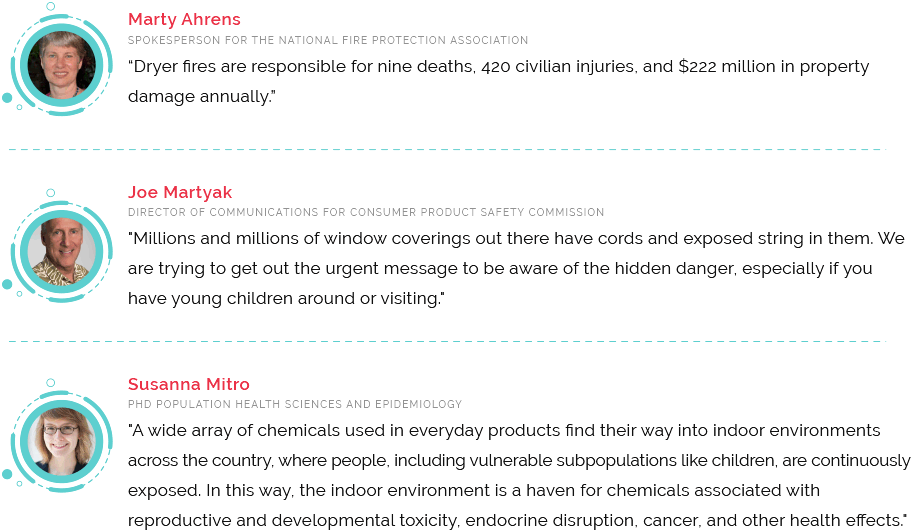
Insight from Industry Experts
Before delving into the specifics on how to identify and prevent home hazards, let's see what industry experts have to say:
Shocking Statistics on Home Hazards
Preventable home hazards cause many injuries and deaths. Here are the latest statistics that highlight why home safety should be a priority:
 In 2023, poison control centers managed over two million human exposure cases.
Source: National Capital Poison Center
 One of every five older adults who falls sustains a broken bone, head injury, or other serious injuries.
Source: Centers for Disease Control and Prevention
 Choking remains the fourth leading cause of unintentional injury death, with over 5,000 victims annually.
Source: The National Safety Council

Most drownings among children ages 1 to 4 occur in home swimming pools.
Source: Centers for Disease Control and Prevention
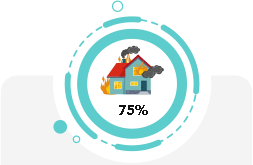 Home fires cause 68 percent of fire deaths and 56 percent of fire injuries.
Source: National Fire Protection Association
 Falls account for half of accidental deaths in the home. Much of the time, these falls occur at ground level and not at an elevation such as a staircase.
Source: National Floor Safety Institute
Most Common Home Hazards and How to Prevent Them
Understanding the most common hazards in your home is the first step toward creating a safer environment. Let's explore each major hazard category and practical prevention strategies you can implement today to make your home safer, such as by investing in a high-quality home security system.
Falling

Falls are especially detrimental to young children and seniors aged 60 and up. Common household products often associated with severe falls include baby walkers, windows, trampolines, and other playground equipment.
Prevent household members from falling by implementing the following measures:
 Keep floors dry and clutter-free, especially in high-traffic areas like kitchens and bathrooms where spills are common.
- Keep sturdy step stools to use when reaching for things in closets or the top kitchen cabinets.
- Install safety gates at both the top and bottom of staircases, ensuring they meet current ASTM safety standards.
- Use soft and protective mats under play equipment.
- Teach kids under 6 years of age to avoid climbing on bunk beds.
- Add non-slip rubber mats in your bathroom to avoid slipping after a shower.
- Make sure that staircases are well-lit, are clear of clutter, do not have loose carpeting, and have the appropriate handrails.
- Install a light on the basement stairway, and paint the steps a brighter color to make them more visible.
- Be careful around your cats, dogs, and other pets. They’re fall risks, but steps such as obedience training and dog walking minimize the danger.
- Clear your outdoor steps as soon as possible after it snows. Grip tape is your best friend to make surfaces less slippery.
- Secure cabinets and drawers from toddlers using modern childproofing solutions.
- Require children riding bikes or skateboards to wear approved helmets at all times.
- Install ample lights throughout your home. Dim lighting is a major fall hazard.
 Keep floors dry and clutter-free, especially in high-traffic areas like kitchens and bathrooms where spills are common.
 Keep sturdy step stools to use when reaching for things in closets or the top kitchen cabinets.
 Install safety gates at both the top and bottom of staircases, ensuring they meet current ASTM safety standards.
 Use soft and protective mats under play equipment.
 Teach kids under 6 years of age to avoid climbing on bunk beds.
 Add non-slip rubber mats in your bathroom to avoid slipping after a shower.
 Make sure that staircases are well-lit, are clear of clutter, do not have loose carpeting, and have the appropriate handrails.
 Install a light on the basement stairway, and paint the steps a brighter color to make them more visible.
 Be careful around
 Clear your outdoor steps as soon as possible after it snows. Grip tape is your best friend to make surfaces less slippery.
 Secure cabinets and drawers from toddlers using modern childproofing solutions.
 Require children riding bikes or skateboards to wear approved helmets at all times.
 Install ample lights throughout your home. Dim lighting is a
 Fires & Burns

Cooking equipment remains a leading cause of home fires. Heating equipment also contributes to a significant number of home fire deaths, particularly during winter months.
- Replace traditional candles with LED flameless alternatives.
- Stay with your food when you cook. Cooking mishaps are the number one cause of fires, and a fire is most likely to occur when the stove is unattended.
- Use the back burners of stoves so children can't accidentally knock over pots or grab something hot.
- Keep chimneys and dryer exhausts well-ventilated and free of flammable buildup by cleaning them regularly.
- Install interconnected smoke alarms in every bedroom, outside each sleeping area, and on every level of your home.
- Test smoke detectors at least once a month to ensure the batteries still work. Replace batteries once or twice a year. Even if you use hardwired detectors or sealed, long-life batteries that work for 10 years, it’s still a good idea to test your detectors frequently.
- Keep space heaters at least a few feet away from anything flammable, like blankets, clothing, and curtains.
- Keep fire extinguishers in common areas like the kitchen, near the fireplace, and near other sources of heat.
- Set your water heater to 120 degrees Fahrenheit or below to prevent scalding injuries.
- Keep curling and clothes irons out of reach of children, and away from ledges, electrical wiring, and flammable materials.
 Replace traditional candles with LED flameless alternatives.
 Stay with your food when you cook. Cooking mishaps are the number one cause of fires, and a fire is most likely to occur when the stove is unattended.
 Use the back burners of stoves so children can't accidentally knock over pots or grab something hot.
 Keep chimneys and dryer exhausts well-ventilated and free of flammable buildup by cleaning them regularly.
 Install interconnected smoke alarms in every bedroom, outside each sleeping area, and on every level of your home.
 Test smoke detectors at least once a month to ensure the batteries still work. Replace batteries once or twice a year. Even if you use hardwired detectors or sealed, long-life batteries that work for 10 years, it’s still a good idea to test your detectors frequently.
 Keep space heaters at least a few feet away from anything flammable, like blankets, clothing, and curtains.
 Keep fire extinguishers in common areas like the kitchen, near the fireplace, and near other sources of heat.
 Set your water heater to 120 degrees Fahrenheit or below to prevent scalding injuries.
 Keep curling and clothes irons out of reach of children, and away from ledges, electrical wiring, and flammable materials.
Drowning

The CDC reports that drowning remains the leading cause of death for children ages one to four, with an average of 11 drowning deaths per day in the United States. Most infant drownings occur in bathtubs, while toddler drownings predominantly happen in residential pools.
Even small amounts of water can be dangerous — children can drown in as little as 2 inches of water. Take the following precautions to significantly reduce the chances of a drowning at home:
- Gate your pool off properly. That means four-sided fencing with a self-closing and self-latching gate around the pool. Check local laws to ensure the gate is up to code.
- Install door and pool alarms that alert you when someone enters the pool area.
- Attend to babies or toddlers in the bathtub 100% of the time. Never leave them alone.
- Do not leave large open containers of water in the yard or in the house unattended. Examples of these containers include cleaning buckets and kiddie pools. Even open coolers pose a risk if their ice has melted into water.
- Cover hot tubs all the time and secure the covers so they don’t slip off easily.
- Check and replace all drain covers in a pool. Drains have powerful suction that can keep even adults underwater if a drain cover is broken or removed entirely.
- Do not interact with pools or bathtubs when consuming alcohol or prescription drugs.
 Gate your pool off properly. That means four-sided fencing with a self-closing and self-latching gate around the pool. Check local laws to ensure the gate is up to code.
 Install door and pool alarms that alert you when someone enters the pool area.
 Attend to babies or toddlers in the bathtub 100% of the time. Never leave them alone.
 Do not leave large open containers of water in the yard or in the house unattended. Examples of these containers include cleaning buckets and kiddie pools. Even open coolers pose a risk if their ice has melted into water.
 Cover hot tubs all the time and secure the covers so they don’t slip off easily.
 Check and replace all drain covers in a pool. Drains have powerful suction that can keep even adults underwater if a drain cover is broken or removed entirely.
 Do not interact with pools or bathtubs when consuming alcohol or prescription drugs.
Choking & Suffocating
Obstructed airways can be fatal and are divided into three main types: suffocation, choking, and strangulation.
SUFFOCATION
Recent data shows that sleep-related suffocation deaths remain a significant concern, with approximately 3,700 infants dying from sleep-related deaths annually in the United States. Take these steps to prevent suffocation:
- Put child-resistant locks on airtight spaces like fridges to ensure a child doesn't crawl in and get stuck.
- Use cribs that meet current safety standards with slat spacing no more than 2-3/8 inches (about the width of a soda can) to prevent head entrapment.
- Keep plastic bags out of a child’s reach. Children are at risk of getting the bags wrapped around their heads and suffocating themselves.
- Follow the ABCs of safe sleep: Alone, on their Back, in a Crib. Use a firm mattress that fits snugly in the crib with no gaps. Keep the crib bare — no pillows, blankets, bumper pads, or toys for infants under 12 months.
 Put
Put  Use cribs that meet current safety standards with slat spacing no more than 2-3/8 inches (about the width of a soda can) to prevent head entrapment.
 Keep plastic bags out of a child’s reach. Children are at risk of getting the bags wrapped around their heads and suffocating themselves.
 Follow the ABCs of safe sleep: Alone, on their Back, in a Crib. Use a firm mattress that fits snugly in the crib with no gaps. Keep the crib bare — no pillows, blankets, bumper pads, or toys for infants under 12 months.
CHOKING
Choking involves something obstructing the airway internally, like a part of a toy or a piece of food stuck in a person's throat. Prevent choking issues at home by considering these precautions:
- Make sure children chew their food thoroughly and don't swallow large bites. Cut up a child's food into fingertip-sized pieces.
- Inspect toys and stuffed animals for small pieces that could come off easily.
- Check the ground regularly for small items like bits of toys, hard foods, marbles, and jewelry that children could easily choke on.
- Avoid high-risk foods for children under four: whole grapes, nuts, popcorn, raw carrots, hard candy, and hot dogs (unless cut lengthwise and then into small pieces).
 Make sure children chew their food thoroughly and don't swallow large bites. Cut up a child's food into
  Inspect toys and stuffed animals for small pieces that could come off easily.
 Check the ground regularly for small items like bits of toys, hard foods, marbles, and jewelry that children could easily choke on.
 Avoid high-risk foods for children under four: whole grapes, nuts, popcorn, raw carrots, hard candy, and hot dogs (unless cut lengthwise and then into small pieces).
STRANGULATION
Window blind cords remain a hidden danger in many homes. The Window Covering Safety Council recommends cordless window coverings as the safest option. Keep these tips in mind to prevent strangulations in your home:
- Replace corded window blinds with cordless alternatives, or secure cords high and out of reach using cleats or cord wraps.
- Do not put necklaces and headbands on infants.
- Avoid hanging bags and purses on chairs, cribs or anywhere a toddler could reach.
- Do not tie pacifiers around a baby's neck or clothing.
- Cut drawstrings on hoodies, waistbands, and other clothing items for your children.
- Keep an eye on babies in a stroller, as they could end up getting stuck in the straps and strangled.
 Replace corded window blinds with cordless alternatives, or secure cords high and out of reach using cleats or cord wraps.
 Do not put necklaces and headbands on infants.
 Avoid hanging bags and purses on chairs, cribs or anywhere a toddler could reach.
 Do not tie pacifiers around a baby's neck or clothing.
 Cut drawstrings on hoodies, waistbands, and other clothing items for your children.
 Keep an eye on babies in a stroller, as they could end up getting stuck in the straps and strangled.
Poisoning
Poisoning affects people of all ages. Younger children are susceptible because they get into cleaning supplies and other toxic household products. They overdose on vitamins and medicines not taken under proper adult supervision.
Teens and adults are also at risk from appetite suppressants, heroin, amphetamines, antidepressants, motor vehicle exhaust gas, anesthetics, and even caffeine and alcohol. There’s also carbon monoxide poisoning. The good news is, there are easy actions you can take to prevent accidental poisonings at home:
- Store hazardous materials in locked cabinets at least five feet off the ground, or use child-resistant locks on lower storage areas.
- Get family members and pets out of a room before you use pesticides in it.
- Store medicines and vitamins out of children’s reach. Avoid placing them on countertops or tables where kids can easily get to them.
- Be especially vigilant with button batteries, which cause severe internal burns if swallowed. Store spare batteries in locked containers and check toys regularly for loose battery compartments. Seek immediate medical attention if ingestion is suspected.
- Check that visitors keep their medicines secure in their purse. Children are relentless sometimes and feel no shame going through other people's belongings, especially if bags are wide open.
- Do not use old drink bottles or food containers to store household cleaners or toxic chemicals. This confuses both children and adults.
- Close the packaging to any chemical or medication before leaving, even for just a minute.
- Dispose of medications safely through DEA take-back programs or FDA-approved disposal methods. Many pharmacies now offer year-round medication disposal kiosks.
- Install carbon monoxide detectors on every level of your home and within 10 feet of sleeping areas.
- Turn off gas stoves before leaving the kitchen.
- If your home was built before 1978, have it tested for lead paint by an EPA-certified professional. Children chewing on lead can cause serious harm.
 Store hazardous materials in locked cabinets at least five feet off the ground, or use child-resistant locks on lower storage areas.
 Get family members and pets out of a room before you use pesticides in it.
 Store medicines and vitamins out of children’s reach. Avoid placing them on countertops or tables where kids can easily get to them.
 Be especially vigilant with button batteries, which cause severe internal burns if swallowed. Store spare batteries in locked containers and check toys regularly for loose battery compartments. Seek immediate medical attention if ingestion is suspected.
 Check that visitors keep their medicines secure in their purse. Children are relentless sometimes and feel no shame going through other people's belongings, especially if bags are wide open.
 Do not use old drink bottles or food containers to store household cleaners or toxic chemicals. This confuses both children and adults.
 Close the packaging to any chemical or medication before leaving, even for just a minute.
 Dispose of medications safely through DEA take-back programs or FDA-approved disposal methods. Many pharmacies now offer year-round medication disposal kiosks.
 Install carbon monoxide detectors on every level of your home and within 10 feet of sleeping areas.
 Turn off gas stoves before leaving the kitchen.
 If your home was built before 1978, have it tested for lead paint by an EPA-certified professional. Children chewing on lead can cause serious harm.
Working From Home Safety Tips
With remote work becoming increasingly common, home office safety has never been more important. Creating a safe workspace protects both you and potentially expensive work equipment.
Whether you're a seasoned remote worker or new to the work-from-home lifestyle, these safety considerations will help you maintain a productive and hazard-free workspace.
First on our list? Keep your electronics – and all the wires, cords, and outlets you’ll need to connect them – organized safely. We can’t stress enough how important surge protectors are; we need several devices to do our job, so we make sure to use a surge protector. This way, all of that valuable equipment – some of which might belong to your employer – won’t be damaged in a power surge.
Next, invest in ergonomic equipment to prevent repetitive strain injuries. Look for an adjustable chair with lumbar support, position your monitor at eye level about arm's length away, and consider a standing desk converter for alternating positions throughout the day. Blue light blocking glasses can reduce eye strain from extended screen time.
Finally, we highly recommend investing in a home security system. You may be able to write off your home security kit and monitoring (or at least some of it) as a tax deduction, seeing that it’ll be protecting your work computer and other work-related items. At any rate, it’s worth looking into.
Final Thoughts
Creating a safe home environment requires ongoing attention and regular updates to your safety measures. While this guide covers major hazards, remember that every home is unique. Consider having professionals perform safety assessments. Your insurance company may even pay for it. Also check with your doctor for tailored recommendations to you and your family’s health needs.
Additional Resources
Below are additional resources to help you prevent accidents and reduce the risks of home hazards:
EPA This resource goes over the different types of dangers in the home.
CPSC The Consumer Product Safety Commission provides ample information on the dangers of different products that you may have in your residence.
Centers for Disease Control and Prevention Here, you will find valuable tips on general emergency preparedness.
Pool Safely If you have a pool at home, take a look at this website which includes pool safety guidelines for families.
Safe Kids Home safety is especially important for your little ones. Learn more about how to keep your residence safe for children.
Poison Control Call Poison Control at 1-800-222-1222 or get help online if you think you or someone at home may be poisoned. It is free and confidential.
Citations:
- Poison Control. (2024). Poisoning Statistics, 2023.
https://www.poison.org/poison-statistics-national - National Fire Protection Association. (2024). Fire loss in the United States.
https://www.nfpa.org/education-and-research/research/nfpa-research/fire-statistical-reports/fire-loss-in-the-united-states - Centers for Disease Control and Prevention. (2024). Drowning Facts.
https://www.cdc.gov/drowning/data-research/facts/ - Centers for Disease Control and Prevention. (2024). Data and Statistics for SUID and SIDS.
https://www.cdc.gov/sudden-infant-death/data-research/data/ - Window Covering Safety Council. (Retrieved 2025). Window Covering Cord Safety.
https://windowcoverings.org/window-cord-safety/