Bathroom Bacteria & Germs Statistics for 2026
 |
December 9, 2025
|
December 9, 2025
For a place devoted to personal hygiene, the bathroom can get plenty unsanitary. From hair in the sink to toothpaste smeared on the counter, the aftermath of our grooming is often ugly. Because cleaning the bathroom isn't exactly enjoyable, it can easily get kicked down the to-do list. According to a recent survey, most Americans do not clean their bathroom as frequently as the CDC recommends.
Letting germs linger can prove harmful. Even spotless bathrooms can facilitate the transmission of illness, and irregular cleaning could elevate those risks. With these concerns in mind, we swabbed a range of surfaces in three home bathrooms to test for the presence of potentially harmful microbes. We also surveyed over 500 people about their bathroom habits to learn what might contribute to this bacterial count.
Ready to discover just how many microscopic roommates are sharing your bathroom space? Let's dive into the data.
Bathroom Germs, by Surface
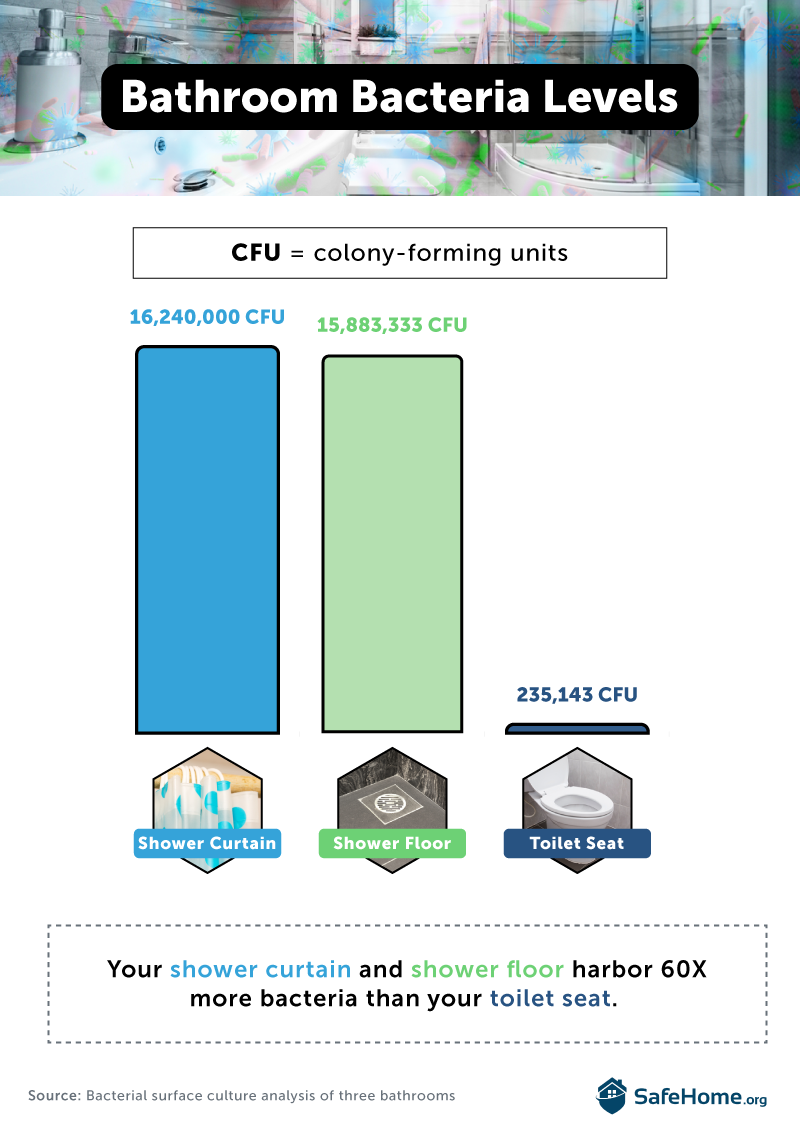
Toilets may seem particularly repugnant, but they don't even come close to the shower in terms of germ concentration. In fact, our swab results revealed astronomically high bacterial counts from two shower components: the curtain and floor. Both harbor roughly 70 times more bacteria than the toilet seat. It's not entirely surprising that germs thrive in a wet environment, however: Moisture is one of the most important factors in bacterial growth. Which other bathroom surfaces provided germs a happy home?
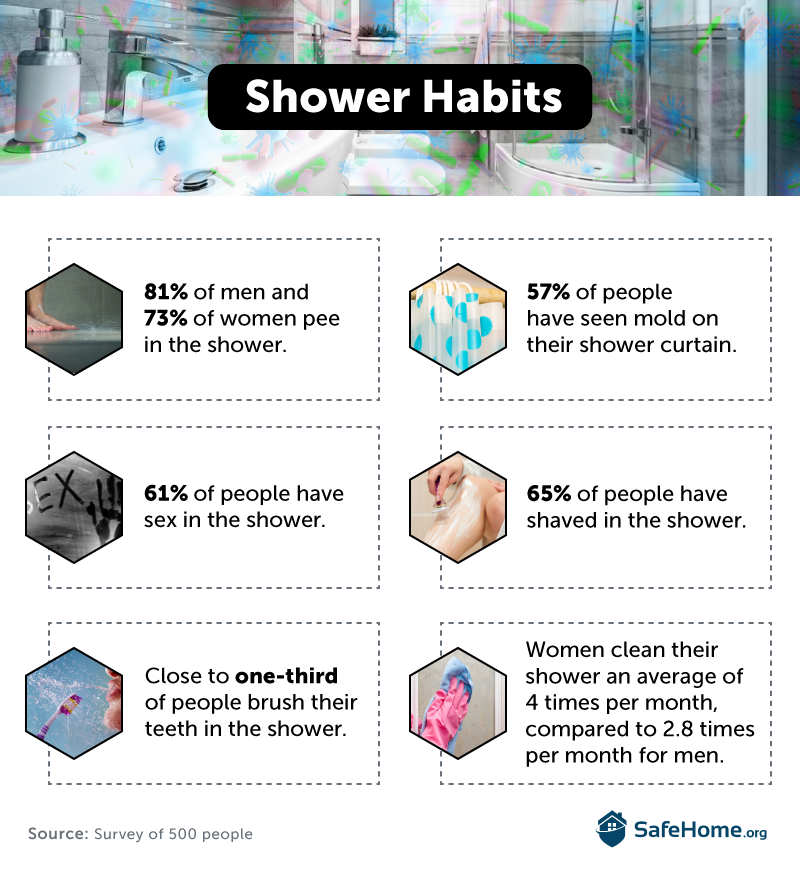
Studies consistently confirm that toothbrushes harbor significant amounts of bacteria. But our findings suggest the toothbrush handle may be where bacteria truly flourish, with more than 12.6 million colony-forming units (CFU). Think about it – the handle gets touched with unwashed hands first thing in the morning and last thing at night, yet rarely gets the same rinse treatment as the bristles. Plus, toothbrush handles enjoy extended contact with our hands, which are prime bacterial real estate in their own right. By some scientific estimates, each human hand is home to roughly 150 species of bacteria.
Interestingly, though, other surfaces we touch frequently had relatively few bacteria. The faucet and interior door handles had only a fraction of the bacteria found on the shower curtain or floor. That doesn't mean you can throw caution to the wind with regard to these surfaces, however – especially when you're in a public restroom. CDC guidelines still emphasize the importance of proper hand hygiene and avoiding direct contact with high-touch surfaces in public facilities.
Lurking in the Lavatory: Horrible or Harmless?
Although you probably aren't thrilled about any bacteria residing in your bathroom, some varieties are completely harmless to humans or even helpful in certain cases. Gram-positive rods, for example, are typically innocuous; this type of germ dominated surfaces such as the faucet handle. Bacteria of the bacillus variety had a more nuanced reputation: While certain strains can cause foodborne illness, others are actually used as probiotics to support digestive health. This bacteria was relatively rare in our bathroom swabs except on a single surface: It represented nearly three-quarters of the germs found on toilet seats.
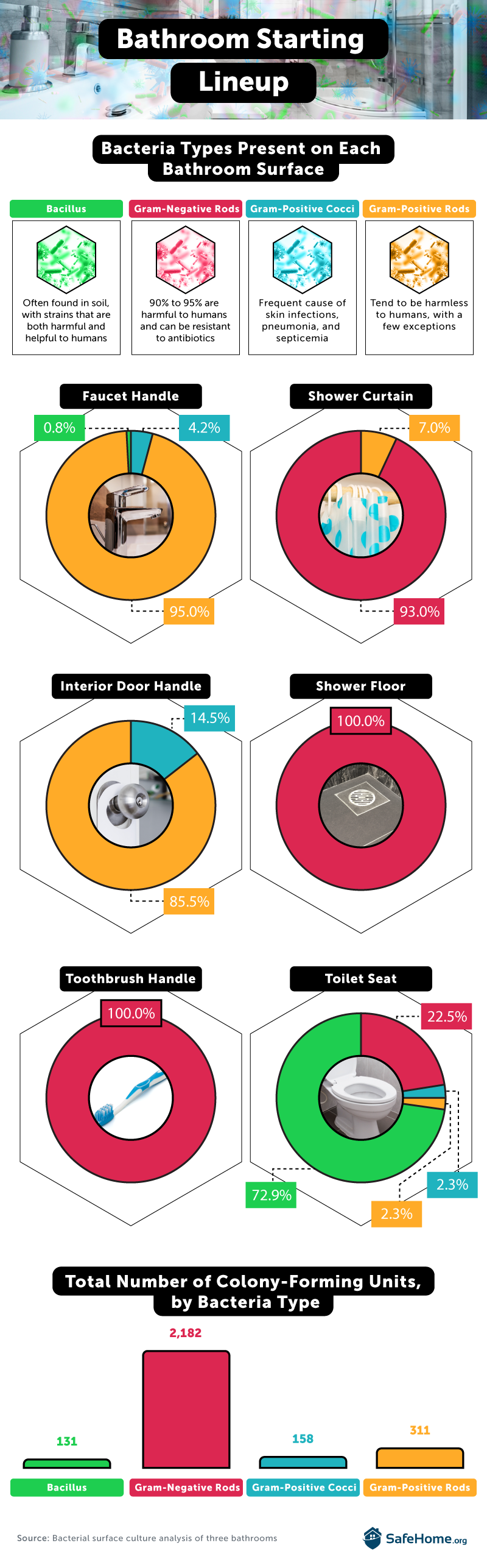
Unfortunately, more harmful bacteria also had a sizeable presence. Gram-positive cocci, which are associated with skin infections and several other illnesses, represented nearly 15 percent of germs found on the interior door handle. But gram-negative rods, which are pathogenic in the vast majority of cases, represented the greatest threat. They were the predominant bacteria on our three germiest surfaces and the most common variety of bathroom bacteria overall. Because they are sometimes resistant to drugs, these bacteria are of great concern in hospitals, let alone in the average home.
Washing Up and Getting Down
Let's talk about those bathroom habits we all have but rarely discuss. When we asked individuals about their own bathroom behaviors, a few possible explanations emerged. Most men and women, for example, admitted to peeing in the shower, and urologists continue to confirm is generally hygienic and can even help conserve water. Similarly, 61 percent of respondents reported having sex in their showers, although it's unclear doing so produces more bacteria than taking a shower solo. Plenty of people also combined rinsing off with other grooming activities, including 65 percent who shaved in the shower.
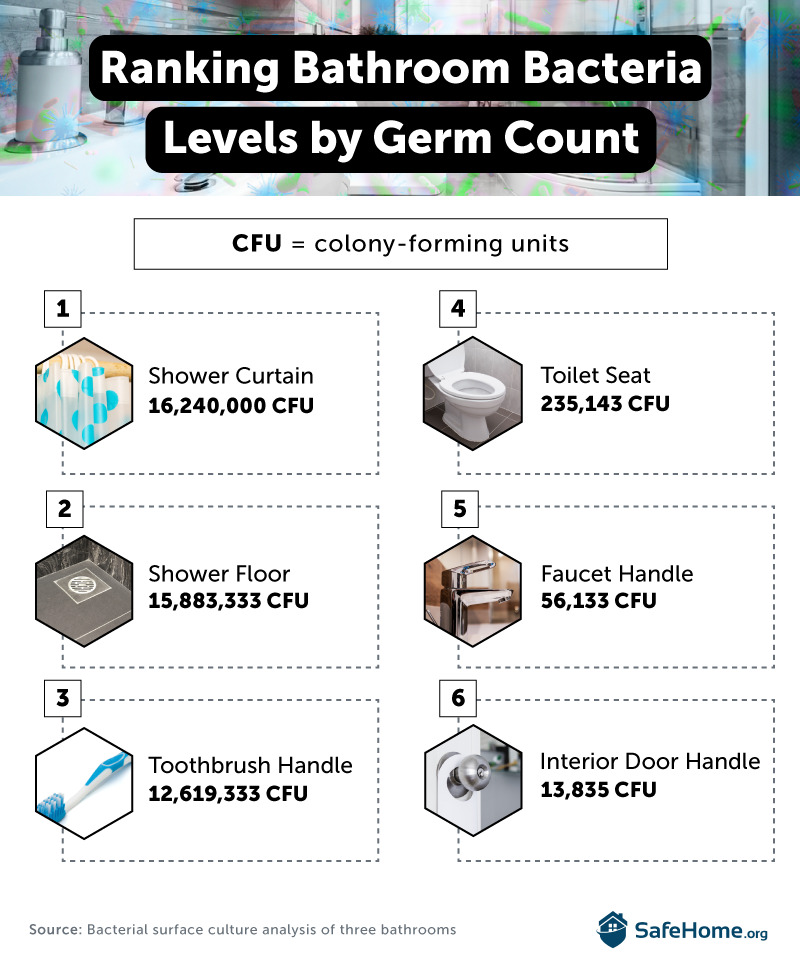
Whatever you do within the confines of your bathroom, it will likely require consistent cleaning. In this regard, women were more reliable, cleaning their lavatories four times a month on average. This aligns with data from the Bureau of Labor Statistics showing women still perform the majority of household cleaning tasks, despite increasing workplace participation. But even if we clean regularly, we may delay in making more significant improvements. More than half of respondents saw mold on their shower curtain, a situation doctors urge homeowners to address promptly.
Reclaiming Your Restroom
Our findings suggest our bathrooms are likely rife with bacteria, but we certainly can't avoid these germs altogether. The obvious solution is more frequent and effective cleaning, and in this regard, there's no substitute for good old-fashioned elbow grease. There are some techniques, however, that might help inconsistent cleaners adopt a new approach to bathroom sanitation.
If you tackle your bathroom only when grime gets unbearable, creating a fixed cleaning schedule is a solid first step. Try dedicating just 15 minutes every three days to quick bathroom maintenance. That's enough time to prevent the buildup that makes deep cleaning feel overwhelming. Plus, you can take your chores with a side of leisure: Fire up some tunes or a great podcast, and watch the time fly by.
Last but not least, strategize with your family members about splitting up cleaning duties fairly. Consider creating a rotating schedule where each person “owns” the bathroom for a week. They're responsible for keeping it guest-ready, which naturally encourages more frequent tidying.
Methodology
We performed a surface culture analysis of three home bathrooms. Two were in homes occupied by women, and one was in a home occupied by a man. We also ran a survey of 504 people. Our survey consisted of 274 women and 230 men, with an average age of 37.
Fair Use Statement
You're welcome to share this content with your own audience for noncommercial purposes – especially if someone you know needs a little extra incentive to get scrubbing. We simply ask that you cite our research so that our team gets proper credit for this project.