The fact is, every responsible parent is concerned about their children's safety. At the same time, it is important for kids to socialize at a young age and be able to have a certain level of freedom to grow and develop independence. Finding this balance can feel overwhelming. However, with the right safety foundation, you can empower your children to protect themselves when you're not around.
Teaching safety doesn't mean instilling fear. It means building awareness and confidence. When children understand basic safety rules, they develop instincts that will serve them throughout their lives.
Spotlight: Industry Expert Insight
Before delving into safety rules and different scenarios, let's take a look at what industry experts have to say about child safety:


Safety at Home
Your home should be your child's safe haven, but everyday household items and situations can pose risks if children aren't prepared. These fundamental rules can help keep your kids protected while building their safety awareness.
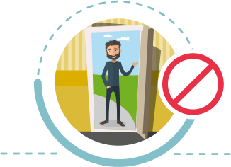
Do not open the door for strangers.
Instruct your kids to keep the doors locked and secure at all times, and only open the door for familiar faces. Teach them that they should never open the door for someone without your permission – even if that person claims to know you. This is especially important if your kids are old enough to be home alone. If you haven't already, consider installing a high-quality video doorbell so that your family members can safely and easily see who's at the door.

Be familiar with the family emergency contact list.
Every household should have an emergency contact list, neatly written out or printed and stowed away somewhere central. This way, if a disaster strikes, family members can easily refer to it and contact others if needed. Let your children know where they can find this list and how to use it in the event that they need to.
Main contact information should ideally be memorized (such as parents' phone numbers) but other family members' contacts like grandparents, aunts, and uncles in the immediate area can be noted on this emergency contact list.
In addition to family contacts, also include the phone numbers of local paramedics, fire departments, police stations, family doctors, and close friends to be extra prepared. Consider posting copies in multiple locations. We recommend putting them on the refrigerator, near each phone, and in your child's backpack.

Know the family escape plan.
Time is of the essence during an emergency, so it's essential to have a solid family escape plan in place. Spend a family night discussing home safety and the potential escape routes should a disaster take place. The American Red Cross recommends practicing your escape plan at least twice a year, including once at night when children might be disoriented. When creating an escape plan, the key is to devise the quickest way to get out of the house, and make sure that everyone in the family is on the same page and understands their role in ensuring everyone's safety.
In addition to putting together the escape plan, you'll also want to set in stone where family members should gather and meet outside to account for everyone's safety. Choose a meeting spot that's a safe distance from your home but easy to remember – like a specific tree, mailbox, or neighbor's driveway. Show them the different elements they can find in a first-aid kit and how they are used.
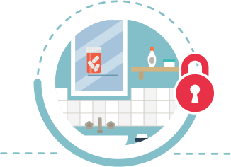
Stay away from the medicine cabinet.
Medication poisoning sends over 60,000 children to emergency rooms annually. That’s why kids should not have access to any medications when they aren't under a guardian's watch. They could easily overdose or unintentionally take the wrong medicines. Protect your children by teaching them that any type of drug can be dangerous if taken in large quantities. Also, inform them that they should only take medicine given to them by a parent or a trusted guardian.
You could also consider getting a reliable medical alert system, especially if you have a child with physical or cognitive impairment or chronic illness. A medical alert system can get them the help they need in case of medical emergencies.

Practice water safety.
Drowning remains the leading cause of death for children ages one to four. As such, children should always be monitored by a guardian when in a pool or bathtub. Children under six can drown in just a few inches of water. Teach your children to “test the waters” to make sure that it isn't too hot before they submerge their bodies into it and potentially burn themselves. Remind them that they should never mix electricity with water to avoid electrocution.
Kids who do not know how to swim yet should use floaties in larger bodies of water. Help your children practice basic water safety skills: floating on their back, treading water, and knowing how to call for help. Last but not least, encourage them to wear safety gear such as goggles, arm bands, and vests to stay afloat.

Pay attention to allergies.
Food allergies affect one in 13 children in the United States. That's roughly two students per classroom. If you know your child has any allergy, be sure to educate them so that they know what to look out for and stay away from.
Kids who are allergic to cats, for example, should ideally stay away from them or take allergy medications as needed if they are going to go over to a friend's house with a cat. On the other hand, children with food allergies should always ask about ingredients before eating anything outside the home. With time and hopefully not too much experimentation, your children will eventually become familiar with what is and isn't good for their well-being.

Be able to use the security system.
Is your home equipped with a security system? If so, your children will benefit greatly from knowing how to use it. First and foremost, explain to them the importance of keeping your home security system information confidential. Teach them that security codes are like passwords – they should never be shared with friends, posted online, or written down where others might see them. Then, show your kids how to arm and disarm the alarm system, and locate and activate any panic buttons.
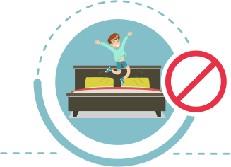
Furniture: A No-Go Zone
When not securely placed, furniture can pose a serious hazard for children. This is especially the case if they are reckless and not prepared for the worst. For example, heavy furniture that isn't mounted properly on the wall may fall and potentially cause injury to a child. To avoid such a catastrophe, kids should not be allowed to jump on beds or play near climbing things like bookshelves.

Safety at Play
Playing outside is one of the most memorable times from childhood. Children growing up in rural communities can explore nearby streams and fields, while city kids have playgrounds and local stores. Outdoor play is crucial for physical and mental development, but setting clear boundaries helps ensure these adventures stay safe and fun.

Know which plants and animals to be wary of.

Kids playing out in nature should be taught to identify which local plants are dangerous, like how to identify poison ivy and poisonous berries. Create a simple rhyme or visual guide your child can remember. “Leaves of three, let it be” for poison ivy is a classic example that still works.
As for animals, if you live in an area that has snakes, then you'll want to teach your kids to identify which ones are poisonous, where they tend to live, and what to do if bitten. The same goes for families that live in an area that may have bears, cougars, and other wild animals. A healthy respect for all wildlife will go a long way in preventing injuries or death.

The city life may not have so many encounters with plants that can cause harm, but poison ivy can propagate just about anywhere, especially in waterways like in Los Angeles. Urban areas also present unique wildlife challenges. Teach kids to avoid approaching stray dogs, cats, and nocturnal animals like raccoons that might carry diseases.

Scout out the areas where children may go.
The terrain around rural areas can be great for playtime, but parents should make sure there isn't rotted out trees with branches that could easily fall off and hit a child, or deep water areas in a nearby stream. Walk the area with your children first, pointing out potential hazards like unstable rocks, slippery slopes, or areas with spotty cell phone service. In some parts of the country, there are very unique terrain issues that parents should become aware of by contacting their local police department.
Communal parks, alleyways, and other areas that kids may pass through or go to play should be checked out for any harmful debris like scrap metal or unsafe structures.
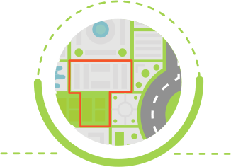
Set boundaries and curfews.
One of the joys of growing up in the country is playing outside in nature. Parents will want to set boundaries on how far out their children can safely go. Consider using natural landmarks as boundaries – “you can go as far as the big oak tree” or “stay where you can see our backyard fence” – which are easier for kids to remember than abstract distances. Curfews should be set as well so if an older child who is allowed to explore a bit further isn't back by a certain time, then parents know to go search for him or her.
It is often hard to see or hear very far in urban areas, so the boundaries may be much tighter. For city kids, boundaries might be “our block only” or “between the corner store and the park.” Make sure to add clear boundaries about never entering alleys or abandoned buildings.

Safety at School
When your children are old enough to go to school, it will not be practical for you to keep your eyes on them at all times — no matter how much you want to be right next to them. School presents new independence opportunities, but also new safety challenges. These rules will help your child navigate their school environment confidently.

Know full name, home phone number, and address.
Basic contact details are the most important for your child to know and memorize. This way, they are able to share this information with police or any authorized official in case of an emergency. Make learning fun by turning it into a song or game. Studies show that children retain information better when it's set to music or rhythm. If possible, also have your child memorize an emergency contact phone number. This could belong to a grandparent, aunt, or uncle, for example.

Keep personal information personal.
Let your children know that personal information should stay personal, and should not be shared with strangers unless in an absolute emergency situation. In our digital age, this includes not sharing information online, whether that’s on social media or online games. Teach your child to not release any information without your consent as you could have an identity theft crisis on your hands if sensitive data is ever leaked.
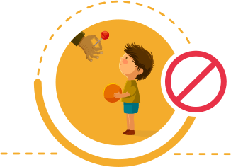
Don't ingest anything from a stranger.
While we're on the topic of strangers, it's time to teach your children to politely refuse anything given by strangers. Role-play different scenarios with your child so they know how to say “No, thank you” firmly but politely, even when an adult seems friendly or insistent.
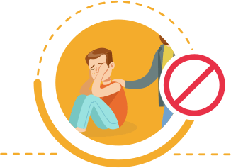
No one should touch your child's body.
As soon as your children are old enough to comprehend the basics, it's important to teach them that no one except their parents is allowed to touch them. Child safety experts recommend using proper anatomical names for body parts and teaching children about “body safety rules” as early as age three. Also, let them know that they should scream for help and alert those around them if they feel violated in any way.
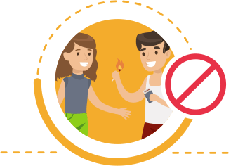
Stay away from fire.
Curious children are often intrigued by fire; it's not uncommon that they want to play with it. Teach them that it is not safe to do so, and let them know that experimenting with fire comes with dire, painful, and potentially deadly consequences.
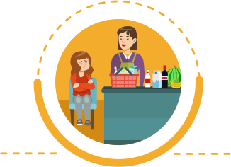
Lost? Stay put.
If your kids ever get lost somewhere, tell them to remain calm and stay where they are. Let them know that they can ask a woman with children nearby for help if they see them. Usually, kids get lost in supermarkets. If yours ever gets lost in one, tell them that they can go up to the checkout section of the store and seek help.
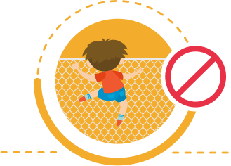
Fence climbing is not allowed.
One day, your young and active child may be playing ball and it suddenly bounces over to another space that's fenced off. As tempting as it may be to climb the fence to retrieve the ball, it is not safe to do so. Explain that fences are boundaries for a reason. They might protect them from dogs, pools, construction sites, or private property where they shouldn't be. No toy (or anything, really) is worth sacrificing safety!
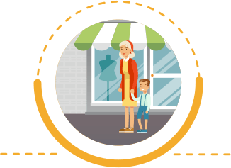
Never wander off without an adult family member.
Let your children know that if they need to go somewhere for something, they need to be accompanied by an adult family member — whether it be their own mom and dad, or grandparent, for example. For obvious safety reasons, kids should not leave the house or yard alone.
Create a family “code word” that only trusted adults would know. Teach your children that if someone claims you sent them, they must know the code word. If they don't, your child should refuse to go and seek help immediately.
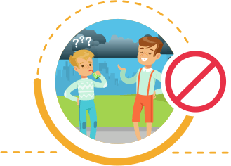
Don't do anything that doesn't feel right.
Growing up, children may feel pressured to do things that they don't necessarily feel comfortable doing. Common examples include taking clothes off in front of others, diving in a pool, or eating/drinking something that may seem a little off. Teach your kids about their “uh-oh feeling” – that uncomfortable sensation in their stomach when something isn't right. Let them know this feeling is their body's alarm system and they should always listen to it.
As long as they feel uncomfortable, they should never feel pressured to do something no matter how many other people are doing it. In the event that they do not feel like doing something, show them how they can politely decline in various scenarios.
Final Thoughts & Additional Resources
Safety education is an ongoing conversation, not a one-time lecture. Start with age-appropriate basics when your children are as young as three, and build on these foundations as they grow. Keep communications open with your children and avoid reprimanding them for every little thing. This way, they will be more inclined to tell you everything and you can provide them guidance along the way.
Keep in mind that while this guide is in no way comprehensive, it is intended to provide starter ideas on safety rules to teach young children. Regular practice through role-playing, family drills, and open discussions will help these safety rules become second nature to your children. For optimal safety, we recommend reviewing other resources like the ones below to gain further knowledge about children's safety.
Study on Healthy Urban Environments for Children and Young People This is an in depth study on how to increase road traffic safety, playground renovations, and more to create a safer and healthier urban environment for children.
Teaching Young Children Habits for Personal Safety This guide goes into further detail on the importance of habit building in kids to increase their safety.
CDC Safety in the Home and Community for Children The Center for Disease Control and Prevention has an excellent guide covering dozens of scenarios to go over with your child to help ensure their safety, from burns to dog bites to youth violence prevention.
National Resource Center For Health and Safety in Child Care and Early Education The University of Colorado College of Nursing provides an excellent resource covering over 600 national standards on quality health and safety practices at early care and educational institutes. You'll find state regulations here as well.
National Children's Center for Rural and Agricultural Health and Safety Here you'll find information specifically for child safety in rural areas, including research articles and webinars.
Citations:
- American Red Cross. (2025). Prevent, Prepare, and Escape: Fire Safety Starts with Smoke Alarms.
https://www.redcross.org/local/texas/north-texas/about-us/news-and-events/news/prevent–prepare–and-escape–fire-safety-starts-with-smoke-alar.html - Consumer Product Safety Commission. (2024). Annual Report on Pediatric Poisoning Fatalities and Injuries.
https://www.cpsc.gov/s3fs-public/Pediatric_Poisoning_Fatalities_Injuries_Report_2024_final.pdf - Centers for Disease Control and Prevention. (2024). Drowning Deaths Rise in the United States.
https://www.cdc.gov/media/releases/2024/s0514-vs-drowning.html - Food Allergy Research & Education. (Retrieved 2025). Facts and Statistics.
https://www.foodallergy.org/resources/facts-and-statistics - Enough Abuse. (2024). Why We Should Teach Children Proper Names for Private Body Parts.
https://enoughabuse.org/why-we-should-teach-children-proper-names-for-private-body-parts/